
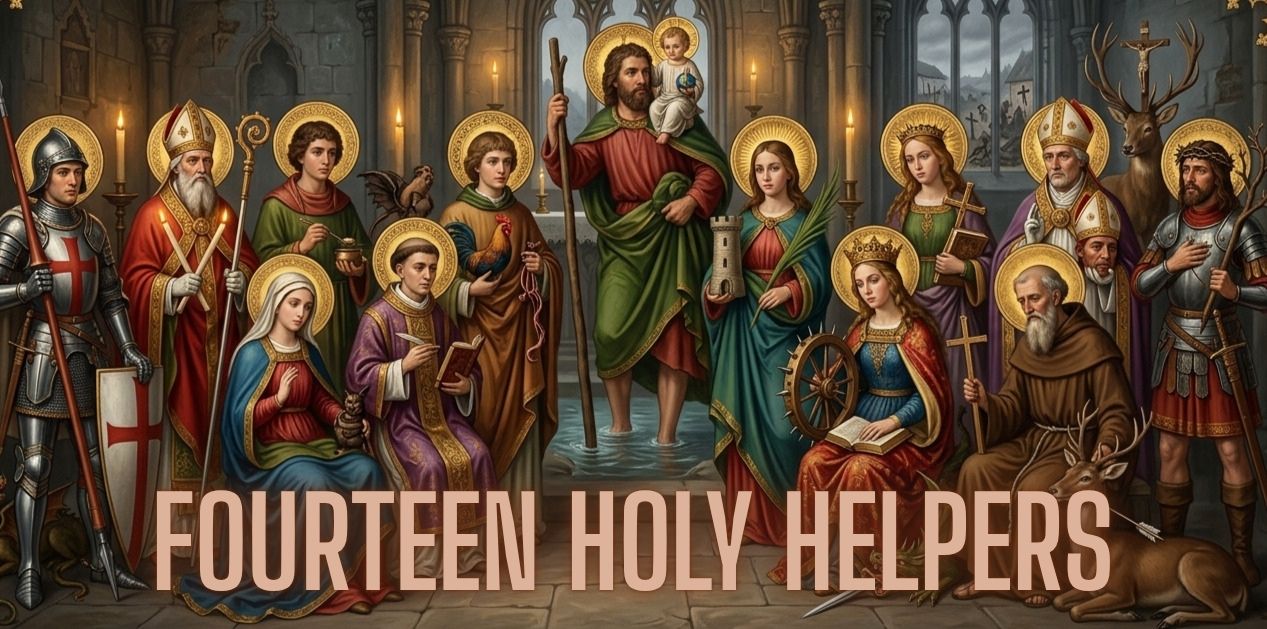
The Fourteen Holy Helpers: Origins, Saints and Meaning
The Fourteen Holy Helpers form one of Catholicism’s most fascinating group devotions, born from centuries of genuine desperation. During one of history’s deadliest plagues, ordinary believers turned to these fourteen saints for comfort and protection. Their combined intercession was thought to be especially powerful and their legacy still shapes Catholic devotion today.
The Fourteen Holy Helpers’ Feast Day Falls on 8 August
Traditionally, the Church celebrated the Fourteen Holy Helpers together on 8 August each year. However, the 1969 reform of the Roman calendar removed this joint feast from universal observance. Despite this change, many regions, particularly in Germany and Central Europe, still honour the group informally on this date. Each individual saint also retains a separate feast day throughout the liturgical calendar.
How the Fourteen Holy Helpers Devotion Began
This devotion first emerged during the fourteenth century within the Rhineland region of modern Germany. Believers referred to these saints collectively as Nothelfer, meaning “helpers in need” in German. Unsurprisingly, this urgent devotion coincided directly with the Black Death, which devastated Europe between 1346 and 1349. As the plague killed millions without warning, terrified communities desperately sought divine protection wherever they could find it.
According to historical records, the earliest documented reference to this group appeared in 1284, connected to an Altar in Krems, Austria. Later, a brotherhood dedicated to the devotion formed in 1466, eventually gaining papal recognition. Because the plague also devastated livestock, several of these saints became protectors of animals as well as people. Consequently, the devotion spread rapidly through Bohemia, Moravia, Switzerland, Austria, Italy and eventually the Americas.
Meet the Fourteen Holy Helpers and Their Patronage
Each of the Fourteen Holy Helpers offered protection against a specific danger or affliction.Saint George, a Roman soldier martyred under persecution, became a protector against skin diseases and a guardian of animals. Saint Blaise, a bishop known for healing throat ailments, remains popular even today during annual throat blessings. Meanwhile, Saint Erasmus, often called Elmo, offered protection to sailors and those suffering abdominal pain.
Saint Pantaleon served as patron of physicians, while Saint Vitus protected against epilepsy and safeguarded domestic animals from illness. Saint Christopher, perhaps the most famous among them, guarded travellers and was invoked against sudden, unexpected death. Saint Denis, meanwhile, became associated with headache sufferers, and Saint Cyriacus offered comfort against temptation during a person’s final hours.
Saint Acacius provided similar protection for soldiers and headache sufferers, while Saint Eustace became known as a healer of family troubles. Notably, Saint Giles remains the only non-martyr among the group, and believers invoked him both for a good confession and protection against plague itself. Rounding out the list, three virgin martyrs held particular importance: Saint Margaret of Antioch, patroness of safe childbirth; Saint Catherine of Alexandria, protector against sudden death and patroness of students; and Saint Barbara, invoked against fever and sudden, unprepared death.
Why the Fourteen Holy Helpers Still Matter Today
Interestingly, some traditions describe these fourteen saints as symbolically representing different parts of Christ’s suffering body during the crucifixion. This connection deepened the devotion’s spiritual meaning far beyond simple plague protection. During the fifteenth century, Pope Nicholas V even attached special indulgences to prayers honouring this group, though these no longer apply under modern norms.
Although official liturgical recognition has diminished since 1969, popular devotion to the Fourteen Holy Helpers remains strong in many Communities. Shrines, Chapels, and pilgrimage sites dedicated to the group continue attracting visitors across Europe. Readers wanting to explore individual members further can revisit our earlier profile of Saint Giles, one of the fourteen saints discussed here. For additional historical background, readers may also consult Catholic Culture’s liturgical resources.
Ultimately, the story of the Fourteen Holy Helpers demonstrates how faith and fear often intertwine during humanity’s darkest moments. Their enduring legacy reminds believers that hope and intercession can flourish even amid overwhelming suffering.





Leave a Reply