
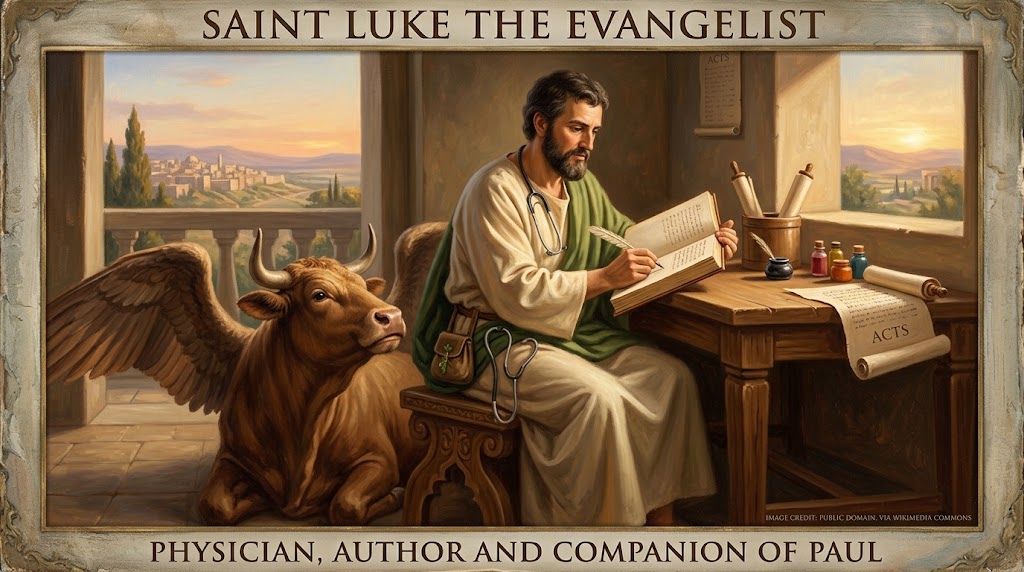
Image credit: Public domain, via Wikimedia Commons
Saint Luke the Evangelist Gave the World a Gospel of Mercy
The Church celebrates the feast of Saint Luke the Evangelist on October 18. In 2026, the date falls on a Sunday, so the Sunday liturgy takes precedence. Moreover, the same day marks World Mission Sunday. Therefore, the two celebrations meet in a fitting way. Indeed, Luke was a traveller, a missionary and a tireless witness to the Gospel.
Saint Luke the Evangelist came, according to tradition, from Antioch in Syria, a city in modern Turkey. He was probably a Gentile and not a Jew. Furthermore, Saint Paul calls him “the beloved physician” in his Letter to the Colossians. As a result, the Church honours him as the patron of doctors and nurses. In addition, he enjoyed a Greek education. Consequently, he wrote the finest Greek of any New Testament author.
Luke also joined Saint Paul on his missionary journeys. In the Acts of the Apostles, the narrator suddenly says “we” at certain points. Scholars therefore believe that Luke shared those voyages. Likewise, he stayed with Paul during his imprisonment in Caesarea and travelled with him to Rome. Later, when many friends had left, Paul wrote that only Luke remained with him. Thus, Luke showed a loyalty that few could match.
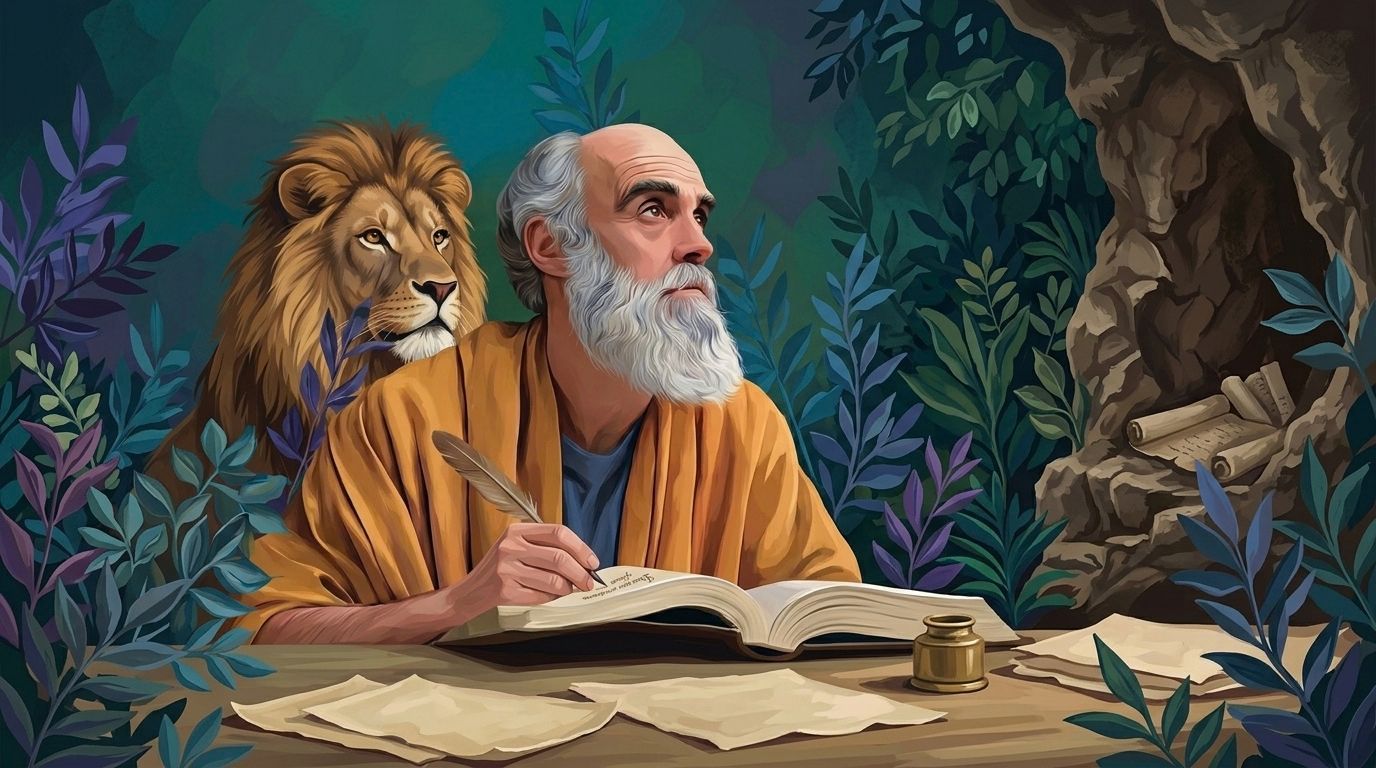
Next comes his writing. Saint Luke the Evangelist composed both the third Gospel and the Acts of the Apostles. Together, these two books form one continuous story. In fact, they make up a larger share of the New Testament than the work of any other single author. Luke addressed them to a man named Theophilus. He explains that he investigated everything carefully before writing. Hence, his Gospel reads like a well-researched history.
His Gospel also preserves some of the most loved stories of Jesus. For example, only Luke tells the parables of the Good Samaritan and the Prodigal Son. Similarly, he alone records the story of Zacchaeus and the song of Mary known as the Magnificat. Moreover, he gives the fullest account of the birth of Christ. Scholars suggest that he drew on the memories of the Blessed Virgin Mary herself. Therefore, many call him the evangelist of Our Lady.
Mercy forms the heart of his message. Throughout the Gospel, Jesus welcomes sinners, heals the sick and lifts up the poor. In addition, Luke gives special attention to women, who appear often in his pages. He also stresses prayer and the work of the Holy Spirit. Consequently, his Gospel invites every reader to trust in God’s forgiveness. Above all, it reminds us that salvation is meant for all peoples.
Tradition adds several details about his later life. Many writers say that he preached in Greece after the deaths of Peter and Paul. He died at the age of eighty-four. Then, in the year 357, believers moved his relics to Constantinople. Meanwhile, ancient stories describe him as the first painter of icons of the Virgin Mary. For this reason, artists also honour him as their patron. Finally, Christians portray him with a winged ox, which is his symbol.
How can we honour him today? First, read the Gospel of Luke slowly, one chapter each day. Second, pray for doctors, nurses and all who care for the sick. In addition, ask his help for artists and for anyone who tells the story of faith. You can learn more from Britannica and from the EWTN library. Finally, read World Mission Sunday 2026 to see how Luke’s missionary spirit lives on.
In conclusion, Saint Luke the Evangelist remains a guide for every believer. He healed bodies, and he also served souls through his words. Likewise, he shows that careful work and deep faith can walk together. Therefore, let us ask for his prayers on this feast. May we, too, carry the mercy of Christ to everyone we meet.


Leave a Reply