
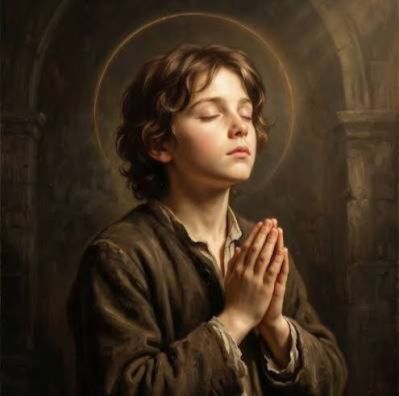
Image Credit: Prayers to Jesus Christ / Instagram
Saint Vitus: The Young Martyr Who Became a Protector Against Storms and Sickness
Saint Vitus occupies a unique place in Christian devotion, bridging the worlds of historical martyrdom and legendary miracle. Though the stories surrounding his life blend fact with folklore, his impact on medieval and modern spirituality remains undeniable. As one of the Fourteen Holy Helpers, he stands among Christianity’s most invoked saints for protection against physical and spiritual afflictions.
The Feast Day of Saint Vitus
The Church commemorates Saint Vitus on June 15, a date that has marked his veneration for centuries. This midsummer placement carries symbolic weight, as his cult became deeply associated with protection against summer storms and the neurological condition that bears his name. The feast invites believers to remember not only his martyrdom but also the enduring power of faith across generations.
Legend and Historical Reality
The traditional narrative of Vitus reads like an adventure from ancient romance. According to this account, he was born in Sicily as the only son of a Roman senator. At the remarkably young age of twelve, he embraced Christianity, a decision that would redirect his entire destiny. His conversions and miracles soon attracted dangerous attention.
Valerian, the administrator of Sicily, summoned the boy to test and hopefully shatter his newfound faith. When persuasion failed, Vitus fled with two faithful companions: his tutor Modestus and his servant Crescentia. Their journey took them from Sicily to Lucania and eventually to Rome itself. There, Vitus reportedly performed an extraordinary exorcism, freeing Emperor Diocletian’s own son from an evil spirit.
However, the emperor’s gratitude turned to suspicion when Vitus refused to offer sacrifice to the Roman gods. His miraculous cure was dismissed as sorcery rather than divine power. Consequently, Vitus, Modestus, and Crescentia faced a series of brutal tortures. The legends claim they emerged completely unscathed, protected by heavenly power. Finally, during a violent storm that destroyed pagan temples, an angel guided them back to Lucania, where they eventually died.
This narrative, while rich in spiritual meaning, is classified as unreliable by modern scholars. The hagiographical traditions accumulated layers of miraculous embellishment over centuries. Yet beneath the legend lies a solid historical core: a cult that extends back to antiquity and three Christians who were genuinely martyred in Lucania. Their deaths were real, even if the surrounding details became legendary.
The Cult Spreads to Germany
The transformation of Vitus from local Italian martyr to widespread European saint occurred through the translation of his relics. In 836, his remains were moved to Saxony, a region in modern-day Germany. This transfer sparked an extraordinary devotion that would define his legacy for centuries.
Medieval Germany was particularly receptive to cults emphasizing protection against natural disasters and illness. The timing of Vitus’s relic translation coincided with a period of intense spiritual seeking, and his reputation grew rapidly. Churches were dedicated to him, prayers were composed in his honor, and pilgrims sought his intercession for increasingly specific needs.
The Fourteen Holy Helpers
Saint Vitus’s significance expanded dramatically when he became one of the Fourteen Holy Helpers, a group of saints venerated collectively during the Middle Ages for their powerful intercession against various diseases and dangers. This consortium included well-known figures such as Saint Christopher, Saint Blaise, and Saint George, alongside Vitus and his companion Modestus.
The Fourteen Holy Helpers emerged from the traumatic experience of the Black Death in the fourteenth century. As plague devastated Europe, communities sought supernatural protection through these proven intercessors. Each saint was assigned specific protective domains, and Vitus’s portfolio was particularly broad.
Patronages and Protections
Saint Vitus carries one of the most diverse collections of patronages in the entire calendar of saints. His primary association is with epilepsy, a condition that terrified medieval communities and resisted medical understanding. Sufferers and their families turned to Vitus for relief when physicians could offer none.
The neurological disorder chorea, characterized by involuntary dance-like movements, became known as “St. Vitus’ Dance”—directly named after him. This condition was once believed to result from spiritual affliction or demonic influence, making the martyred saint’s intercession seem especially appropriate.
Beyond medical patronages, Vitus became the protector of dancers and actors. This association likely developed from the “dancing” movements of chorea sufferers, but it expanded to include all performing artists who sought divine blessing on their craft. The famous St. Vitus Cathedral in Prague, with its stunning Gothic architecture, stands as a testament to this artistic connection.
Most dramatically, Vitus is invoked as a protector against storms. The legendary storm that destroyed pagan temples during his torture became the foundation for this patronage. Farmers, sailors, and anyone exposed to the elements prayed for his protection when dark clouds gathered. This association remains particularly strong in German and Central European folk traditions.
The Enduring Legacy of Saint Vitus
The story of Saint Vitus illustrates how historical martyrdom generates spiritual meaning that transcends its original context. Whether the legends accurately recount his life matters less than what his veneration has accomplished across centuries. He represents the triumph of faith over imperial power, the possibility of youthful holiness, and the hope that suffering can be transformed into protection for others.
Modern believers facing illness, performance anxiety, or natural disasters can find in Vitus a companion who understands vulnerability. His youth at martyrdom reminds us that sanctity knows no age limits. His companionship with Modestus and Crescentia demonstrates that faith is best lived in community. His storm association speaks to our universal need for safety amid life’s turbulence.
The Church’s celebration of Vitus on June 15 invites reflection on how martyrdom seeds future devotion. From three deaths in ancient Lucania, a spiritual harvest grew that has comforted millions across more than a millennium. In an age that often dismisses ancient saints as irrelevant, Vitus’s continued invocation by epileptics, dancers, and storm-tossed travelers proves that authentic faith never truly ages.


Leave a Reply