
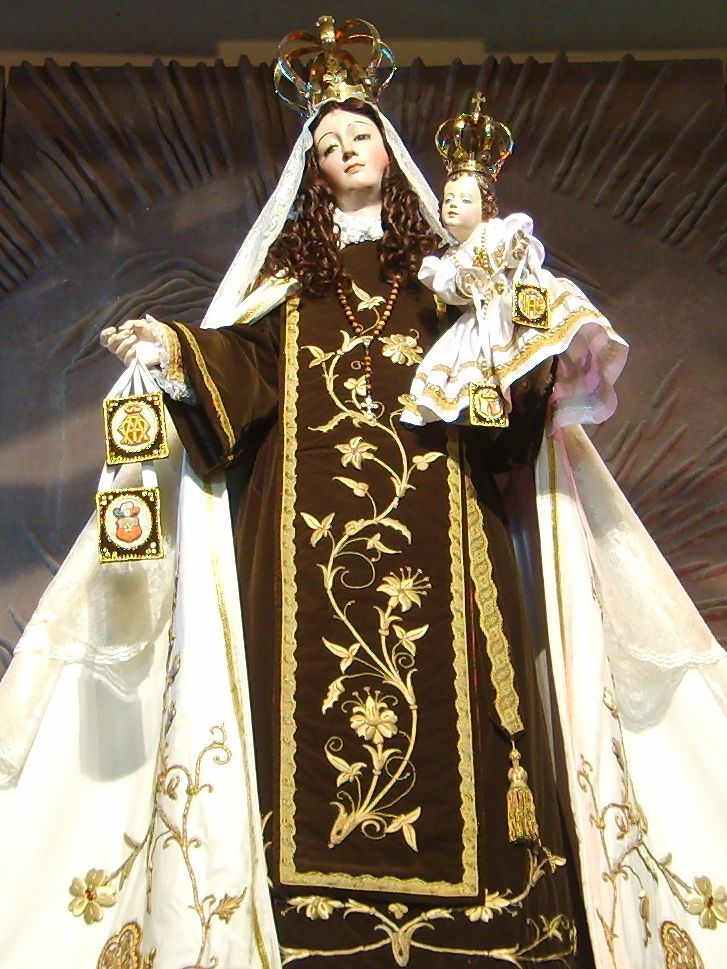
Image credit: Photo of Our Lady of Mount Carmel, courtesy of Wikimedia Commons/Jorge Barrios (public domain).
Our Lady of Mount Carmel: The Feast Day of the Brown Scapular
The Feast Day of Our Lady of Mount Carmel
The Catholic Church celebrates the feast of Our Lady of Mount Carmel every year on July 16, honouring the Blessed Virgin Mary as patroness of the Carmelite Order. This date carries deep significance because it marks the anniversary of a vision believed to have occurred in 1251, when Mary reportedly appeared to a Carmelite Friar named Simon Stock. Over the centuries, this feast has grown into one of the most beloved Marian observances in the Church, celebrated by Carmelites and lay faithful alike.
Origins on a Sacred Mountain
Long before the feast existed, Mount Carmel already held deep spiritual meaning. Rising about 1,742 feet above Israel’s Mediterranean coastline, the mountain range is closely tied to the Old Testament prophet Elijah, who famously prayed there for rain during a devastating drought. According to Scripture, Elijah’s servant eventually spotted a small cloud rising from the sea, which many later interpreted as a symbol foreshadowing the Virgin Mary herself.
During the twelfth century, Christian hermits settled on Mount Carmel, drawing inspiration from Elijah’s example of prayer and fasting. These hermits eventually organized into a religious community, and by 1150, a formal Order began taking shape. As persecution from the Saracens intensified, many of these monks gradually emigrated to Europe, carrying their devotion to Mary with them.
The Vision of Saint Simon Stock
By the thirteenth century, the newly formed Carmelite Order faced significant scrutiny and opposition from secular clergy. Consequently, Simon Stock, who served as the Order’s sixth superior general, turned to Mary in prayer, seeking a sign of her protection. According to tradition, Our Lady appeared to him on July 16, 1251, holding the Christ Child in one arm and the Brown Scapular in the other.
During this vision, Mary reportedly offered a remarkable promise, stating that whoever died wearing the scapular would be preserved from eternal fire. She further described the garment as “a sign of salvation, a protection in danger, and a pledge of peace.” This moment, therefore, became the foundation for one of Catholicism’s most enduring devotional practices.
What Exactly Is the Brown Scapular?
The word “scapular” comes from a Latin term meaning “shoulder,” and originally referred to a simple work apron worn by monks. Structurally, it consists of two small pieces of brown wool cloth connected by cords, worn over the shoulders so that one piece rests on the chest and the other on the back. Because it symbolizes the yoke of Christ described in Matthew’s Gospel, the scapular represents a person’s willingness to carry Jesus’s burden with humility and trust.
Although the scapular began as part of the Carmelite habit, it eventually spread to lay Catholics who wished to share in the order’s spiritual graces. Today, smaller versions of the scapular remain widely available in Catholic shops worldwide, often given as gifts during milestones like First Communion or Confirmation.
Growth of the Devotion Through the Centuries
Interestingly, the feast of Our Lady of Mount Carmel did not always link to the scapular devotion. Historical records suggest the Carmelites originally established the feast between 1376 and 1386 to celebrate their approval as a religious order. Only later did popular tradition connect the celebration more firmly to Simon Stock’s vision.
Pope Sixtus V formally approved the feast in 1587, and its observance gradually expanded across the Catholic world. Pope Benedict XIII extended the celebration to the entire Latin Church in 1726, cementing July 16 as a universal date of devotion. Even so, after the Second Vatican Council, Church liturgists revisited the feast due to historical uncertainties, and today’s official liturgy no longer references the scapular directly, though popular devotion to it continues strongly.
A Devotion That Spread Across the Globe
Devotion to Our Lady of Mount Carmel has since reached far beyond its Carmelite origins. She is recognized as the patron saint of Chile and Bolivia, and countless churches around the world bear her name. Additionally, the visionaries of Fátima reported that Mary appeared during her final 1917 apparition specifically as Our Lady of Mount Carmel, reinforcing the scapular’s importance for the faithful.
For readers interested in exploring related Marian devotions, the EWTN Mission archive offers additional prayers and reflections connected to this feast.
Why Our Lady of Mount Carmel Still Matters Today
Ultimately, devotion to Our Lady of Mount Carmel continues to remind Catholics of Mary’s maternal protection and her role as a model of humble faith. While the Church has clarified that wearing the Brown Scapular does not guarantee salvation on its own, it remains a powerful sacramental sign of one’s commitment to living according to Christ’s teachings. For nearly eight centuries, believers have turned to this devotion during moments of hardship, drawing comfort from Mary’s promise of peace, protection, and enduring love.





Leave a Reply