
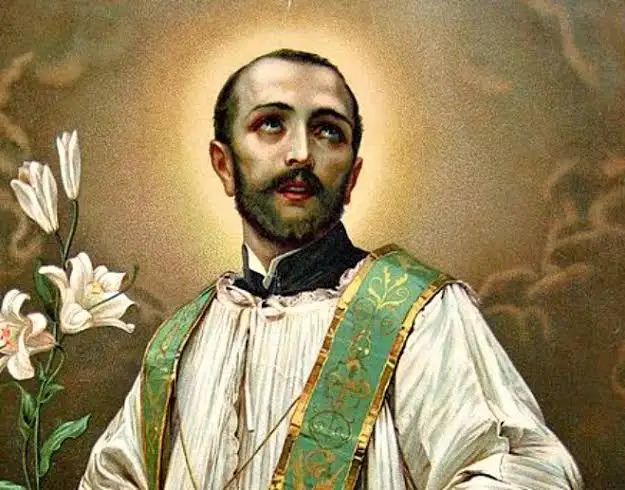
Saint Anthony Mary Zaccaria: Founder of the Barnabites and Apostle of the Forty Hours
Saint Anthony Mary Zaccaria stands as one of the most dynamic reformers of the Catholic Counter-Reformation. Born into Italian nobility, this physician turned priest would eventually found three religious communities and transform Eucharistic devotion across Europe. Furthermore, the feast day of Saint Anthony Mary Zaccaria on July 5 honours a man who gave his life to reviving faith during one of the Church’s most turbulent eras. In fact, his legacy continues through the Barnabite order, the Angelic Sisters, and the countless faithful who practice the Forty Hours devotion he popularized.
Feast Day of Saint Anthony Mary Zaccaria: July 5
The Catholic Church celebrates Saint Anthony Mary Zaccaria on July 5, commemorating the day he died in 1539 at the young age of 36. This date falls during the liturgical octave of Saints Peter and Paul, underscoring his deep commitment to the apostolic mission. Moreover, the Church recognizes him as patron saint of physicians, a nod to his early medical career. Consequently, his feast day resonates with both healthcare professionals and those devoted to Eucharistic adoration.
Early Life and Formation of Saint Anthony Mary Zaccaria
Born in 1502 in Cremona, Italy, into the noble Zaccaria family, this future saint experienced tragedy early. His father Lazzaro died shortly after his birth, leaving his mother Antonietta a widow at only 18 years old. Rather than remarry, she devoted herself entirely to charitable works and her son’s spiritual education. Under her guidance, the boy developed a profound devotion to prayer and service to the poor.
He studied philosophy in Pavia and then medicine at the University of Padua, earning his doctorate at age 22. Returning to Cremona, he practiced medicine with a distinctive approach. While caring for patients’ physical ailments, he also ministered to their spiritual needs, encouraging the sick to receive the Sacraments and turn from sin. Additionally, he taught catechism to poor children and began preaching in the local church as a layman. However, he soon realized that saving souls mattered far more than healing bodies.
Priesthood and Miraculous First Mass of Saint Anthony Mary Zaccaria
At the urging of his spiritual director, Saint Anthony Mary Zaccaria pursued theological studies and was ordained a priest in 1528 at age 26. During his very first Mass, a miraculous event occurred. At the moment of consecration, he became enwrapped in a supernatural light that remained until the Blessed Sacrament was consumed. Contemporary witnesses testified to this marvel, and news of the event spread rapidly.
As a priest in Cremona, he confronted a society in steep moral decline. Poverty was rising, wars had taken their toll, and church attendance had diminished. Meanwhile, the Protestant Reformation was sowing confusion throughout northern Italy. In this challenging environment, he preached with eloquence and manifest holiness. Within two years, his zeal had so transformed the city that common consent named him “Father of His People.”
Founding the Barnabites: The Mission of Saint Anthony Mary Zaccaria
In 1530, divine providence called this reformer to Milan, where corruption and religious neglect were equally rampant. Realizing that individual effort alone could not reform such a decadent society, he resolved to found a new religious community. He met two kindred spirits, Bartholomew Ferrari and Anthony Morigia, who enthusiastically joined his vision.
Together, they established the Clerics Regular of Saint Paul, a congregation dedicated to radical poverty, mortification, charitable works, and proclaiming the Gospel in imitation of Saint Paul. Pope Clement VII canonically sanctioned the order in 1533. After the founder’s death, they were entrusted with the Church of Saint Barnabas in Milan, and thus became commonly known as the “Barnabites.” The order focused on preaching, teaching, and administering the sacraments with special emphasis on the Eucharist and devotion to the Crucified Christ.
The Angelic Sisters and Laity of Saint Paul Founded by Saint Anthony Mary Zaccaria
This saint’s vision extended beyond priests. He gathered holy women under Countess Ludovica Torelli of Guastalla, his spiritual directee, and founded the Angelic Sisters of Saint Paul. These uncloistered nuns lived lives of prayer, penance, poverty, and public charity, working to reform religious life by their good example. On January 15, 1535, Pope Paul III approved this congregation with the bull Debitum pastoralis officii.
Furthermore, he established a lay organization called the Laity of Saint Paul, sometimes called the Married of Saint Paul or Oblates of Sainmt Paul in North America. This association enabled married couples to participate actively in the apostolate. Thus, he created a comprehensive spiritual family encompassing priests, religious women, and lay people, all united in the mission of reforming Christian society.
Devotional Innovations: The Forty Hours and Friday Bells of Saint Anthony Mary Zaccaria
Among the most enduring contributions of this reformer were his devotional innovations. He popularized the Forty Hours devotion, a practice of continuous Eucharistic adoration before the exposed Blessed Sacrament. This devotion spread from Milan throughout Europe and remains a cherished practice in many parishes today.
He also introduced the ringing of church bells at 3:00 p.m. on Fridays, inviting the faithful to pause and recall the Passion of Christ at the hour of His death. Additionally, he promoted frequent reception of the sacraments, particularly the Eucharist and confession, at a time when such practices were rare. His emphasis on personal piety and active charity significantly contributed to the Counter-Reformation.
Trials and Exoneration of Saint Anthony Mary Zaccaria
This saint’s zeal for reform inevitably attracted opposition. His criticism of abuses within the Church earned him powerful enemies. Twice, in 1534 and 1537, he was denounced to Rome and investigated for heresy. However, he was completely exonerated both times. In 1536, he stepped down as General of the Order, and Giacomo Antonio Morigia was elected Superior. He then went to Vicenza, where he reformed two convents and founded the order’s second house.
Death and Canonization of Saint Anthony Mary Zaccaria
In 1539, this tireless apostle became seriously ill while on a mission of peace. He returned to his mother’s house in Cremona, where he died on July 5, 1539, at only 36 years old. Twenty-seven years after his death, his body was found to be incorrupt. His mortal remains are now enshrined at the Church of Saint Barnabas in Milan, Italy.
The Church beatified him in 1849 under Blessed Pope Pius IX. Pope Leo XIII canonized him on May 27, 1897. In 2001, Cardinal Joseph Ratzinger, the future Pope Benedict XVI, wrote the preface for a book on this saint, praising him as “one of the great figures of Catholic reform in the 1500s” who deserves to be rediscovered as “an authentic man of God and of the Church, a man burning with zeal.”
Legacy of Saint Anthony Mary Zaccaria Today
Today, this founder is widely recognized as the Apostle of the Forty Hours and the founder of the Barnabite order. The Barnabites continue their mission of preaching, teaching, and sacramental ministry across the world. The Angelic Sisters of Saint Paul maintain their active charitable works. Moreover, the Forty Hours devotion remains one of the most powerful forms of Eucharistic adoration in the Catholic Church.
In art, he is depicted wearing the black cassock of the Barnabite order, often holding a lily, cross, chalice, and host. His life exemplifies the truth that holiness, not position or longevity, determines one’s impact on the Church. Though he lived only 36 years, his reforms continue to bear fruit nearly five centuries later.

Leave a Reply