
Image Credit: Vatican News
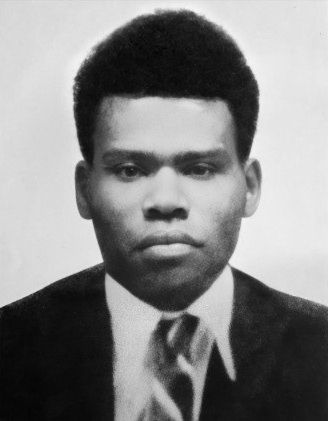
Blessed Peter To Rot: The Catechist Martyr of Papua New Guinea
The Feast Day of Blessed Peter To Rot
Every year on July 7, the Catholic Church commemorates Blessed Peter To Rot, a devoted catechist who laid down his life during the Japanese occupation of New Britain. On January 17, 1995, Pope John Paul II traveled to Papua New Guinea to beatify this remarkable man, making him the first blessed from the region. Moreover, his story holds special significance for the Missionaries of the Sacred Heart, since they trained and worked alongside him throughout his ministry.
A Childhood of Promise and Prayer
Peter To Rot was born in 1912 in Rakunai, a village near Rabaul, the capital of New Britain in Papua New Guinea. His father, Angelo To Puia, served as a respected chief and local leader, while his mother, Maria Ja Tumul, raised six children. Peter was the third child, with an older brother Joseph, an older sister Therese, a younger brother Gabriel, and two youngest siblings who died in childhood.
Angelo To Puia recognized something special in his son, likely because they shared similar personalities and temperaments. Nevertheless, he refused to spoil Peter and demanded just as much from him as from the other children. When Peter turned seven, his father enrolled him in the village school, even though attendance was not mandatory. Angelo understood that education would prove essential if Peter was to become a true leader.
At school, Peter distinguished himself as a quick and capable student. His teachers noticed something remarkable: his daily journal of activities always included both morning and evening prayer. Meanwhile, his childhood resembled that of most boys his age. He served at Mass, played sports, helped with household chores, and occasionally joined in harmless mischief. What truly set him apart, however, was his natural leadership among the other boys. Despite being the chief’s son, he never acted arrogant or bossy.
Training for Ministry
When Peter reached eighteen, the parish priest, Father Laufer of the Missionaries of the Sacred Heart, approached his father about the possibility of Peter becoming a priest. Angelo To Puia responded thoughtfully, believing it was not yet time for someone from their generation to join the priesthood. Perhaps one of his grandchildren would receive that blessing. However, he agreed that Peter could become a catechist. Consequently, in the fall of 1930, Peter began studies at the Catechist School in Taliligap, which the MSC staffed.
Peter threw himself completely into his studies. His prayer life deepened through daily Mass and Communion, frequent visits to church for prayer during the day, and growing devotion to the Blessed Sacrament. At Taliligap, his leadership abilities blossomed in work, sports, recreation, and prayer. Before completing his third year, Father Laufer sent urgent word that Peter was needed back at the parish. Peter returned to Rakunai and, at twenty-one years old, became the youngest catechist in the community.
His primary responsibility involved teaching at the parish school, yet he also visited the sick and prayed with those nearing death. People warmed to him because he remained even-tempered, never moody, and consistently calm and kind. He defended the Church and its teachings, engaging anyone in conversation about religion. The community soon recognized that he practiced exactly what he preached.
Marriage and Family Life
On November 11, 1936, Peter married Paula Ja Varpit at the Rakunai church. Paula had been his student, and their two families arranged the union. Their marriage flourished with genuine happiness. Peter proved an exemplary husband, and together they prayed every morning and evening. As his concerns mounted during the Japanese occupation, he often confided in Paula.
Their first child, a son, arrived on December 5, 1939. They named him To Puia in honor of Peter’s father, who had passed away in 1937, and gave him the Christian name Andreas. Peter took enormous pride in fatherhood and frequently carried the child around, holding and playing with him. In their culture, it was unusual for a child to spend more time with the father than the mother. In 1942, a daughter named Rufina joined the family.
Courage Under Japanese Occupation
In January 1942, war reached Rabaul. After dropping bombs on people who had never even seen airplanes before, Japanese soldiers landed and sent all missionaries to a prison camp at Vunapope. As Father Laufer departed, he shook Peter’s hand and entrusted him with everything: “To Rot, I am leaving all my work here in your hands. Look after these people well. Help them, so that they don’t forget about God.”
Peter accepted this responsibility willingly, despite his fear. He knew God would remain with him, visited the sick, prayed with the dying, and prepared them to meet Jesus. He held classes for children and adults alike, helping everyone remain faithful to Christ’s teachings. To those frightened by the war, he offered encouragement: “This is a very bad time for us, and we are all afraid. But God our Father is with us and looking after us. We must pray and ask him to stay with us always.”
Peter had established the practice of gathering villagers daily for prayer. However, as bombings intensified, the community decided meeting in one place was too dangerous. Peter divided everyone into small groups and had them gather in caves originally dug for bomb shelter. There, the people continued their daily prayers, finding strength and peace despite the dangers surrounding them.
Defiance of Unjust Laws
Initially, the Japanese ignored the people’s prayer and Sunday worship. Nevertheless, as they began losing the war, they grew fearful that the people’s God opposed them. They summoned village leaders and issued strict commands: “You people must not pray to your God. You cannot meet on Sundays for service, and you must not pray in the villages either. Anyone who disobeys this law will go to jail.”
When the leaders brought this message back, Peter To Rot spoke up boldly: “The Japanese cannot stop us loving God and obeying his laws! We must be strong and we must refuse to give in to them.” Consequently, he continued teaching the people and gathering them for prayer.
Another Japanese decree permitted men to take second wives, aiming to gain local favour and tighten control. Once again, Peter objected strongly. He reprimanded anyone found with a second wife and insisted that villagers follow the Church’s teaching on marriage. He required them to come to him, their catechist, to witness marriages. Anything else constituted a sin before God. On several occasions, he made provisions to protect women being abducted as second wives.
Arrest, Imprisonment, and Martyrdom
Some local young men working as Japanese spies reported these activities. The authorities arrested Peter and searched the caves where he held prayer services, along with his home and his brothers’ houses. They confiscated his Bible, catechism, song book, notebooks, and two crucifixes. From his brother Tatamai’s house they took a raincoat, and from Telo’s suitcases they found an Australian bank book. All three brothers were arrested.
The police chief interrogated Tatamai first about church services. When Tatamai admitted attending them, the chief struck him on the head with a wooden cane and sentenced him to one month in prison. Then Peter faced questioning about celebrating church services, his stance on marriage, and his defiance of the law allowing multiple wives. He too was struck on the head and repeatedly poked with a cane near his heart. He received a two-month sentence.
Telo, the youngest, was accused of being an Australian spy because of the bank book. He was hung on a papaya tree and beaten until he lost consciousness. In the following days, Tatamai and Peter were sent into forced labor, while Telo was too severely injured to work.
Telo was released after two weeks due to his health; Tatamai after one month. Peter, however, remained imprisoned. When the village chief asked why, the police responded that Peter was a “bad type” who prevented men from having two wives and who called people to prayer.
Peter received many visits from relatives and friends, especially his mother and wife. They came daily with food, and he encouraged them, assuring them he was not afraid because he was in prison for God. He told the village chief, “I am in prison because of the adulterers and because of the church services. Well, I am ready to die. But you must take care of the people.” To another friend he added, “If it is God’s will, I’ll be murdered for the faith. I am a child of the church and therefore for the church I will die.”
One day he asked Paula to bring his shaving kit, a white laplap, his Rosary, and his catechist’s cross. The next day, a Friday, she brought these items along with food and their two children—Andreas, now six, and Rufina, three. Paula was pregnant with their third child. When she noticed Peter ate very little, she grew anxious. Peter calmed her, explaining that it was his duty to die for his people and for the name of the Father, Son, and Holy Spirit. The family stayed together for a long while until Peter urged her to take the children home.
Later, when his mother visited, Peter mentioned that the police were bringing a Japanese doctor to give him medicine for a slight cold. He added, “I don’t know what that means. Perhaps it is a lie. After all, I am not ill.” In the late afternoon, Peter bathed, shaved, and put on his new laplap. He stood at the prison hut door and prayed.
Around seven in the evening, all prisoners except Peter were taken to a nearby farm for a party—something that had never happened before. At about ten o’clock, the guard told them to sleep. Not returning to the prison was also highly unusual. Because security was light, three prisoners crept back in the darkness. There they found Peter To Rot dead on the prison house porch.
He lay on his back, one arm bent under his head, one leg twisted beneath the other. His body was still warm. They noticed cotton wads in his nostrils and ears, a red welt on his neck, a cloth strip around his head, and a small syringe puncture on his upper left arm. They knew he had been murdered, yet fearing for their own lives, they hid and said nothing.
The next morning, Peter was missing at roll call. The police chief feigned surprise, claiming Peter had been very ill and must have died. He then summoned the village chief and relatives to remove the body.
As the villagers washed Peter’s body for burial, they noticed foul-smelling foam coming from his ears, nostrils, and mouth. Removing the cloth from his head revealed two bleeding punctures at the back of his skull. The center of his throat was crushed flat and swollen, as if struck by a truncheon. No one believed he had died of illness.
Peter To Rot received a chief’s burial at the new cemetery beside the church where he had ministered. Although many people attended, the funeral proceeded in silence, since everyone feared what the Japanese might do if they prayed aloud in public. From that day forward, the people revered him as a martyr for his faith.
Beatification and Legacy
On January 17, 1995, Pope John Paul II celebrated Peter’s beatification in Papua New Guinea, honouring this courageous catechist who chose faithfulness over safety. Today, Blessed Peter To Rot stands as a powerful witness that ordinary people, through prayer and courage, can become extraordinary witnesses to Christ.



Leave a Reply