
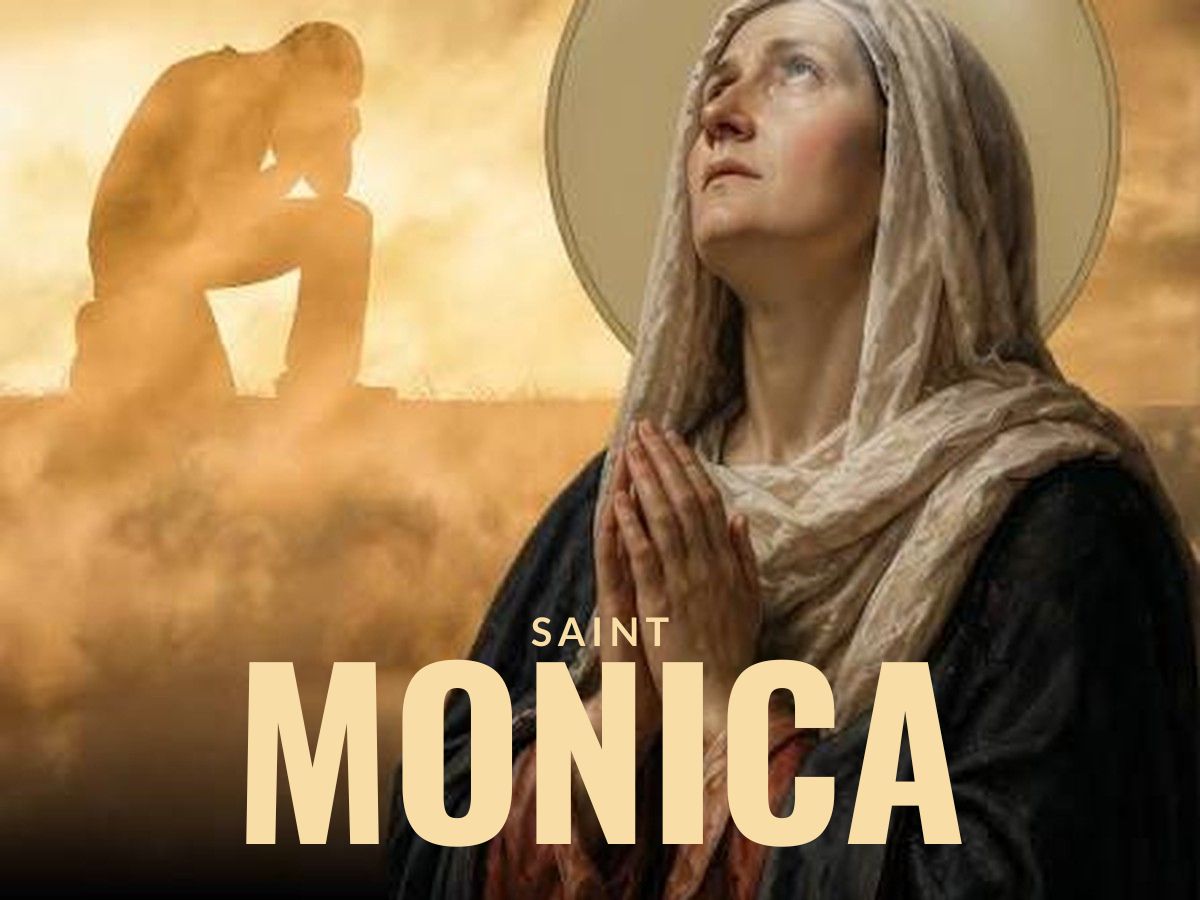
Saint Monica: The Mother Whose Tears Never Turned to Despair
Saint Monica stands among the most relatable saints in the entire Catholic calendar, since her story centres on something countless parents understand deeply: watching a child drift from faith. Her patience, grief and eventual joy still resonate with believers facing similarly difficult family situations today. Her story offers genuine hope to anyone still waiting on an answer to years of prayer.
Saint Monica’s Feast Day Falls on 27 August
The Catholic Church celebrates Saint Monica every year on 27 August, positioned deliberately just one day before her son Augustine’s own feast. This pairing reflects an old liturgical tradition of placing a mother’s memorial right before her child’s celebration. Interestingly, devotion to Saint Monica first spread during the thirteenth century, when her feast was originally kept on 4 May, a date the Church of England and Episcopal Church still observe today.
A Difficult Marriage in Roman North Africa
Monica was born around 331 in Thagaste, a town in Roman North Africa now known as Souk Ahras, Algeria. Historians believe she was likely Berber, based on her name’s linguistic origins. While still young, she married Patricius, a pagan local official known for his violent temper, a trait apparently shared by his mother, who lived with the couple. Despite these tensions, Monica’s steady prayer and quiet almsgiving earned Patricius’s genuine respect, even though her devotion sometimes irritated him.
Years of Grief Over a Wayward Son
Monica and Patricius had three children: Augustine, Navigius, and Perpetua. When Augustine fell seriously ill as a boy, Monica pleaded with Patricius to allow his baptism, only for her husband to withdraw permission once the child recovered. After Patricius died, seventeen-year-old Augustine travelled to Carthage for further schooling, where he adopted Manichaeism, a religious philosophy Monica found deeply troubling.
When Augustine later shared these views openly, Monica actually banned him from her table. However, a vivid dream soon convinced her to reconcile with her son instead. Seeking guidance, she visited an unnamed bishop, who offered her the now-famous reassurance that “the child of those tears shall never perish.”
Following Augustine Across the Mediterranean
Determined to remain close to her son, Monica followed Augustine first to Rome, then onward to Milan after discovering he had already left. There, she met Bishop Ambrose, whose preaching eventually helped guide Augustine toward Christianity following seventeen years of resistance. Augustine later described his mother’s devotional habits in his famous work, Confessions, noting how she brought food and wine offerings to shrines honouring various martyrs.
When Ambrose explained that such offerings might encourage overindulgence among struggling drinkers, Monica immediately stopped the practice. Instead, she began bringing prayerful intentions and charitable gifts for the poor, a change Augustine praised as spiritually purer than her earlier custom.
A Peaceful End to a Long Journey
Monica and Augustine spent six peaceful months together at Cassiciacum before his long-awaited baptism finally took place at Milan’s church of St John the Baptist. Setting out afterward for Africa, the pair stopped at Ostia, where Monica suddenly fell ill and died. Augustine later recorded her final words to him, in which she declared that all her hopes had finally been fulfilled, leaving nothing further she needed from this world.
Relics, Veneration and a Rediscovered Epitaph
Monica was initially buried at Ostia, and her remains later moved to a hidden crypt within the church of Santa Aurea. In 1430, Pope Martin V ordered her relics transferred to Rome, a journey reportedly marked by several miraculous occurrences. Cardinal Guillaume d’Estouteville subsequently built the Basilica di Sant’Agostino specifically to house Augustine’s memory, placing Monica’s relics within a chapel beside the high altar.
Remarkably, the original stone bearing her funerary epitaph resurfaced in 1945, discovered accidentally by two boys digging near Santa Aurea. Its inscription honours Monica as “Mother of the Virtues,” crediting her son’s spiritual accomplishments partly to her own steadfast example.
Saint Monica’s Enduring Legacy Today
St Monica now serves as patroness of wives and abuse victims, and her name lives on prominently in Santa Monica, California, reportedly linked to nearby springs once compared to her legendary tears. Readers wanting to deepen their own devotion can explore our Novena to Saint Monica for a complete nine-day prayer written in her honour. For further historical detail, Britannica’s biography of Augustine of Hippo offers valuable additional context regarding her son’s remarkable conversion.
Nearly seventeen centuries later, St Monica’s persistent, hopeful love continues encouraging every parent still praying quietly for a child’s return to faith.



Leave a Reply