
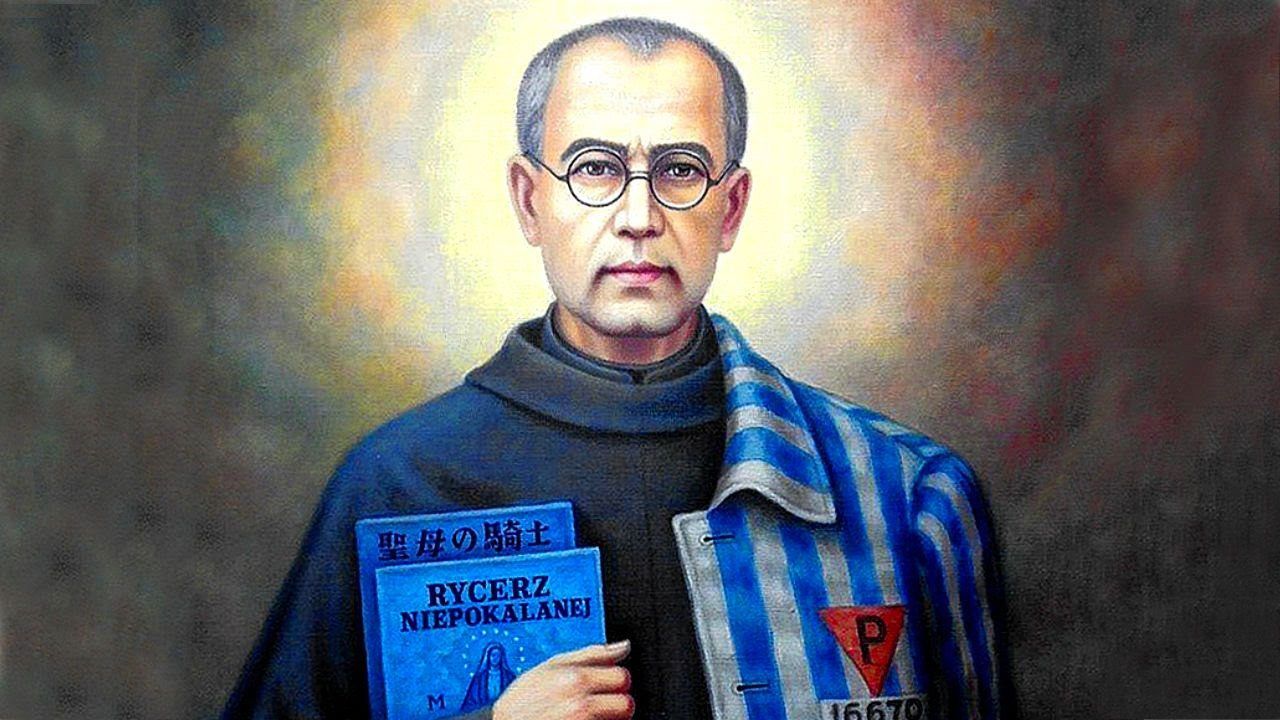
Image Credit: Vatican News
Saint Maximilian Kolbe performed one of the most widely remembered acts of self-sacrifice in modern Church history, volunteering to die in place of a stranger inside a Nazi death camp. Long before that final act, he had already built a remarkable life as a publisher, missionary, and tireless promoter of Marian devotion. His story combines intellectual achievement, wartime courage, and a controversial legacy that continues to generate discussion today. This piece traces his early vision, his priesthood, and the sacrifice that defined his death.
Saint Maximilian Kolbe’s Feast Day Falls on August 14
The Catholic Church honours Saint Maximilian Kolbe every year on August 14, the day of his martyrdom in 1941. Pope Paul VI beatified him in 1971, and Pope John Paul II canonized him in 1982, declaring him a martyr of charity. He is remembered today as patron of drug addicts, prisoners, families and the pro-life movement.
A Childhood Vision That Shaped His Life
Kolbe was born Raymund Kolbe on January 8, 1894, in Zduńska Wola, then part of the Russian Empire’s Polish territory. At age nine, he reported a vision of the Virgin Mary offering him two crowns, one white for purity and one red for martyrdom, and he accepted both without hesitation. Four years later, Kolbe and his older brother joined the Conventual Franciscans and he later earned doctorates in both philosophy and theology while studying in Rome.
Founding a Movement and a Publishing Empire
While in Rome, Kolbe witnessed aggressive public demonstrations against the pope, prompting him to found the Militia Immaculatae in 1917, a movement dedicated to prayer for the conversion of the Church’s opponents. After his 1918 ordination, Kolbe built an extensive publishing operation in Poland, founding the periodical Knight of the Immaculata and establishing the monastery of Niepokalanów, which grew into a major religious publishing center. He also founded monasteries in Japan and India during missionary trips through Asia in the early 1930s.
Sheltering Refugees During Nazi Occupation
When Germany invaded Poland in 1939, Kolbe remained at his monastery rather than fleeing, opening a temporary hospital for those in need. Arrested briefly and released, he refused to sign paperwork that would have granted him German citizenship status through his ethnic German ancestry. Kolbe’s monastery went on to shelter roughly 2,000 Jewish refugees from Nazi persecution, even as it continued publishing anti-Nazi materials under restricted permission.
Saint Maximilian Kolbe’s Sacrifice at Auschwitz
The Gestapo shut down the monastery in February 1941 and transferred Kolbe to Auschwitz that May. After a prisoner escaped that July, camp officials selected ten men to die by starvation as a warning to others. When one selected man cried out for his wife and children, Kolbe stepped forward and volunteered to take his place instead. Witnesses reported that Kolbe led fellow prisoners in prayer throughout his confinement, remaining calm even as starvation and dehydration claimed the others around him. After two weeks, guards administered a lethal injection to end his life on August 14, 1941, and his remains were cremated the following day, coinciding with the Feast of the Assumption.
A Debated Distinction Between Martyr and Confessor
Kolbe’s canonization sparked genuine theological debate within the Church, since he technically died through an act of charity rather than direct persecution for his faith. Pope Paul VI initially recognized this distinction, naming him a confessor rather than a martyr at his beatification. Pope John Paul II later overruled that earlier assessment, insisting that Nazi hatred toward entire categories of people inherently constituted religious persecution as well, and he formally declared Kolbe a martyr at his 1982 canonization.
Addressing a Difficult Chapter
Some of Kolbe’s prewar writings have drawn documented criticism for antisemitic language, including references to Freemasonry and Zionism that reflected troubling rhetoric common in certain Catholic publications of that era. Defenders note that such references appeared in only a small fraction of his surviving correspondence, and that his wartime actions, sheltering thousands of Jewish refugees at direct personal risk, stand in stark contrast to that earlier rhetoric. Historians and Church commentators continue to debate how these two aspects of his record should be weighed together.
A Legacy That Spans Continents
Franciszek Gajowniczek, the man Kolbe saved, survived the Holocaust and personally attended both his beatification and canonization ceremonies. Today, Kolbe’s statue stands among twentieth-century martyrs above the Great West Door of Westminster Abbey in London and multiple churches, museums, and religious communities worldwide now bear his name. Readers exploring nearby August feasts can browse the complete August Saints calendar for more.

Leave a Reply