
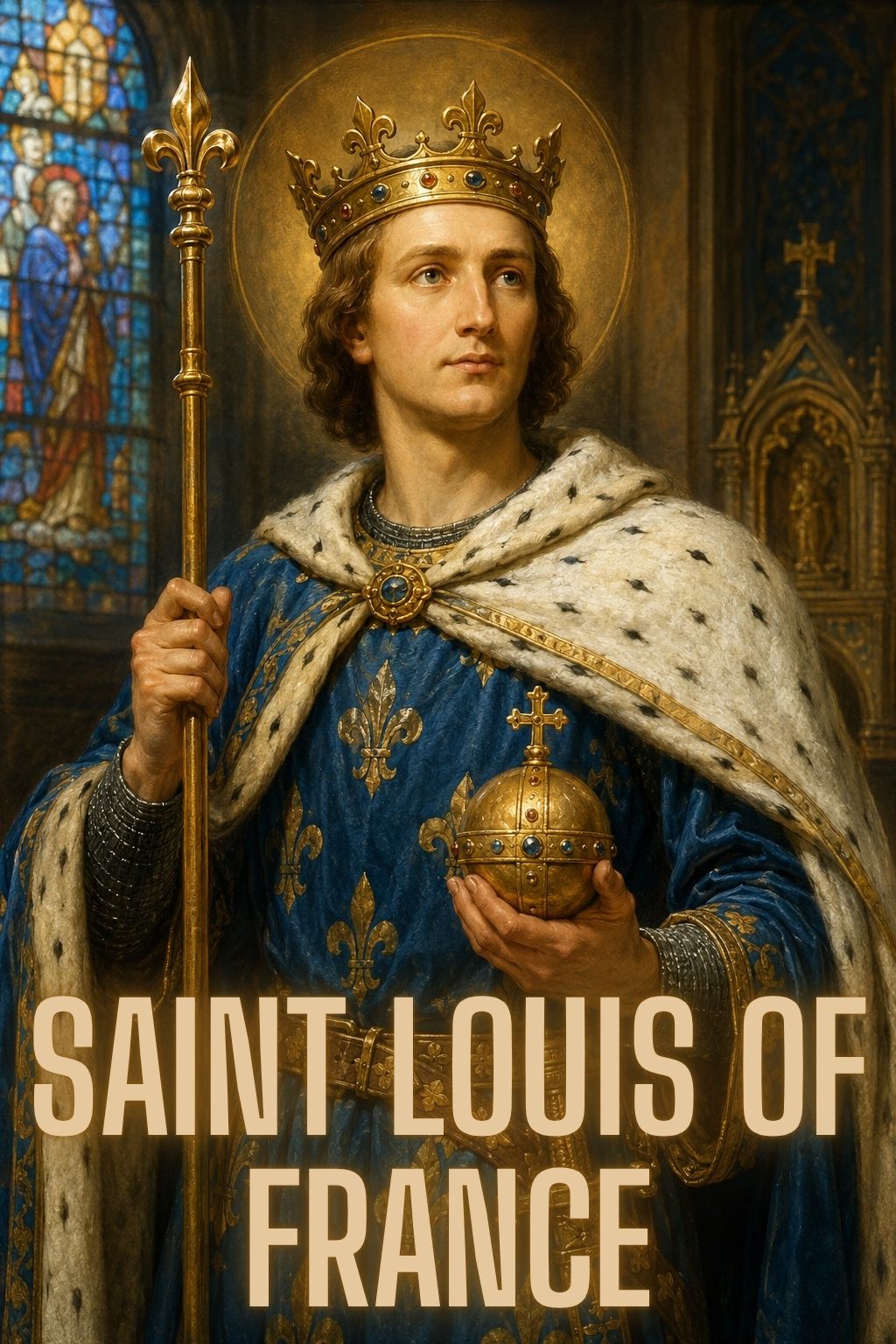
Saint Louis of France: The Only King of France Canonised a Saint
Saint Louis of France occupies a truly unique place in Catholic and European history. He remains the sole French monarch ever declared a saint by the Church, a distinction that still shapes how historians view his 44-year reign. His story combines devout faith, sweeping legal reform and the turbulent politics of the Crusades.
Saint Louis of France’s Feast Day Falls on 25 August
The Church celebrates Saint Louis of France every year on 25 August, marking the exact date of his death in 1270. He died during the Eighth Crusade near Tunis, struck down by dysentery that swept through his camp. Pope Boniface VIII formally canonised him in 1297, drawing heavily on testimony gathered from close companions who witnessed his life firsthand.
A Childhood Shaped by Faith and Power
Louis IX was born on 25 April 1214 at Poissy, near Paris, to Prince Louis, later Louis VIII, and Blanche of Castile. He lost his father at just twelve years old and was crowned king shortly afterward at Reims Cathedral. Because he was still a child, his mother ruled as regent and she instilled in him a deep, lasting devotion to the Catholic faith. She famously told him she would rather see him dead than watch him commit a single mortal sin.
Saint Louis of France Reforms Justice at Home
Once he began ruling personally around 1234, Saint Louis of France pursued ambitious legal reforms that reshaped French governance. He abolished trials by ordeal and combat, replacing them with the presumption of innocence, a genuinely radical concept for his era. He also created a system allowing subjects to appeal judgments directly to the crown and he famously heard petitioners’ cases in person beneath an oak tree at Vincennes.
His 1254 Great Reform Ordinance further tightened ethical standards for royal officials, backed by intensive inspections known as enquêtes. These reforms earned him a reputation across Europe as a scrupulously fair and principled ruler, so much so that other monarchs frequently asked him to mediate their own disputes.
Faith, Relics and the Sainte-Chapelle
Saint Louis of France expressed his devotion visibly through architecture and patronage. He built the stunning Sainte-Chapelle in Paris specifically to house the Crown of Thorns and a fragment of the True Cross, relics he acquired at enormous expense from the struggling Byzantine emperor. His court also became a magnet for scholars and figures such as Thomas Aquinas and Albert the Great worked in Paris during his reign.
However, his religious zeal carried a darker side as well. Louis enforced strict anti-blasphemy laws and oversaw the 1240 Disputation of Paris, which led directly to the burning of thousands of Talmud copies. He also required Jewish subjects to wear identifying badges, policies that modern historians view as deeply troubling even within their thirteenth-century context.
Crusades Define His Later Reign
Saint Louis of France led two major crusades during his lifetime, both aimed at securing the Holy Land through Egypt. During the Seventh Crusade in 1250, his army suffered defeat at the Battle of Fariskur, and Egyptian forces captured him personally. He secured his release only after paying an enormous ransom and surrendering the city of Damietta.
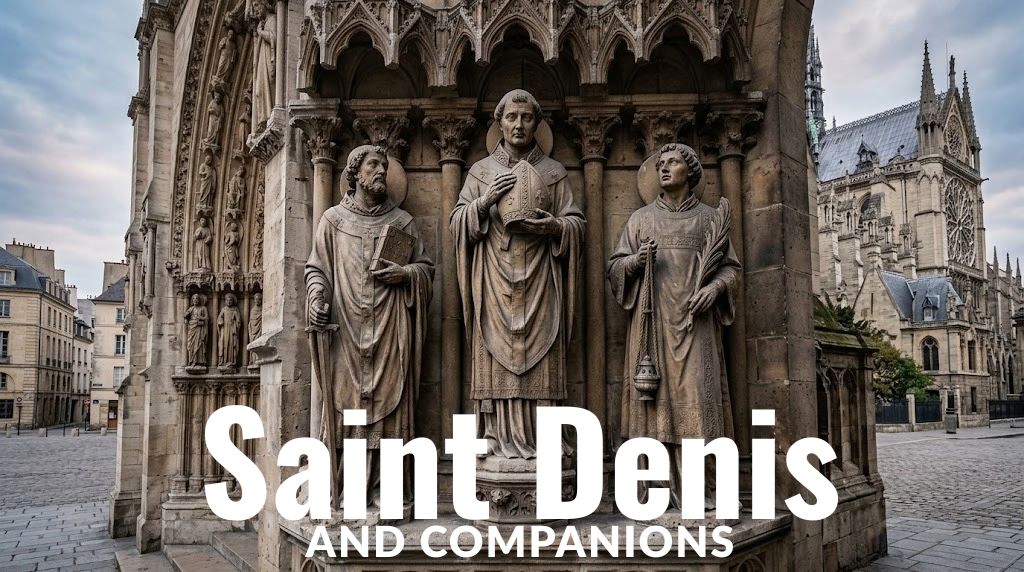
Undeterred, he launched an Eighth Crusade in 1267, this time targeting Tunis in North Africa. Disease struck his camp almost immediately after landing, and Louis died there on 25 August 1270. His remains were carried across Sicily, Italy and the Alps before finally reaching burial at Saint-Denis, France’s traditional royal necropolis.
A Lasting Legacy Beyond the Crown
Saint Louis of France left behind more than just legal and architectural achievements. He maintained active diplomatic relations with the Mongol Empire, corresponded with rival rulers and successfully negotiated major treaties with both Aragon and England. His personal writings to his son Philip III, known as the Enseignements, outlined a vision of moral leadership grounded firmly in Christian virtue.
Even centuries later, his reputation for fairness and piety endures within Catholic tradition. Today, he serves as patron of Tertiaries, alongside builders, needleworkers and various charitable causes connected to his hospital foundations. Readers wanting to explore more royal saints can browse our Catholic Saints archive for additional profiles. For deeper historical detail, Encyclopaedia Britannica’s biography of Louis IX offers useful further reading.
Saint Louis of France ultimately shows how medieval kingship and Catholic sainthood could intertwine, producing a legacy that still prompts genuine historical reflection today.


Leave a Reply