
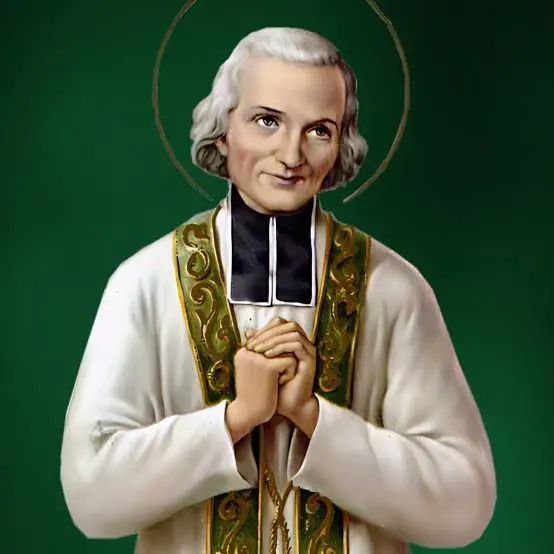
Image Credit: The Catholic Crusade
Saint John Vianney: Feast Day, Life, and Legacy
Saint John Vianney rose from a struggling seminary student to become one of history’s most sought-after confessors. Born a shepherd’s son in rural France, he nearly failed his priestly studies before transforming an entire village through decades of tireless ministry. Pilgrims eventually traveled from across Europe just to sit in his confessional line. Today, let us trace his difficult path to the priesthood, his legendary work at Ars and the enduring devotion that followed his death.
Saint John Vianney’s Feast Day Falls on August 4
The Catholic Church honours Saint John Vianney every year on August 4, the anniversary of his death in 1859. His feast day has moved several times across the liturgical calendar. It first appeared on August 9 in 1928, shifted to August 8 in 1960 and finally settled on August 4 in 1969, matching his actual date of death.
A Childhood Shaped by Persecution
Vianney was born on May 8, 1786, in Dardilly, France, the fourth of six children in a devout farming family. His grandparents had once hosted Benedict Joseph Labre, the patron saint of the homeless, during his pilgrimage to Rome. When the French Revolution turned violently anticlerical, loyal priests were forced into hiding and the Vianney family traveled to distant farms to attend secret Masses. Watching those priests risk their lives left a deep impression on young John. He made his first Communion at age thirteen in a neighbor’s kitchen, with the windows covered so candlelight would not betray the gathering.
Saint John Vianney’s Difficult Path Through Seminary
At twenty, Vianney finally began formal studies under Abbé Balley in Écully, struggling badly with Latin due to his interrupted early education. His studies were then disrupted again in 1809, when he was drafted into Napoleon’s army despite his status as a seminarian. Illness delayed his departure, and he later became separated from his draft group near Roanne, eventually living under the assumed name Jerome Vincent among deserters hiding in the Forez mountains. He spent fourteen months there running a small school before an 1810 imperial amnesty let him return legally to his studies. Considered too slow for the major seminary at Lyons, he only reached ordination because Balley personally vouched for his piety. He was ordained a priest on August 12, 1815.
Appointed Pastor of a Forgotten Village
In 1818, Vianney became parish priest of Ars, a small town of just 230 residents. He reportedly got lost searching for the village until a young shepherd pointed him in the right direction. Alongside Catherine Lassagne and Benedicta Lardet, he soon founded La Providence, a home for orphaned and abandoned girls. Vianney found a community shaped by religious indifference in the Revolution’s aftermath, with Sundays spent drinking and dancing rather than worshiping. He preached firmly against these habits and refused absolution to those unwilling to change, later collecting his teachings into the well-known Sermons of the Curé of Ars.
A Confessor Sought by Thousands
Word of Saint John Vianney’s spiritual gifts spread internationally, and pilgrims began arriving as early as 1827. By 1855, roughly 20,000 visitors traveled to Ars each year, and during his final decade, Vianney regularly spent sixteen to eighteen hours a day hearing confessions. His bishop eventually excused him from diocesan clergy retreats, since so many souls depended on his presence. One widely told story recounts a grieving widow whose husband had died by suicide; Vianney reportedly assured her that her husband had found salvation through a final, hidden moment of repentance. He also held deep devotion to Saint Philomena, crediting her intercession for his recovery from a serious 1843 illness, and he built a shrine in her honor that became a popular pilgrimage site.
Longing for Solitude, Serving Until Death
Despite his growing fame, Vianney often longed for the quieter life of a contemplative monk, and he attempted to leave Ars four separate times, most recently in 1853. He remained a committed Franciscan tertiary throughout his life and was later awarded France’s Legion of Honour. He died at Ars on August 4, 1859, at seventy-three years old, with roughly 300 priests and 6,000 mourners attending his funeral.
From Beatification to Sainthood
Pope Pius IX declared Vianney venerable in 1874 and Pope Pius X beatified him in 1905. Pope Pius XI canonized him in 1925 and later named him patron saint of parish priests in 1929. In 1959, Pope John XXIII marked the centenary of his death with the encyclical Sacerdotii Nostri Primordia. Pope John Paul II visited Ars personally in 1986. Honouring the 150th anniversary of his death, Pope Benedict XVI declared a worldwide Year for Priests from 2009 to 2010. He described him as a true example of a pastor devoted to Christ’s flock.
A Legacy That Still Travels the World
Saint John Vianney’s incorrupt heart toured the United States between 2018 and 2019. It travelled nearly 36,000 miles, drawing over 1,200 hours of public veneration. Statues and parishes bearing his name remain common throughout France and around the world today. Readers exploring nearby August feasts can browse the full August Saints calendar for more.
Leave a Reply