
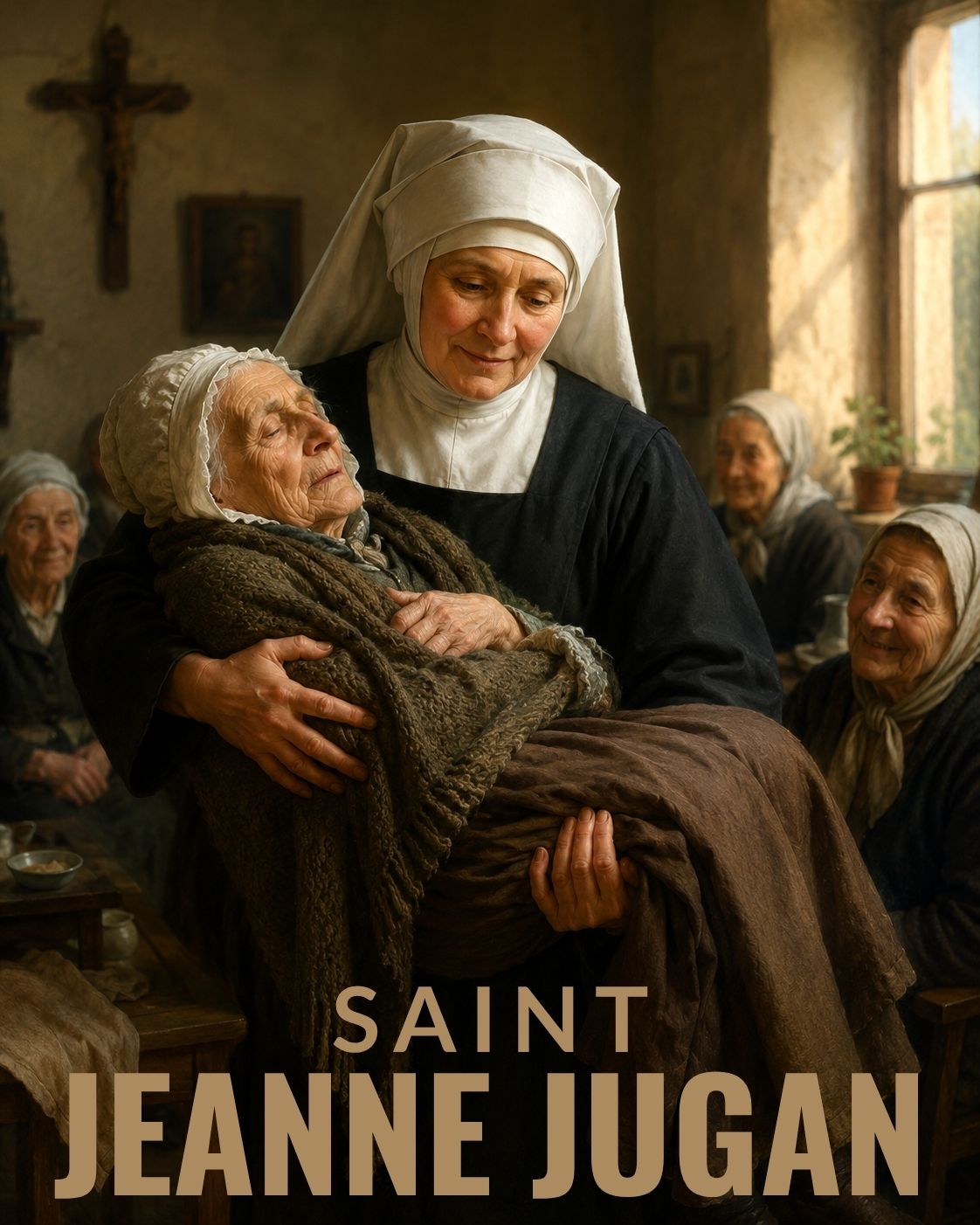
Saint Jeanne Jugan: The Humble Founder Who Housed the Forgotten Elderly
Saint Jeanne Jugan built an entire religious congregation around one spontaneous act of kindness. Born into poverty during the chaos of the French Revolution, she eventually carried a blind, abandoned woman into her own home and never looked back. Her story reveals how genuine compassion, paired with quiet persistence, can grow into a worldwide movement of care.
Saint Jeanne Jugan’s Feast Day Falls on 30 August
The Catholic Church honours Saint Jeanne Jugan every year on 30 August, one day after the actual anniversary of her death in 1879. Pope John Paul II beatified her on 3 October 1982, and Pope Benedict XVI later canonised her on 11 October 2009. During her canonisation, Benedict praised how the Beatitudes shaped her spirit of hospitality and unlimited trust in Providence.
A Childhood Shaped by Revolution and Loss
Jeanne Jugan was born on 25 October 1792 in Cancale, a port town in Brittany, France. She grew up as the sixth of eight children amid intense political and religious upheaval. Her father, a fisherman, was lost at sea when Jeanne was only four years old, leaving her mother to raise the family largely alone. Despite widespread anti-Catholic persecution at the time, her mother secretly ensured the children still received religious instruction.
Jeanne worked as a shepherdess while still very young and learned to knit and spin wool for income. At sixteen, she became a kitchen maid for the Viscountess de la Choue, who regularly brought her along while visiting the sick and poor throughout the region.
Choosing Service Over Marriage
Saint Jeanne Jugan turned down two separate marriage proposals from the same suitor, telling her mother that God had other plans for her life. At twenty-five, she became an Associate of the Congregation of Jesus and Mary, founded by Saint John Eudes. She then spent six years working as a nurse at the town hospital in Saint-Servan, until declining health eventually forced her to stop.
Afterward, Jeanne worked twelve years as a servant for a fellow member of the Eudist Third Order. Together, the two women discovered a shared spiritual calling and began teaching catechism while caring for the town’s poorest residents.
The Moment That Changed Everything
In 1837, Jeanne and an older companion, Françoise Aubert, rented part of a small cottage alongside a seventeen-year-old orphan named Virginie Tredaniel. Together, these three women formed a small community devoted to prayer, catechesis and helping the poor. Then, during the winter of 1839, everything shifted dramatically when Jeanne encountered Anne Chauvin, an elderly woman who was blind, partially paralysed and completely alone.
Without hesitation, Jeanne carried Anne home and gave her own bed away, choosing to sleep in the attic instead. This single act of mercy quickly expanded as Jeanne took in more elderly women needing care, eventually renting larger spaces to house dozens of residents.
Founding the Little Sisters of the Poor
This growing mission became the foundation for what is now known as the Little Sisters of the Poor. Saint Jeanne Jugan wrote a simple Rule of Life for her community, and the sisters went door-to-door daily, begging for food, clothing and money on behalf of their elderly residents. By 1850, more than one hundred women had joined her congregation and additional homes opened steadily throughout the following decade.
The congregation soon expanded well beyond France, reaching England in 1851 and establishing five communities across the United States between 1866 and 1871. By 1879, the movement Jeanne started had grown to include 2,400 Little Sisters worldwide.
Forced Into Obscurity, Later Vindicated
Despite her remarkable achievements, Jeanne was forced out of leadership when a local bishop appointed Abbé Auguste Le Pailleur as Superior General instead. He assigned her exclusively to street begging before eventually sending her into twenty-seven years of quiet retirement. Remarkably, most sisters never even realised Jeanne herself had founded their congregation.
Church officials finally investigated and dismissed Le Pailleur in 1890, over a decade after Jeanne’s death, which let her true role as foundress become publicly recognised at last. St Jeanne Jugan died on 29 August 1879, at eighty-six years old, having spent four decades dedicated entirely to serving the elderly poor.
A Legacy That Still Cares for the Vulnerable
Today, pilgrims can visit her birthplace and the motherhouse at Saint-Pern, where she spent her final years. Readers interested in similar charitable founders can explore our Catholic Saints archive for further profiles. For additional historical detail, the Little Sisters of the Poor’s official history offers valuable further reading.
Saint Jeanne Jugan’s legacy proves that even history’s quietest acts of compassion can eventually transform care for the world’s most vulnerable people.








Leave a Reply