
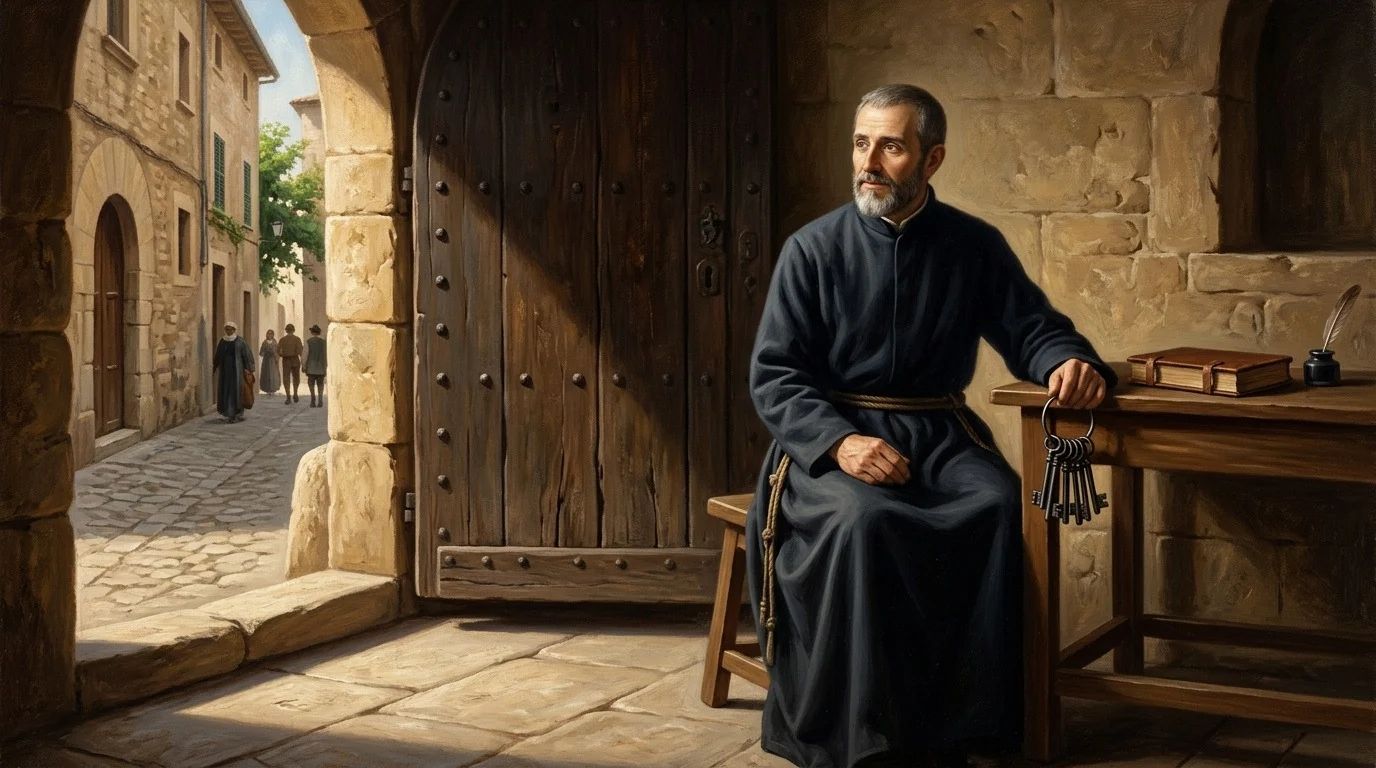
Title: Saint Alphonsus Rodriguez: The Holy Doorkeeper of Majorca
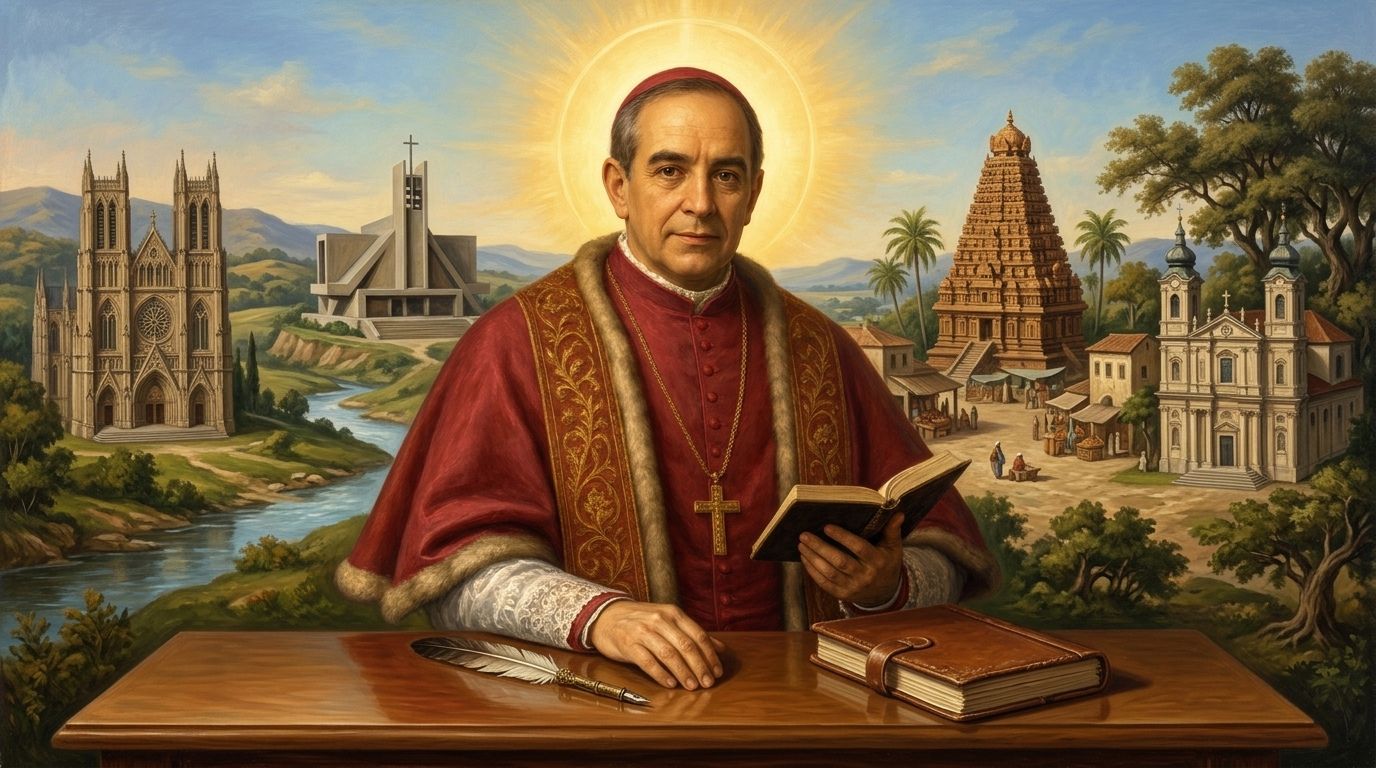
Image credit: Public domain, via Wikimedia Commons
Saint Alphonsus Rodriguez Found Holiness Behind a Humble Door
The Church honours Saint Alphonsus Rodriguez on October 30. The Jesuits, however, keep his feast on October 31, the day he died in 1617. Moreover, he is the patron saint of Jesuit lay brothers, doorkeepers and the island of Majorca. Therefore, this memorial offers a fine lesson in humility. His story proves that a quiet life of service can reach as far as any grand mission.
Alphonsus was born in Segovia, Spain, on July 25, 1532, though some sources give 1531 or 1533. His father was a wool merchant, and Alphonsus was the third of eleven children. As a boy, he met the Jesuit Peter Faber, a companion of Saint Ignatius of Loyola. Faber stayed at the family home and prepared Alphonsus for his First Communion. Thus, the boy first met the Society of Jesus. Later, he studied at the Jesuit college in Alcalá.
However, his studies ended early. His father died and the family business needed a leader. Therefore, Alphonsus returned home and took charge of the shop. In time, he married Maria Suárez and they had children. At first, life seemed secure. Yet sorrow followed quickly. His wife and his children died one after another, and the business began to fail. Consequently, he lost the life he had built.
Grief drove him toward God. After the death of his third child, Alphonsus began to pray more deeply. He also began to consider religious life. He wanted to join the Jesuits, so he asked to enter the Society. However, the superiors turned him down, because he lacked the education that a priest needs. Even so, he did not give up. He studied Latin as best he could and asked again.
Finally, in 1571, the Jesuits accepted him as a lay brother. He was almost forty years old. Soon afterwards, his superiors sent him to the college of Montesión in Palma, on the island of Majorca. There they gave him the humble task of doorkeeper. He held that post for about forty-five years. Thus, he opened the door to students, merchants, nobles and beggars alike.
Despite his simple role, many people sought him out. Visitors came to his small lodge for advice and prayer. In addition, he spent long hours in silence and meditation. Many people thought he had spiritual gifts and some reported visions and healing. Meanwhile, he wrote down his experiences at the request of his superiors. After his death, the Jesuits published these writings as his Spiritual Works.
His most famous friend was Saint Peter Claver. Claver arrived at Montesión as a young Jesuit student around 1605. He soon befriended the old porter, and Alphonsus became his spiritual guide. Eventually, Alphonsus encouraged him to go to the missions in South America. Claver later became the apostle of enslaved Africans in Cartagena. Some sources say he baptised about three hundred thousand people. Thus, the doorkeeper helped to change many lives.
Alphonsus grew weak in his last years. He died on October 31, 1617, at about the age of eighty-five. Church and civic leaders attended his funeral. In 1626, the Church declared him Venerable, and in 1633 Majorca named him its patron. Pope Leo XII beatified him in 1825. Finally, Pope Leo XIII canonised him in 1888, together with his friend Peter Claver. The poet Gerard Manley Hopkins, a Jesuit, wrote a sonnet to honour the occasion.
What can we learn from him? First, loss does not end a life of purpose. Alphonsus lost his wife and children, yet he found a new calling. Second, small tasks have great value. He answered the door with kindness for decades. In addition, patience can turn rejection into opportunity. His story reminds us that God often works through hidden people. To learn more, read the Catholic Encyclopedia and the Jesuit.
In conclusion, Saint Alphonsus Rodriguez shows that holiness can live behind a simple door. He faced grief, rejection and years of quiet labour. Likewise, he reminds us that no job is too small for God. Therefore, let us ask for his prayers. May we, too, welcome every visitor as Christ himself.
Leave a Reply