
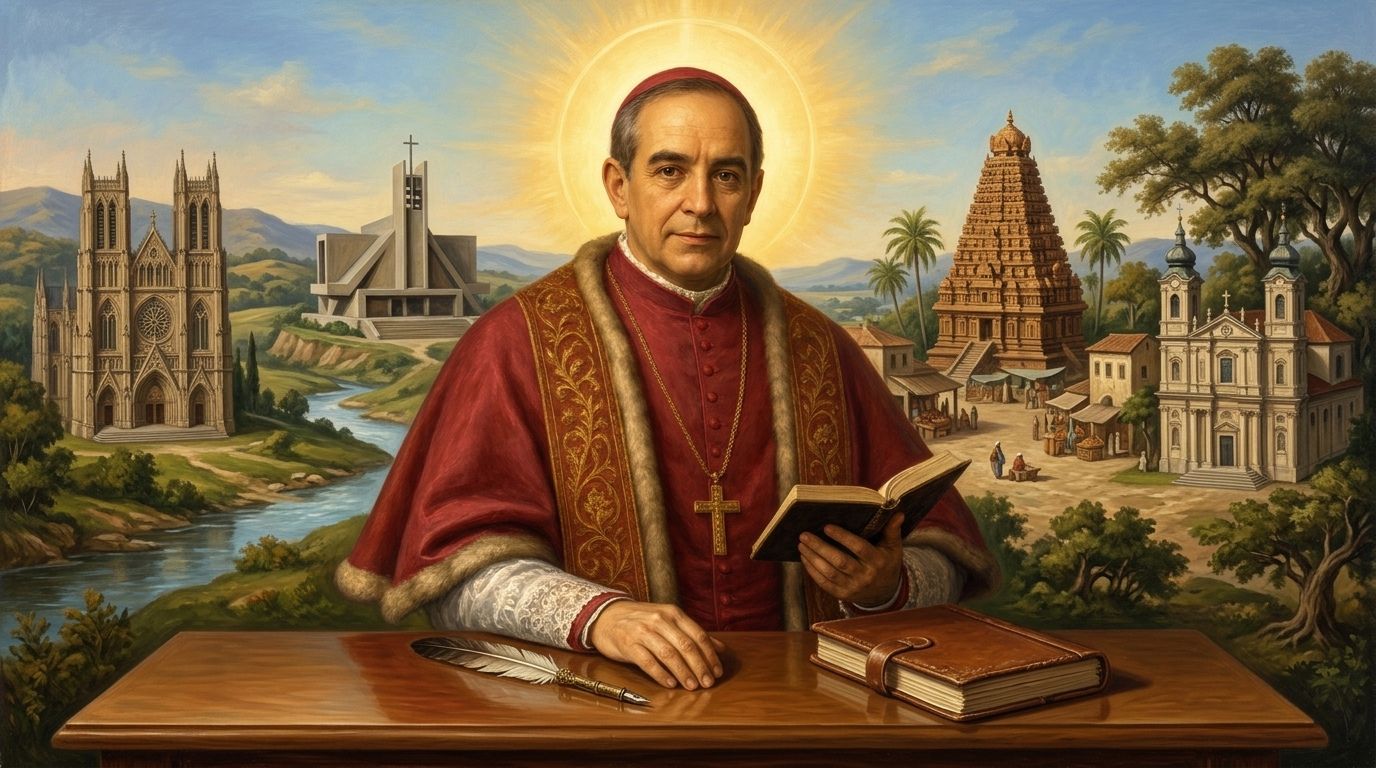
Title: Saint Anthony Mary Claret: Weaver, Missionary and Archbishop
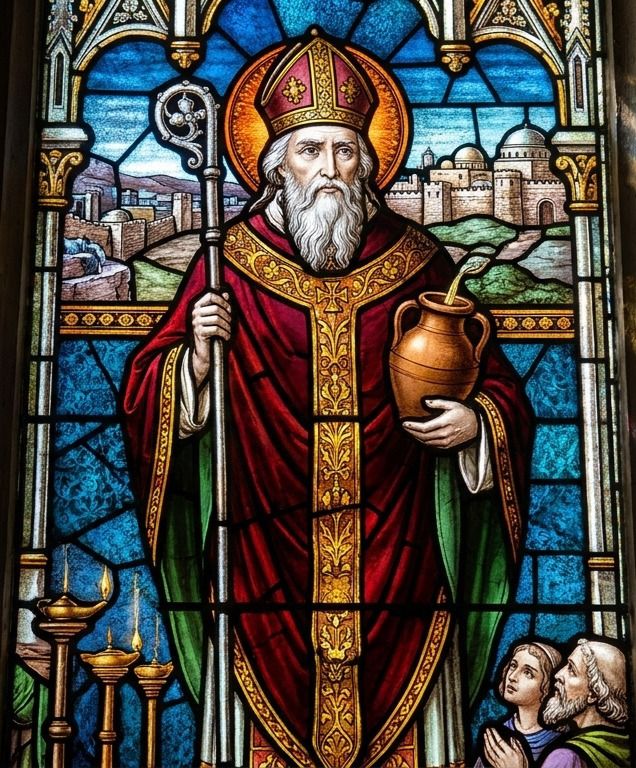
Image credit: Public domain, via Wikimedia Commons
Saint Anthony Mary Claret Wove a Life of Tireless Mission
The Church honours Saint Anthony Mary Claret on October 24. Indeed, this optional memorial marks the day he died in 1870. Before the 1969 revision of the calendar, many places kept it on October 23. Moreover, the saint’s story reaches from a Catalan weaving workshop to the palace of a queen. Therefore, his life offers rich inspiration for believers today.
Saint Anthony Mary Claret was born on December 23, 1807, in Sallent, in Catalonia, Spain. His father was a weaver and Anthony learned the trade as a boy. As a young man, he worked in the textile industry in Barcelona. However, he felt a deeper call. He began to study for the priesthood and for a time he hoped to become a Jesuit. Consequently, he left the loom behind and followed God’s call.
He received ordination as a priest on June 13, 1835, the feast of Saint Anthony of Padua. Afterwards, he travelled throughout Catalonia as a preacher. In addition, he gave parish missions and heard countless confessions. He also understood the power of the printed word. As a result, he wrote and published many books and pamphlets and he founded a religious publishing house. Thus, he reached people who never attended his sermons.
Anthony did not work alone. On July 16, 1849, he gathered five priests in Vic and founded the Missionary Sons of the Immaculate Heart of Mary. People now call them the Claretians. Their goal was simple. They wanted to proclaim the Gospel wherever the need was greatest. Today, the Claretians serve in about seventy countries across the world. Furthermore, their members still preach, teach and publish.
Then came an unexpected turn. Queen Isabella II asked Pope Pius IX to appoint him archbishop of Santiago de Cuba, a diocese that had no bishop for fourteen years. He accepted reluctantly and received his episcopal ordination in Vic in October 1850. At that time, he added the name Mary to his own. In Cuba, he visited parishes on horseback, reformed the clergy and helped couples to regularise their marriages. Moreover, he spoke out against slavery.
His work in Cuba also produced new institutions. With Maria Antonia París, he founded the Religious of Mary Immaculate, the first women’s institute on the island. In addition, he opened schools and encouraged care for the poor. However, his zeal made enemies. Opponents plotted against him, and an assassin once attacked him. Nevertheless, he forgave his enemies and continued to serve. In 1857, the queen recalled him to Spain.
Back in Spain, he became the queen’s confessor. Yet he refused to live a life of luxury at court. Instead, he lived simply and spent his free time with the poor. In addition, he founded a library, a museum, schools and a laboratory. He also helped to revive the Catalan language. Meanwhile, his enemies in politics grew stronger. Finally, the revolution of 1868 deposed Isabella and Anthony followed her into exile.
In 1869, he travelled to Rome for the First Vatican Council. There he defended the doctrine of papal infallibility. Afterwards, enemies continued to harass him, so he withdrew to the Cistercian abbey of Fontfroide in France. He died there on October 24, 1870, at the age of sixty-two. In 1897, the Church moved his remains to Vic, where people found his heart incorrupt. Pope Pius XI beatified him in 1934, and Pope Pius XII canonised him in 1950.
Today, the Church invokes him as a patron of weavers and the Catholic press. To learn more, visit the Catholic World Report.
In conclusion, Saint Anthony Mary Claret shows how a simple craftsman can change a continent. He used his gifts for preaching, writing and service. Likewise, he reminds us that every honest trade can become a path to God. Therefore, let us ask for his prayers on this memorial. May we, too, spread the Gospel with courage and joy.
Leave a Reply