
Bishop, Reformer and Hermit Who Gave Up Power for the Gospel
The Church honours Saint Wolfgang of Regensburg on October 31. Indeed, the same date is Halloween, the eve of All Saints. Therefore, many people overlook this great bishop. However, his feast deserves attention, because he reformed the Church, taught a future saint and gave up land for the Gospel. Moreover, the people of Central Europe have loved him for a thousand years.
Wolfgang was born in Swabia, in south-western Germany, in the early tenth century. Sources give the year as 924 or 934. As a boy, he studied at the abbey school of Reichenau. There he met Henry, a young nobleman who later became Archbishop of Trier. The two men became close friends. Moreover, Wolfgang followed Henry to Trier, where he taught at the cathedral school and helped to reform the clergy.
After Archbishop Henry died in 964, Wolfgang changed course. He joined the Benedictine monks at Einsiedeln Abbey, in what is now Switzerland. In 968, Saint Ulrich of Augsburg ordained him a priest. Soon afterwards, the abbey chose him as director of its school. He also served the poor and lived a simple life. Thus, he showed that learning and humility can go together.
Next, the Church sent him on a mission. Around 971, he went to Hungary to preach to the Magyars. Wars had troubled the region for many years and few people welcomed him. Consequently, his work brought little immediate success. Nevertheless, Grand Prince Géza later accepted baptism, and his son became Saint Stephen of Hungary. Therefore, Wolfgang’s efforts may have helped to prepare the ground.
Then, in 972, Emperor Otto II appointed him bishop of Regensburg in Bavaria. He took office at Christmas of that year. At first, he did not want the job, but he accepted it as a duty. As bishop, he reformed the clergy and the monasteries. In particular, he brought the monk Ramuold from Trier to lead the Abbey of Saint Emmeram. In addition, he cared for the poor and earned the title of almoner. Thus, his people trusted him.
Wolfgang also taught the future Emperor Henry II, who later became a saint himself. The bishop’s lessons shaped the young ruler’s sense of duty. Furthermore, Wolfgang made a costly choice for the good of the Church. When Emperor Otto II proposed a new diocese in Prague, Wolfgang agreed to give up part of his own territory. Consequently, Saint Adalbert became the first bishop of Prague. Few leaders give up land so willingly.
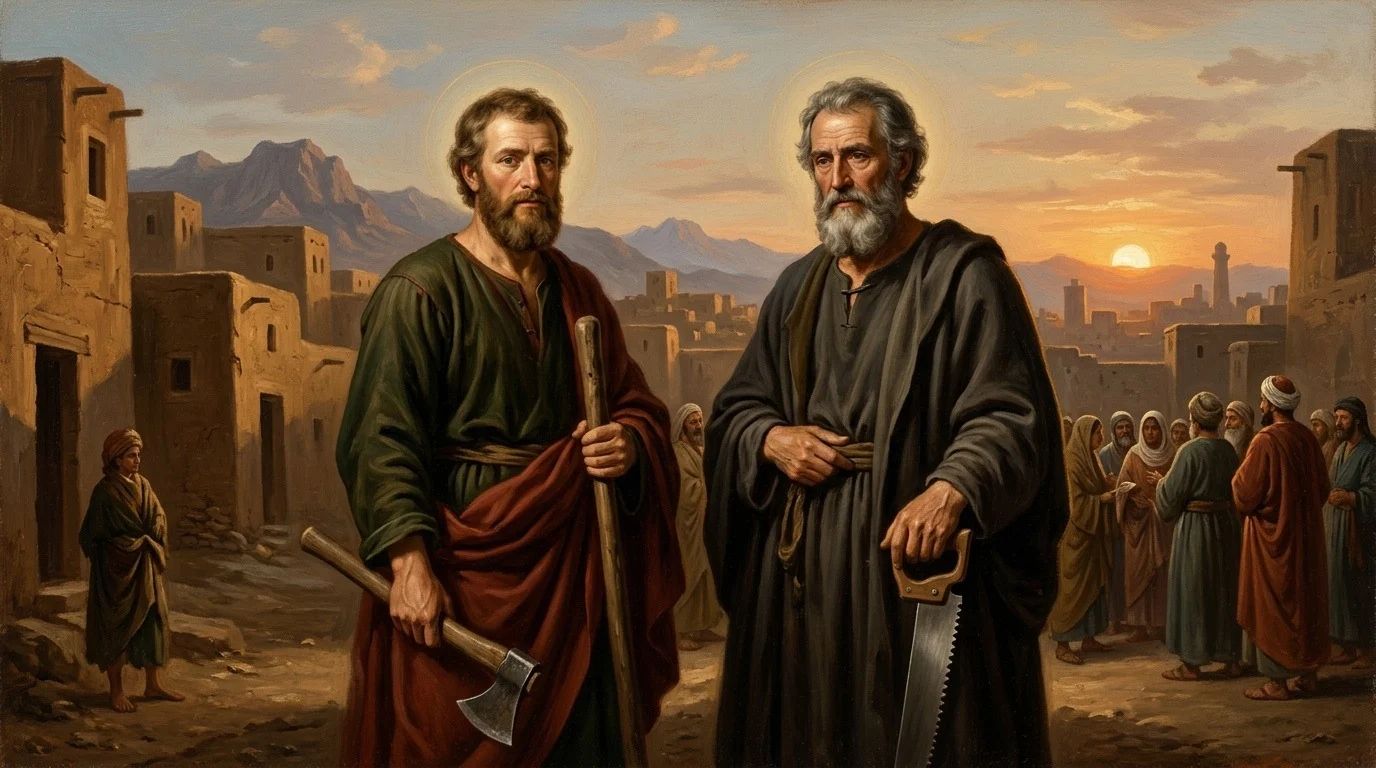
After some years, Wolfgang longed for silence. A conflict with local nobles and his desire for prayer pushed him to leave his office. He withdrew to a lonely place near a lake in the Salzkammergut region of Austria. There he lived as a hermit. According to legend, he threw an axe from a hillside and built his chapel where it landed. Later, a hunter found him and the people of Regensburg persuaded him to return.
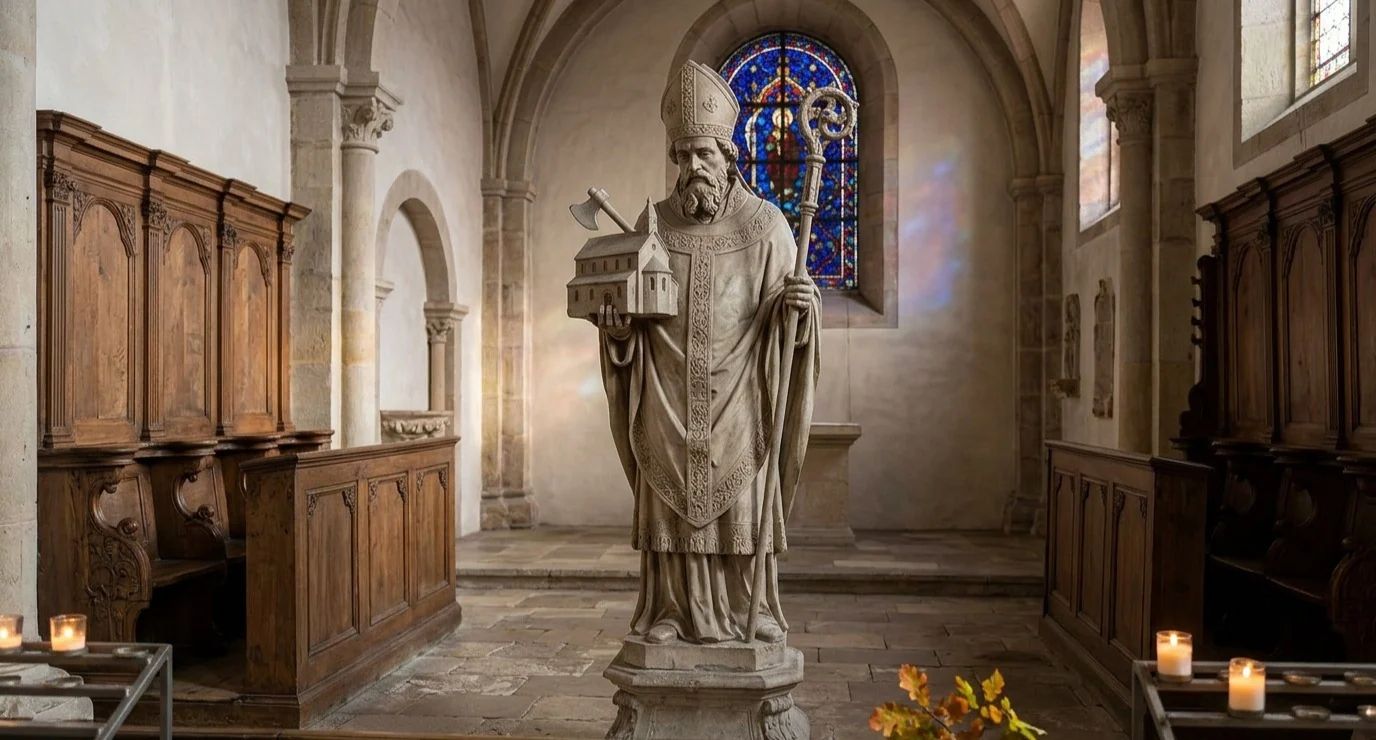
Other legends add colour. One tale says that Wolfgang tricked the devil into helping to build a church. The devil agreed to work in return for the first soul to enter the building. However, Wolfgang drove a wolf inside, and the devil fled in anger. Historians treat these stories as legends. Even so, they show how deeply people loved him. Artists often show him with an axe, a church or a crosier.
In 994, Wolfgang travelled along the Danube toward Pöchlarn in Austria. On the way, he fell ill and asked to rest in the chapel of Saint Othmar at Pupping, near Linz. He died there on October 31, 994. Friends carried his body to Regensburg and the Church buried him in the crypt of Saint Emmeram. After reports of many miracles, Pope Leo IX canonised him in 1052. Today, the Church invokes him as patron of carpenters, woodcutters and stroke victims.
To learn more, read the Franciscan Media and the EWTN News.
In conclusion, Saint Wolfgang of Regensburg shows that service matters more than status. He taught, reformed and gave up land for the good of the Church. Likewise, he knew when to seek silence. Therefore, let us ask for his prayers on this feast. May we, too, serve with courage and humility.


Leave a Reply