
The Oldest Bishop of the Early Church Who Lead Past His One Hundredth Year
The Church honours Saint Narcissus of Jerusalem on October 29, the Roman Martyrology lists him on that day. Meanwhile, the Eastern Orthodox Church keeps his memory on August 7. Moreover, this early bishop led the Church in the Holy City at an astonishing age. Therefore, his story offers a rare glimpse into Christian life in the second and third centuries.
First, consider his origins. Tradition says that Narcissus was born around the year 99, probably in Greece. Few details survive about his youth. However, we know that the Christians of Jerusalem elected him their bishop when he was already at least 80. He became the thirtieth bishop of that city around the year 180. Moreover, he followed the great line of leaders that began with Saint James the Just. Thus, he carried a heavy inheritance.
Narcissus also played a role in one of the early Church’s great debates. Christians in different regions disagreed about the proper date of Easter. Around the year 195, he and Bishop Theophilus of Caesarea led a council of the bishops of Palestine. The assembly decided that Easter should always fall on a Sunday. In addition, the council reflected the practice of the Church of Rome. Consequently, Narcissus helped to shape the way Christians celebrate Easter today.
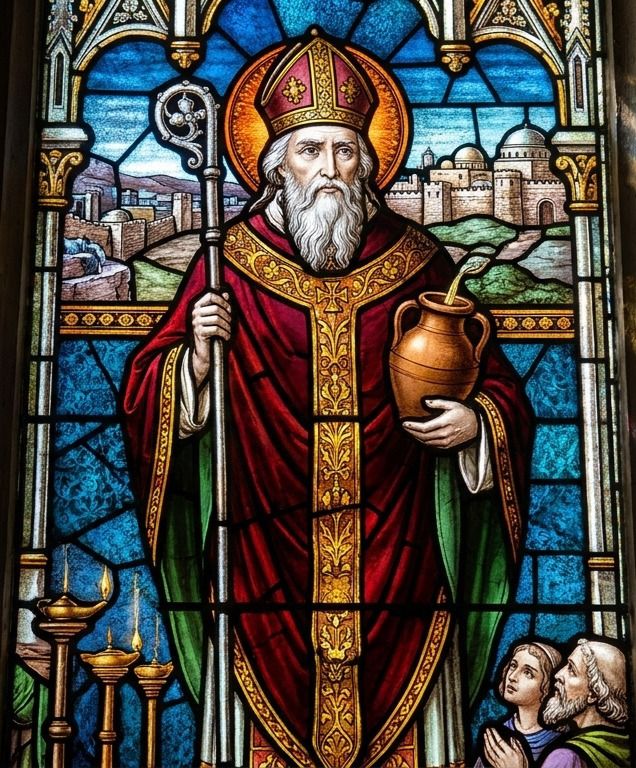
Next comes the famous miracle. The historian Eusebius records that, one Easter Vigil, the deacons ran out of oil for the church lamps. The people feared that the ceremony would fall into darkness. Therefore, Narcissus told them to draw water from a nearby well. He blessed the water, and the deacons poured it into the lamps. According to Eusebius, the water turned into oil. Believers kept some of that oil as a memorial for many years.
However, Narcissus also suffered a painful trial. Three men in his community resented his strict discipline. As a result, they accused him of a terrible crime. Eusebius does not say what the crime was. Moreover, the men swore solemn oaths and called down curses on themselves if they lied. The bishop knew that he was innocent, but he did not want to quarrel. Instead, he left the city and withdrew to the desert to live in prayer.
In his absence, the neighbouring bishops appointed three successors in turn. Eusebius reports that the accusers soon met misfortune, and tradition says that one died in a fire, one fell ill and one lost his sight. Meanwhile, Narcissus lived quietly for years, and many thought he had died. Finally, during the term of the third successor, Gordius, he returned to Jerusalem. The faithful welcomed him with great joy, and the truth about the false charges became clear. Thus, his patience brought fruit.
Because of his age, Narcissus could not carry the full duties of a bishop. Therefore, he asked Saint Alexander, a bishop from Cappadocia who was visiting Jerusalem, to share his work. Historians regard this as the first recorded case of a coadjutor bishop. In a letter written around the year 212, Alexander says that Narcissus was then about one hundred and sixteen years old. Even so, the old bishop kept praying and urging Christians toward unity and peace.
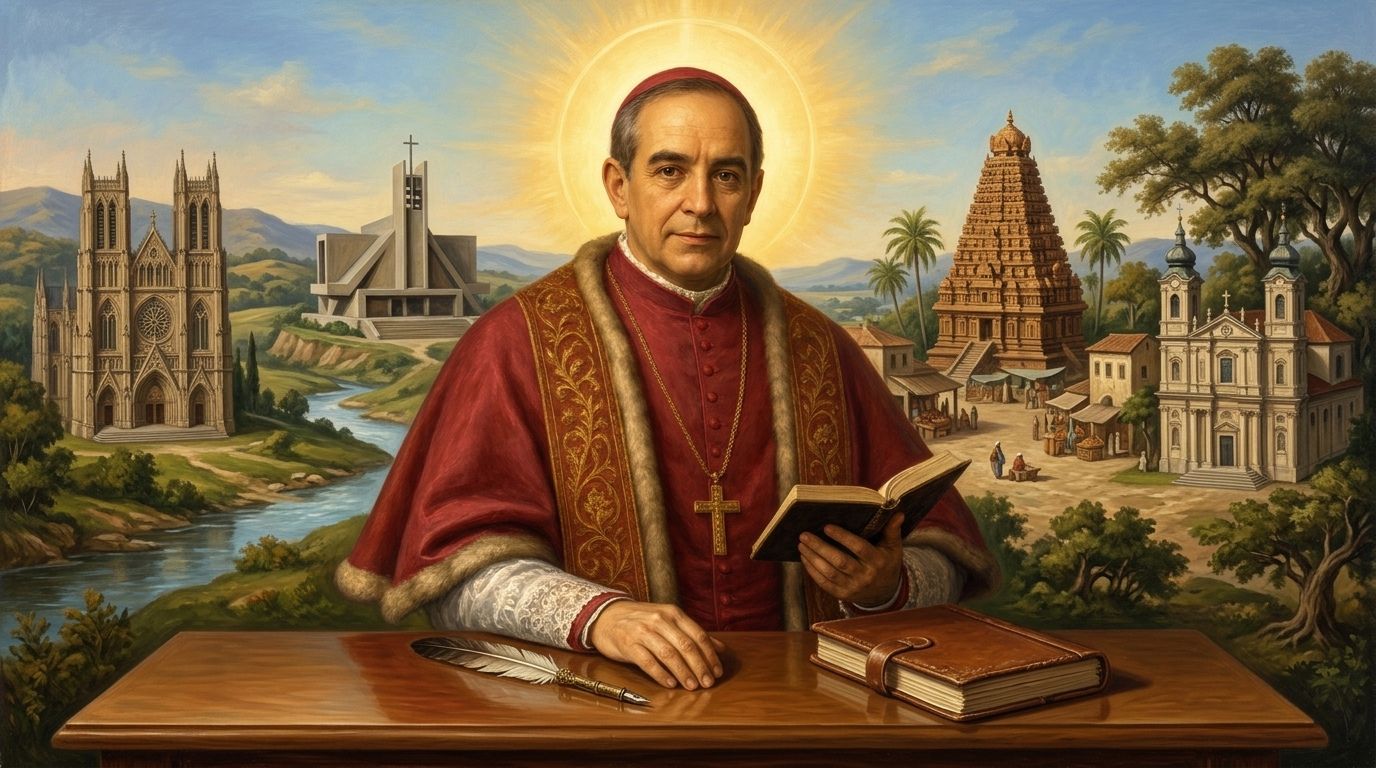
Narcissus died around the year 215, still in his post. Eusebius and later writers praised him for his holiness. Today, the Church invokes him as a patron of the aged. In art, he often appears as a bishop with large jars or a pitcher of water, which recalls the miracle of the oil. Some images also show a blossoming thistle. To learn more, read the EWTN and the America Needs Fatima.
In conclusion, Saint Narcissus of Jerusalem shows that age need not stop service. He faced false accusations, yet he forgave and waited. Likewise, he guided the Church in the Holy City for decades. Therefore, let us ask for his prayers on this memorial. May we, too, trust God in times of injustice and old age.






Leave a Reply