
The Apostles Who Preached Persia, Shared One Mission and One Feast
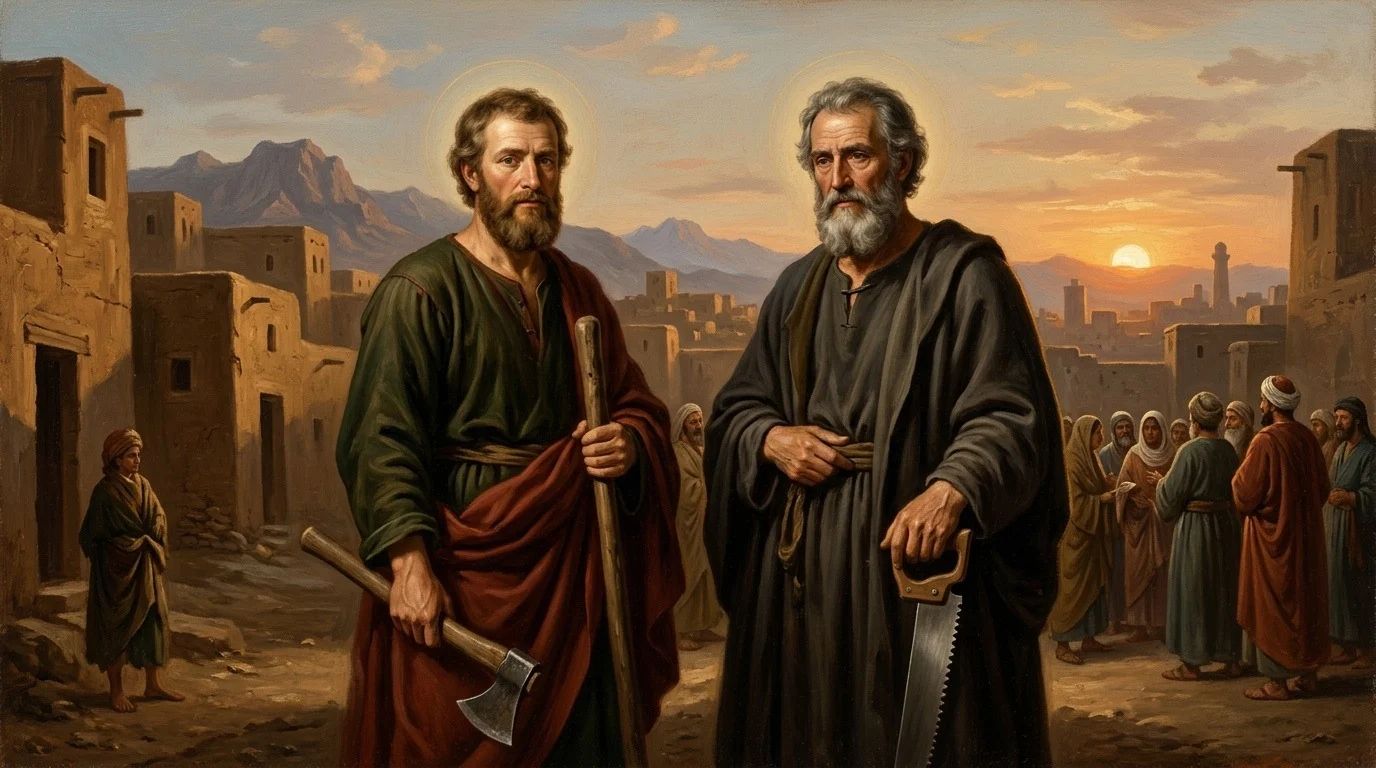
The Church celebrates the feast of Saints Simon and Jude on October 28. Both men belonged to the Twelve Apostles. Moreover, the Roman Calendar joins them on a single day, because tradition says they preached together and died together. Therefore, believers honour them as a pair. Yet each man has a distinct story and each offers a clear lesson for today.
First, consider Simon. The Gospels call him Simon the Zealot and Matthew and Mark call him the Cananaean. This title may mean that he belonged to the Zealot movement, which resisted Roman rule. Alternatively, it may simply describe his burning zeal for the Jewish law. Either way, he is not Simon Peter. Furthermore, the New Testament says almost nothing more about him. He appears only in the lists of the apostles, including the list in the Acts of the Apostles.
Next, consider Jude, also known as Thaddaeus. Luke’s Gospel and the Acts of the Apostles call him Judas, son of James. In addition, the Gospel of John records his question to Jesus at the Last Supper. He asked why Jesus would show himself to the disciples and not to the world. Tradition also names him the author of the Letter of Jude. In it, he urges believers to stay faithful. Thus, he left a short but powerful message.
After Pentecost, the New Testament goes quiet about both men. However, later traditions fill in the gaps. According to some accounts, Simon preached in Egypt and Libya, while Jude preached in Mesopotamia and Armenia. Eventually, they met in Persia, where they worked together. Because these stories come from later writings, historians treat them with caution. Nevertheless, the idea that they shared a mission has endured for centuries.
Then came the martyrdom. According to tradition, pagan priests demanded that the two apostles offer sacrifice to the sun. They refused and an angry crowd attacked them. As a result, both men died for the faith. Accounts of their deaths differ. Many sources say Simon was sawn in half, while others say he was crucified. Likewise, most say Jude was beaten with a club and then beheaded. For this reason, artists show Simon with a saw and Jude with a club or an axe.
Their relics also have a story. According to tradition, believers brought their remains to Rome between the 7th and 8th centuries. Today, the relics rest in Saint Peter’s Basilica. The Vatican says that the faithful have honoured them there since October 27, 1605. The tomb lies beneath the altar of Saint Joseph in the left transept. Meanwhile, the cities of Toulouse and Reims in France also claim some relics.
The Church also honours them as patrons. Jude is famous as the patron of hopeless cases. This reputation grew because his name resembles that of Judas Iscariot, so many believers hesitated to ask for his help. As a result, they turned to him only as a last resort, and many reported answered prayers. Simon, on the other hand, is the patron of sawyers and tanners. In addition, the Church of England keeps a festival in their honour on October 28.
What can we learn from Saints Simon and Jude? First, they teach us to accept a hidden life. They did not write famous Gospels or lead great councils. Even so, they served Christ with courage. Second, they teach us the value of teamwork. Ordinary people can bring the Gospel to new places when they work together. Third, they show that zeal and gentleness can live in the same heart.
To honour them, you might pray a short prayer on the feast. You can also visit a church that bears their name. In addition, you can read the Letter of Jude, which takes only a few minutes. You can pray our Novena to Saint Jude Thaddeus.
In conclusion, Saints Simon and Jude remind us that mission is a shared task. They served quietly, and they died bravely. Likewise, they show that faith can bear fruit even when history remembers few details. Therefore, let us ask for their prayers. May we, too, stay faithful in both hope and hardship.
Leave a Reply