
St. Anthony of Padua: The Saint Who Preaches to Fish and Finds Your Keys
From Wealthy Lisbon to Franciscan Poverty
Fernando Martins de Bulhões had every advantage. Born in 1195 in Lisbon, Portugal, he came from a wealthy, noble family. They arranged excellent education for him at the local cathedral school. At 15, he entered the Canons Regular of the Order of the Holy Cross at the Abbey of St. Vincent near Lisbon. This was a respectable, comfortable religious life—prayer, study, and community without excessive hardship.
But Fernando wanted more. In 1212, he transferred to the motherhouse at Coimbra, then Portugal’s capital, to study theology and Latin without the distraction of frequent family visits. After ordination, he became guestmaster at 19, managing the abbey’s hospitality. It was a position of trust and relative ease.
Then the Franciscans arrived.
They settled in a small hermitage outside Coimbra dedicated to St. Anthony of Egypt. Fernando watched them with growing fascination. Their simplicity, their evangelical poverty, their complete abandonment to God’s will—these attracted him profoundly. When news came that five Franciscans had been martyred in Morocco, their bodies ransomed and returned to Coimbra, Fernando was deeply moved. These men had died for Christ. He wanted to join them.
He received permission to leave the Canons Regular. Upon admission to the Franciscans, he took the name Anthony, after the hermitage chapel’s patron. The wealthy canon had become a poor friar. The comfortable life was exchanged for one that would soon include shipwreck, illness, and extraordinary grace.
The Sermon That Changed Everything
Anthony’s missionary dream took him to Morocco. There, he fell desperately ill. The return voyage was blown off course, landing in Sicily instead of Portugal. From Sicily, he traveled to Tuscany, where local friars assigned him to a rural hermitage near Forlì, considering his poor health.
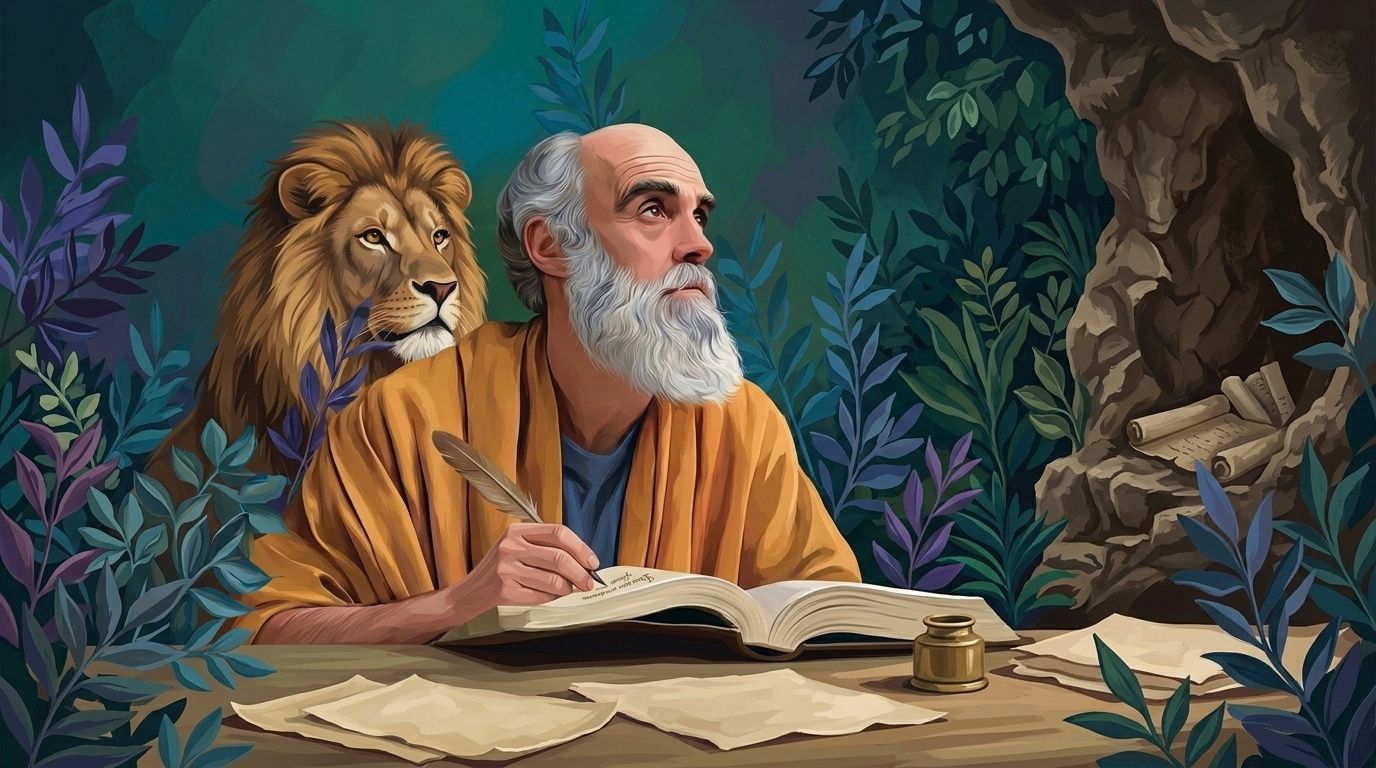
He spent his time praying and studying in a cave cell. He was recovering, quiet, almost invisible.
Then, in 1222, visiting Dominican friars came to Forlì for an ordination ceremony. A misunderstanding arose over who would preach. The Dominicans, famous for their preaching, assumed the Franciscans would provide the homilist. The Franciscans assumed the Dominicans would. The hermitage superior, seeing no other option, turned to Anthony. He suspected this quiet, studious friar might be capable. Anthony objected but was overruled.
What followed astonished everyone. Anthony preached with such eloquence, such scriptural depth, such arresting delivery that both Franciscans and Dominicans were deeply moved. News traveled fast. Soon, Francis of Assisi himself heard about this remarkable preacher.
Francis had distrusted theological study in his order, fearing it would lead to pride and abandonment of poverty. In Anthony, however, he found something different: a kindred spirit who shared his vision while possessing the intellectual gifts to teach those seeking ordination. In 1224, Francis entrusted the order’s studies to Anthony’s care.
The Book, the Thief, and a Famous Devotion
Anthony valued his book of psalms. It contained his personal notes and comments for teaching students. In an age before printing, every book was hand-copied and precious. For a Franciscan, bound by poverty, losing such a resource was genuinely painful.
A novice decided to leave the order. He stole Anthony’s psalter. When Anthony discovered the theft, he did not seek punishment or confrontation. He prayed. He asked God that the book be found or returned.
The prayer worked—dramatically. The thief not only returned the book but came back to the Order himself. This incident, recorded during Anthony’s lifetime, became the foundation of a devotion that would spread across centuries. Today, Anthony is invoked worldwide as the patron saint of lost articles. The stolen Psalter is said to be preserved in the Franciscan friary in Bologna.
The story reveals something essential about Anthony. He was not merely asking for a book. He was asking for a soul. And God, it seems, honoured both requests.
Preaching That Moved Fishes—and Heretics
Anthony’s preaching gift was legendary. He taught occasionally at Montpellier and Toulouse in southern France, but his true element was the pulpit. His method combined allegory, symbolic interpretation of Scripture, and what historian Sophronius Clasen called “the grandeur of Christianity.” The uneducated understood him. The learned were challenged by him.
One famous episode occurred in Rimini, where heretics refused to listen. Anthony went to the shoreline and began preaching to the Fishes. According to the account, a great school of fish gathered, listening. The townspeople, seeing this, flocked to hear him too. The story is not about instructing fishes—it’s about God’s glory, the angels’ delight, and Anthony’s own frustrated heart finding expression.
Another Rimini story involves the “miracle of the Mule.” A heretic challenged Anthony to prove Christ’s real presence in the Eucharist. He presented a starving mule with fresh fodder and showed Anthony the monstrance. The mule ignored the food and knelt before the Blessed Sacrament. The Tempietto of Sant’Antonio in Rimini marks the spot.
At a dinner with heretics who served him poisoned food, Anthony confronted them. They challenged him to eat, citing Mark 16:18 about believers drinking deadly things without harm. He blessed the food, ate it, and suffered nothing.
These stories, whether historical or hagiographical, reveal how Anthony’s contemporaries perceived him: a man whose faith was so tangible that even animals and poison recognized its power.
Doctor of the Church and Incorrupt Tongue
Anthony died young. In 1231, at age 35, he fell ill with ergotism. He retreated to a woodland hermitage at Camposampiero, living in a room built under a walnut tree. He died on June 13, 1231, at the Poor Clare monastery at Arcella, near Padua, while returning to the city.
His canonization was extraordinarily swift. Pope Gregory IX declared him a saint on May 30, 1232—less than one year after his death. It was one of the fastest canonizations in Church history, reflecting the widespread recognition of his holiness.
But the most remarkable confirmation came later. When his body was exhumed 30 years after death, it had turned to dust. Yet his tongue was found totally incorrupt, glistening as if still alive. The relic was displayed in a large reliquary. This was interpreted as a sign of his gift of preaching—the tongue that had spoken Scripture so powerfully remained preserved when everything else decayed.
In 1946, Pope Pius XII declared Anthony a Doctor of the Church, giving him the title Doctor evangelicus—”Evangelical Doctor.” Pope Benedict XVI later explained that “the freshness and beauty of the Gospel emerge from these writings.” Anthony’s sermons, collected as Sermons for Feast Days, were hailed by Pope Gregory IX as a “jewel case of the Bible.” The pope called Anthony the “Ark of the Testament.”
The Saint Who Finds What You Lost
Today, Anthony’s popularity exceeds almost every other saint. He is patron of Padua, patron of Portugal and its former empire, and—most famously—patron of lost articles. The prayer is universal: “St. Anthony, please come around, something is lost and must be found.”
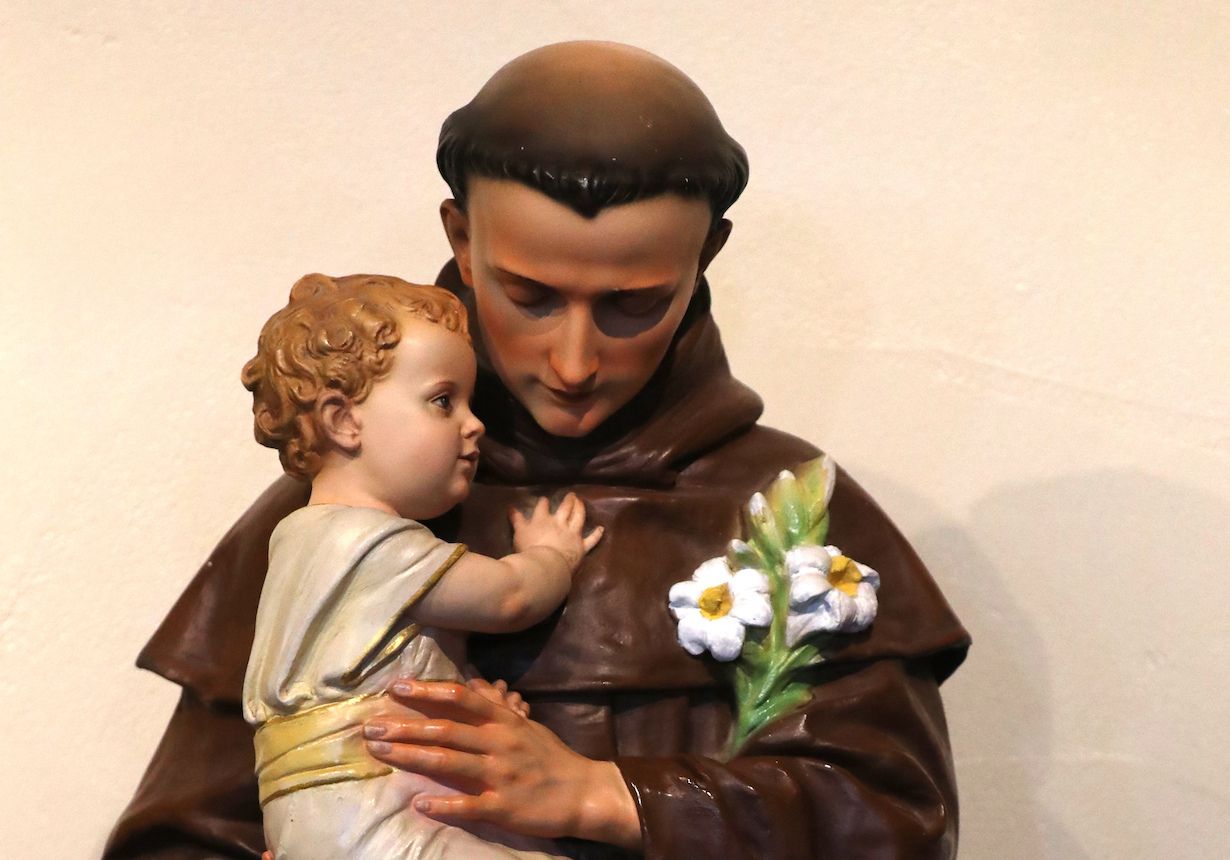
But his intercession extends beyond car keys and missing wallets. He is credited with miracles involving lost people, lost spiritual goods, and lost hope. His iconography—holding the Infant Jesus, carrying a book, sometimes with a lily—appears in churches, homes, and keychains across the world.
In Lisbon, his feast day, June 13, is a municipal holiday with parades and celebrations. Brazil, depict him as a marriage saint, with legends of him reconciling couples. In Boston’s North End, Italian immigrants have held an annual feast since 1919. In New York’s Greenwich Village, a traditional novena of 13 Tuesdays precedes his feast day, culminating in a street fair and procession.
San Antonio, Texas, bears his name because Spanish missionaries found a Payaya Indian community on his feast day in 1692. The mission founded there became one of America’s largest cities. From Albania to Sri Lanka, from the Philippines to Poland, Anthony’s devotion spans continents and cultures.
What Anthony Teaches Us
His story is full of surprises. The wealthy young man who chose poverty. The studious recluse who became a thundering preacher. The missionary who never reached his destination but found his vocation elsewhere. The man who preached to Fishes and moved heretics. The thief converted by prayer for a lost book.
Anthony reminds us that God’s plans rarely match our expectations. He wanted Morocco; God gave him Sicily, Tuscany, and eventually Padua, wanted quiet study; God gave him crowded churches and demanding crowds and he wanted his psalter back; God gave him a converted thief and a worldwide devotion.
His rapid canonization and incorrupt tongue testify to a holiness that was obvious to everyone who knew him. His title as Doctor of the Church confirms that this holiness wasn’t anti-intellectual. Anthony loved Scripture deeply, studied it constantly, and preached it with rare power.
Yet his most popular image—holding the Infant Jesus—reveals the heart beneath the learning. Anthony was not just a scholar or a preacher. He was a mystic who encountered Christ personally, intimately and visibly. The Christ Child appeared to him, tradition says, because Anthony’s heart was sufficiently pure and sufficiently loving to receive such a gift.
Saint Anthony of Padua, patron of lost things, pray for us. Pray that we find what we have lost—keys, yes, but also faith, hope, and love. Please pray that we speak Scripture with the power you demonstrated. Pray that we encounter Christ as you did, personally and tenderly. And when we lose our way, please—come around.


Leave a Reply