
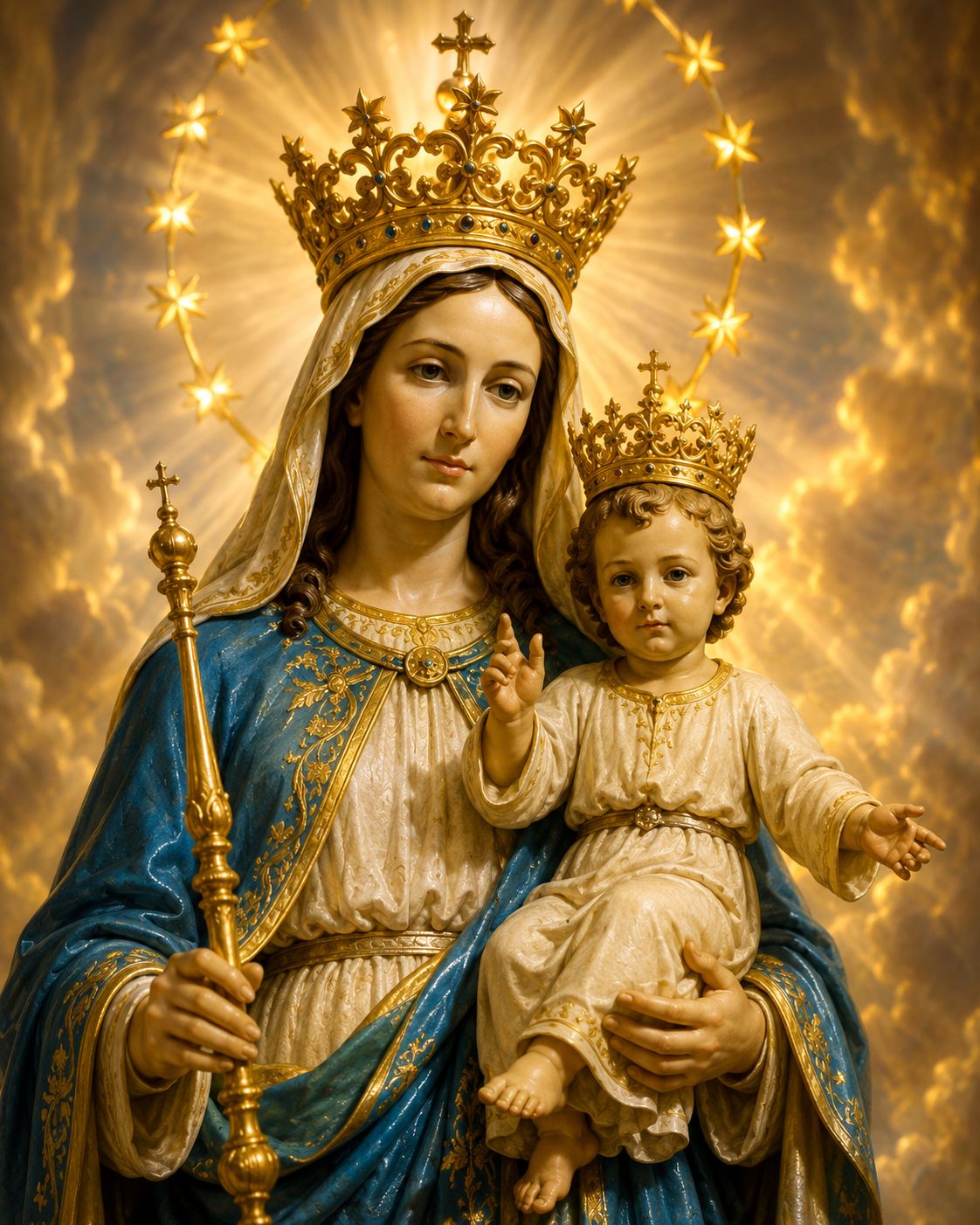
Why Catholics Call Mary Queen: The Meaning of the Queenship of Mary
Catholics around the world honour Mary with a striking title: Queen of Heaven and Earth. The Queenship of Mary might sound like an unusual claim at first, yet it flows naturally from core Catholic beliefs about her Son. Understanding this title helps believers appreciate Mary’s unique role and why the Church continues to celebrate her so warmly today.
The Feast Day of the Queenship of Mary Falls on 22 August
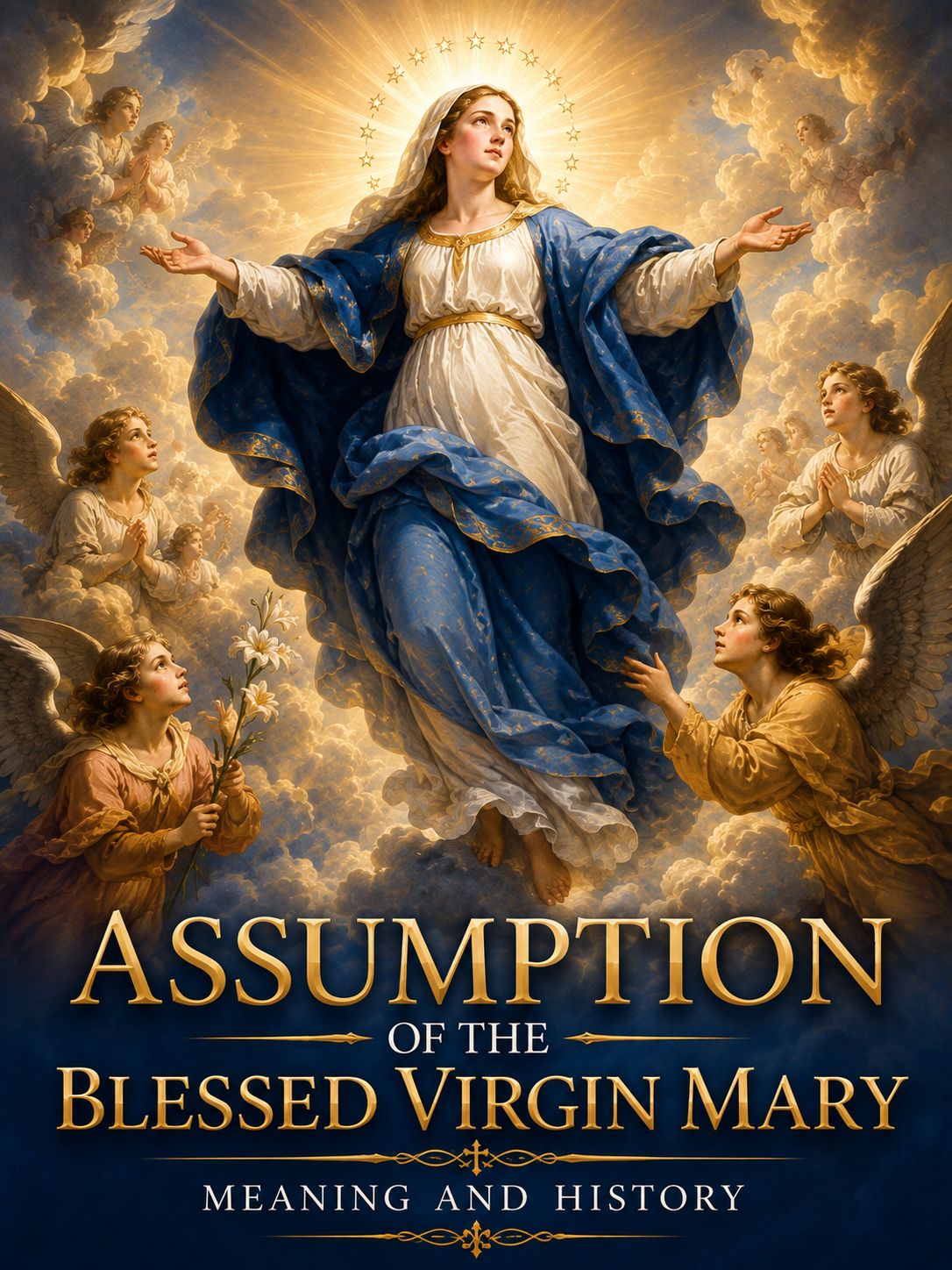
The Church marks the Queenship of Mary every year on 22 August, exactly one week after the Feast of the Assumption. This timing is deliberate. Since the Church teaches that Mary was assumed body and soul into heaven, it follows naturally that she was also crowned there as Queen. Pope Pius XII formally established this feast in 1954 through his encyclical Ad Caeli Reginam, though devotion to Mary as Queen stretches back many centuries earlier.
Why the Queenship of Mary Makes Theological Sense
Catholic teaching holds that Jesus Christ is King of the Universe, reigning over all creation. Because Mary is his mother, Catholics reason that she shares in his kingship in a special, subordinate way. Ancient Israel actually practised something similar: the mother of the reigning king, known as the gebirah, held an honoured position at court and often interceded with her son on behalf of the people.
This biblical pattern gives the Queenship of Mary solid historical roots. Just as King Solomon listened to his mother Bathsheba’s requests in the Old Testament, Catholics believe Mary intercedes with Jesus on their behalf. Her queenship, therefore, is never about rivalling her Son’s authority. Instead, it flows entirely from her closeness to him and her role in salvation history.
Scriptural and Early Church Foundations
Scripture offers several hints that support the Queenship of Mary. The angel Gabriel tells Mary that her son “will reign over the house of Jacob forever,” linking her directly to a royal lineage. The Book of Revelation also describes a woman “clothed with the sun” and “a crown of twelve stars on her head,” an image many Church Fathers connected to Mary.
Early Christian writers embraced this royal imagery quickly. By the fourth century, theologians such as Saint Ephrem the Syrian referred to Mary as “Lady” and “Queen.” Medieval hymns like the Salve Regina, still sung today, address her directly as “Hail, Holy Queen.” Clearly, this devotion did not appear overnight; it developed gradually through centuries of prayer and reflection.
How the Queenship of Mary Differs from Divine Kingship
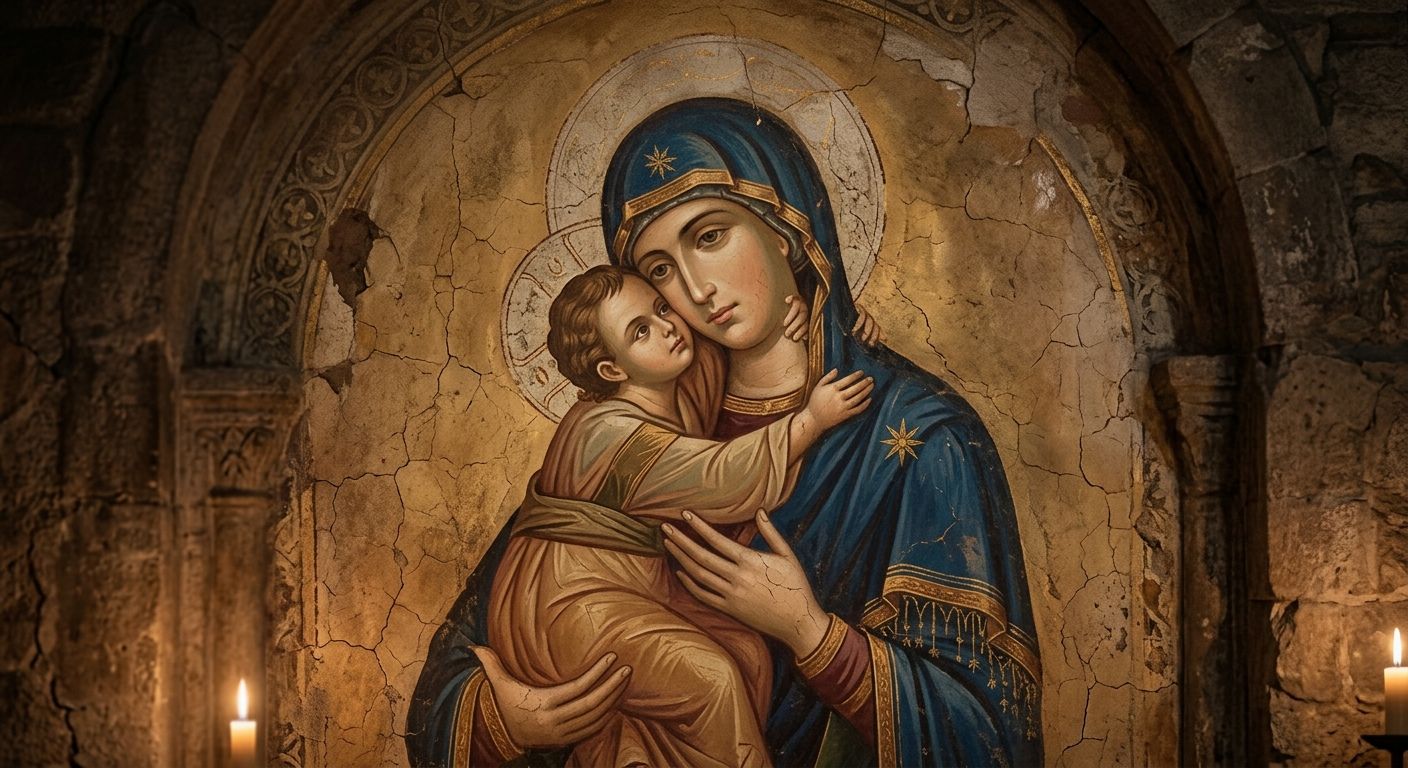
It helps to clarify what the Queenship of Mary does not mean. Catholics do not worship Mary or place her above God. She remains fully human, chosen by God for a unique mission, yet always dependent on his grace. Her queenship works more like that of a mother who shares in her son’s honour without possessing his divine power.
Furthermore, Catholic doctrine ties her queenship to four related dogmas: her divine motherhood, her perpetual virginity, her Immaculate Conception, and her Assumption into heaven. Each belief builds on the last and together they explain why the Church honours her so highly. Her queenship essentially crowns this entire theological picture.
Celebrating the Queenship of Mary Today
Parishes worldwide mark this feast with special Marian devotions, crowning ceremonies for statues, and the praying of the Rosary. Many Catholics also renew their consecration to Mary on this day, following traditions popularised by saints such as Louis de Montfort. Families sometimes place a small crown atop a home statue of Mary as a simple, meaningful gesture.
The feast also encourages Catholics to reflect on Mary’s humility. Despite her royal title, she described herself simply as “the handmaid of the Lord” during the Annunciation. This contrast between her exalted status and her humble self-description offers a powerful lesson: true greatness in the Christian life comes through service, not self-promotion.
A Title Rooted in Love, Not Power
Ultimately, the Queenship of Mary invites believers to trust in her motherly care. Catholics turn to her not because she holds worldly power, but because she loves them the way any mother loves her children. Her crown represents closeness to Christ rather than distance from ordinary believers.
For readers keen to explore more Marian feasts and their origins, our Catholic Feast Days archive offers further reading. Those wanting the full text of the founding document can consult Pope Pius XII’s Ad Caeli Reginam on the Vatican’s official website.
The Queenship of Mary, then, is far more than a decorative title. It reflects a deep theological tradition, rooted in Scripture and shaped by centuries of devotion, that continues to draw Catholics closer to both Mary and her Son.
Leave a Reply