
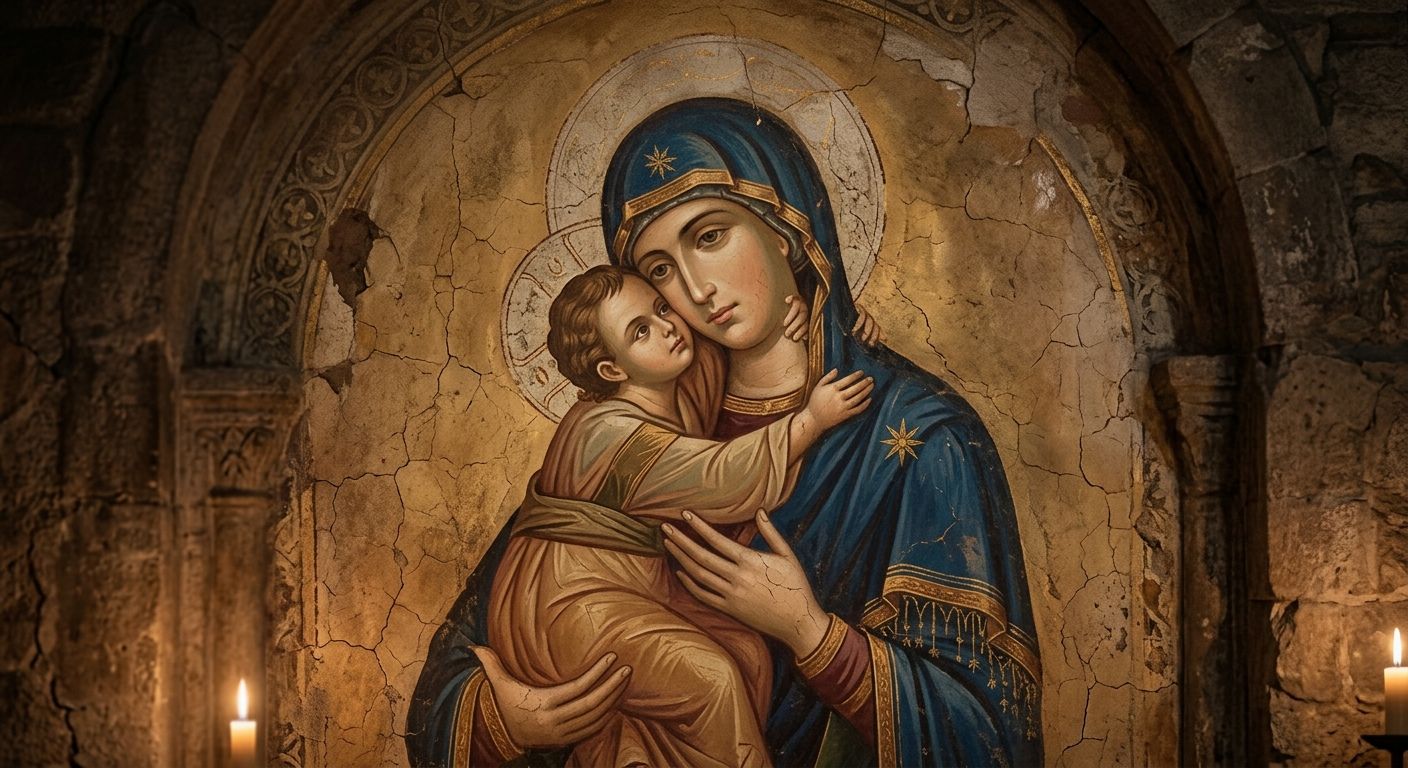
Every year, on April 26, the Church celebrates the Feast of Our Lady of Good Counsel. This title honours Mary as a source of heavenly wisdom. It draws its origin from a small, mysterious fresco venerated in Genazzano, a quiet town near Rome. Although the feast may seem lesser known compared to other Marian celebrations, its story stretches back centuries. It continues to shape devotion today. Catholics across the world, particularly members of the Augustinian order, mark this day with special reverence. The order has cared for the shrine since the 14th century.
The origins of this devotion begin in 1467. On the Feast of Saint Mark, at the close of a local festival, a cloud reportedly descended upon a crumbling 5th century church in Genazzano. Once the cloud lifted, onlookers discovered a delicate image of the Virgin and Child resting on a thin sheet of plaster. Remarkably, the painting appeared to hang in mid-air without any visible support. Tradition holds that this same fresco had long been venerated in Scutari, the capital of Albania, before it mysteriously reappeared in Italy. To this day, nobody can fully explain how the image made its journey.
An elderly widow named Petruccia played a crucial role in this story. She had already sold her possessions to help rebuild the crumbling church, trusting that Mary would provide the rest. Her faith, according to tradition, helped set the stage for the image’s sudden and unexplained arrival. Consequently, the Augustinian friars who cared for the site saw the event as confirmation of her sacrifice, and devotion to the image spread rapidly throughout the region.
Pope Pius XI formally granted the feast to the Augustinian order in 1787, following a request from the order’s prior general. Nearly a century later, in 1871, a friar named Giovanni Battista Orsenigo championed a more solemn celebration of the day. He even displayed a painting of the image that Pope Pius IX had personally blessed. His efforts eventually helped secure lasting recognition for the devotion at the highest levels of the Church.
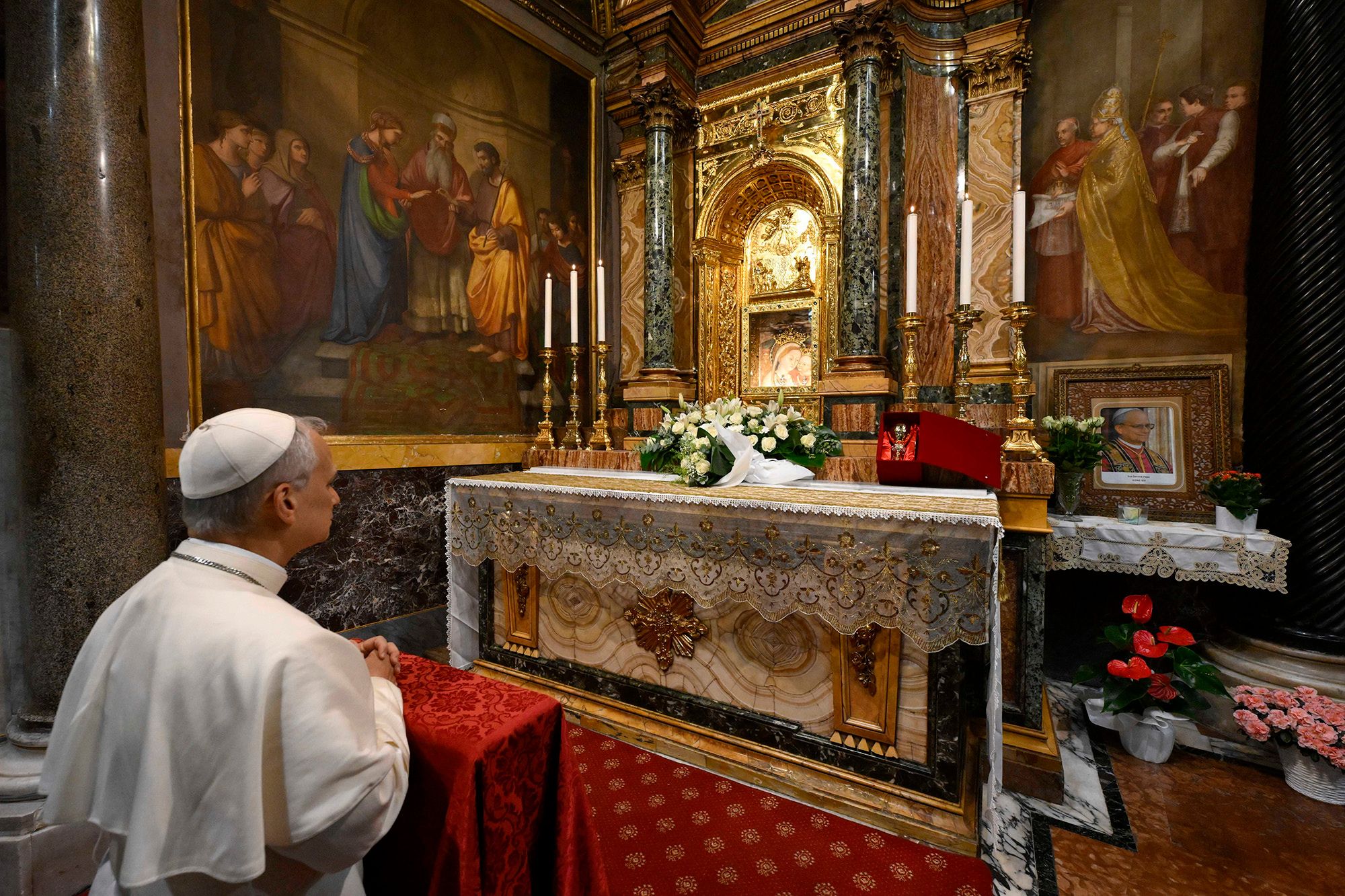
The most significant papal endorsement, however, came from Pope Leo XIII. In 1903, he issued a decree officially adding the title “Mother of Good Counsel” to the Litany of Loreto, a prayer recited by Catholics worldwide. This decision cemented the devotion’s place within mainstream Catholic worship. Interestingly, Pope Leo XIV, the current pontiff, shares more than just a name with his predecessor. Before his election, he served in the Midwest Augustinian Province of Our Mother of Good Counsel and he has visited the Genazzano shrine on more than one occasion, even before becoming pope.
Beyond its historical roots, the feast also carries a rich scriptural connection. Augustinian communities often point to the wedding at Cana, where Mary tells the servants, “Do whatever he tells you.” This brief instruction captures the very essence of good counsel: trusting guidance that leads others closer to Christ. For this reason, the feast invites believers to reflect not only on Mary’s wisdom but also on their own willingness to listen and obey.
The shrine itself has endured remarkable hardship over the centuries. During World War II, much of the church suffered extensive damage, yet the fragile image remained completely untouched. Many Catholics view this survival as further evidence of the image’s miraculous nature. More than five hundred years after its mysterious appearance, the fresco continues to draw pilgrims from around the world. Countless favours have been attributed to Mary’s intercession under this title.
Today, devotion to Our Lady of Good Counsel extends far beyond Italy. She is honoured as a patroness of Albania, given the image’s Albanian origins and various Catholic organisations, including the Catholic Women’s League of Canada, have also adopted her as their patroness.
In essence, the Feast of Our Lady of Good Counsel reminds Catholics that wisdom and guidance are always available. Believers need only seek them prayerfully. Its enduring popularity, spanning more than five centuries, shows how a small and humble image can inspire lasting devotion across generations.
Leave a Reply