
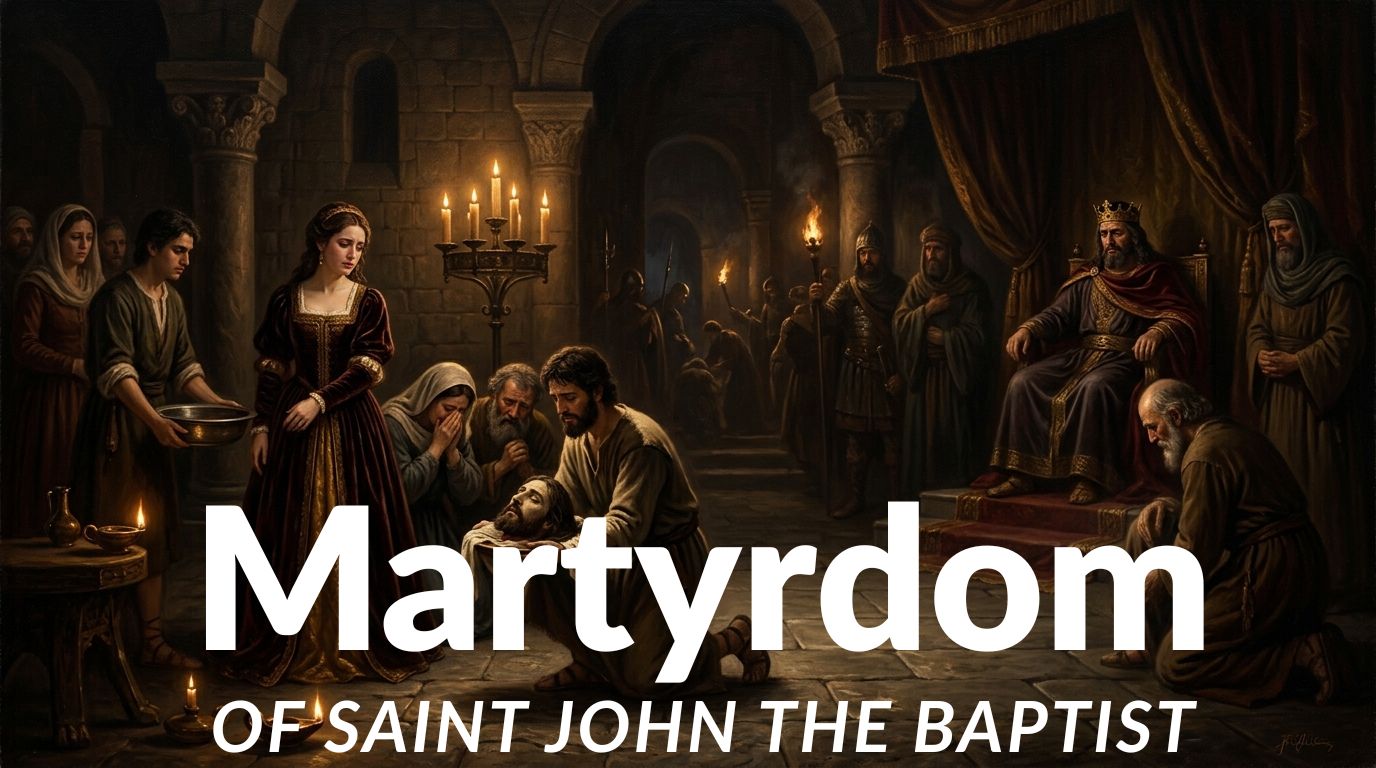
The Martyrdom of Saint John the Baptist: A Prophet Silenced for Speaking Truth
The Martyrdom of Saint John the Baptist stands as one of the most dramatic and unsettling episodes recorded in the Gospels. John, the fearless preacher who prepared the way for Christ, ultimately lost his life for boldly confronting royal wrongdoing. His death offers a timeless example of moral courage in the face of dangerous political power.
The Martyrdom of Saint John the Baptist Is Remembered on 29 August
The Catholic Church commemorates the Martyrdom of Saint John the Baptist every year on 29 August, distinct from his Nativity celebrated on 24 June. This dual observance reflects his unique status as one of very few saints honoured for both his birth and his death. The Eastern Orthodox Church also observes this same date, often marking it with strict fasting traditions.
Why Saint John the Baptist Confronted King Herod
According to the Gospels of Mark and Matthew, John publicly condemned King Herod Antipas for unlawfully marrying Herodias, his brother Philip’s wife. Jewish law forbade such a union and John refused to stay silent despite the obvious danger involved. His outspoken criticism deeply angered Herodias, who reportedly wanted John executed immediately for the insult.
Herod, however, hesitated significantly. Scripture describes him as genuinely fearing John, recognising him as a righteous and holy man worth protecting. Consequently, Herod imprisoned John rather than granting Herodias’s demand for his death outright.
The Feast That Sealed John’s Fate
The Martyrdom of Saint John the Baptist unfolded during an elaborate birthday banquet Herod hosted for his own court officials and military leaders. Herodias’s daughter, traditionally identified as Salome, performed a dance that thoroughly delighted Herod and his assembled guests. Overcome with pleasure, Herod rashly promised to grant her absolutely anything she requested, even up to half his kingdom.
Salome consulted her mother before responding and Herodias immediately saw her long-awaited opportunity. She instructed her daughter to request John’s head, delivered promptly on a platter. Trapped by his own public oath and unwilling to appear weak before his guests, Herod reluctantly agreed to the horrifying request.
How the Martyrdom of Saint John the Baptist Unfolded
Executioners immediately beheaded John within the prison and his head was presented to Salome exactly as requested. She then delivered the gruesome platter directly to her mother, finally satisfying Herodias’s long-standing desire for revenge. John’s own disciples later retrieved his body and gave him a proper, respectful burial.
This brutal sequence of events illustrates how political cowardice and personal vanity can combine to produce devastating consequences. Herod’s fear of embarrassment before his guests ultimately outweighed his own conscience regarding John’s innocence.
Historical Context Beyond the Gospels
The Jewish historian Josephus also documented John’s death within his historical writings, offering valuable corroborating detail from outside Scripture. According to Josephus, Herod feared John’s growing popularity might eventually incite rebellion among the general population. This political concern, alongside the personal grievance involving Herodias, likely combined to seal John’s ultimate fate.
Josephus specifically identifies Machaerus, a fortress east of the Dead Sea, as the probable location of John’s imprisonment and execution. This historical detail helps modern scholars situate the biblical account within its broader first-century political landscape.
Why the Martyrdom of Saint John the Baptist Still Matters
John’s death carries profound symbolic weight within Christian tradition, since he served as the direct forerunner preparing the way for Christ’s own public ministry. His willingness to speak uncomfortable truths, regardless of personal cost, established an enduring model for prophetic courage. Many Christian martyrs throughout subsequent centuries have looked toward John’s example when facing their own persecution.
The feast also invites believers to examine their own willingness to speak truthfully, even when doing so carries genuine social or professional risk. John never wavered despite knowing his outspokenness might ultimately cost him his life.
Reflecting on a Timeless Example
The Martyrdom of Sant John the Baptist remains a powerful reminder that genuine faith sometimes demands significant personal sacrifice. Readers wanting to explore related biblical figures can browse our Saints of the Day archive for further profiles. For additional historical background, Britannica’s overview of John the Baptist offers useful further context regarding his life and historical significance.
Every 29 August, believers pause to honour a prophet who chose truth over comfort, courage over compromise, and ultimately paid the highest possible price for his unwavering convictions.
Leave a Reply