
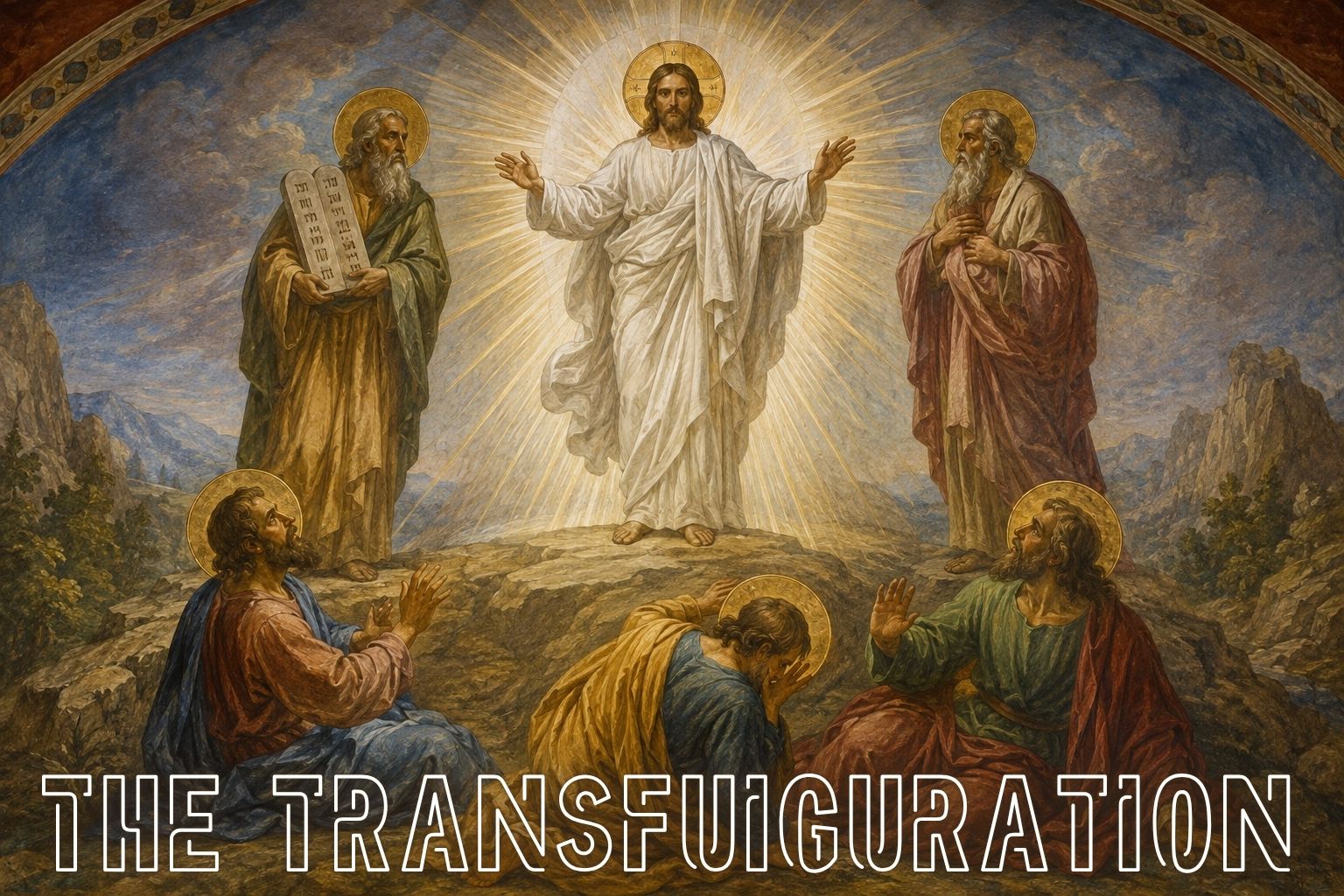
The Transfiguration of the Lord captures one of the most dazzling moments recorded in all four Gospels. For a brief instant on a mountainside, three apostles witnessed Jesus revealed in full divine glory. That single event has shaped Christian art, theology, and worship for nearly two thousand years. Let us see what Scripture says about the Transfiguration, how the feast developed historically and why it still matters to believers today.
The Transfiguration of the Lord Is Celebrated Every August 6
The Catholic Church celebrates the Transfiguration of the Lord every year on August 6. Because this date falls exactly forty days before the Feast of the Exaltation of the Holy Cross on September 14, the two celebrations share a close symbolic connection. Eastern Christians began marking this feast as early as the fifth century, while Western observance developed more gradually over the centuries that followed.
What Happened on the Mountain
According to all three Synoptic Gospels, Jesus led Peter, James, and John up a high mountain, traditionally identified as Mount Tabor. There, his appearance suddenly changed before their eyes. His face shone like the sun and his clothing became dazzling white, brighter than anything earthly bleaching could produce. Moses and Elijah then appeared alongside him, representing the Law and the Prophets and the two figures spoke with Jesus about what still lay ahead of him.
Peter’s Response and a Voice From the Cloud
Overwhelmed by what he witnessed, Peter offered to build three separate shelters, one each for Jesus, Moses, and Elijah. Scripture suggests he barely understood what he was saying, since fear had left him and the other apostles deeply shaken. As Peter spoke, a bright cloud overshadowed the group, and a voice declared Jesus to be God’s beloved Son, commanding the apostles to listen to him. Just as suddenly, the vision ended, leaving Jesus standing alone with his stunned companions.
Why the Transfiguration of the Lord Matters Theologically
The Transfiguration followed Peter’s confession and Jesus’ first prediction of his suffering and death. Many theologians see it as divine encouragement before the apostles faced coming hardships. Peter, James, and John briefly witnessed Christ’s full divinity, strengthening their faith before the Passion.
How the Feast Became Universal
Tradition holds that a church first built on Mount Tabor was dedicated on August 6 during the fourth century, and the Eastern Church began observing the Transfiguration around that same period. Western communities gradually adopted the celebration in various local calendars over the following centuries. The feast became mandatory across the Western Church in 1456 after Belgrade’s successful defense against an Ottoman invasion. After receiving news on August 6, Pope Callixtus III declared it a universal feast, linking it to victory and thanksgiving.
A Feast Tied to Its Own Founder’s Final Day
Pope Callixtus III died on August 6, 1458, the feast day he established two years earlier. In 2002, Pope John Paul II included the Transfiguration among the Rosary’s five Luminous Mysteries. The Transfiguration Gospel is proclaimed each Second Sunday of Lent, revealing Christ’s divinity before his Passion.
Reflecting on the Transfiguration of the Lord Today
The Transfiguration of the Lord continues to offer believers a moment of hope amid difficulty, much as it once strengthened Peter, James, and John before the events of Holy Week. Just as that mountaintop vision prepared the apostles for hardship ahead, the feast invites modern believers to trust in Christ’s glory even during seasons that feel uncertain or difficult. For more on the feast’s liturgical significance, Vatican News’s overview of the Transfiguration offers additional reading. Readers exploring nearby August feasts can browse the complete August Saints calendar for more.
Leave a Reply