
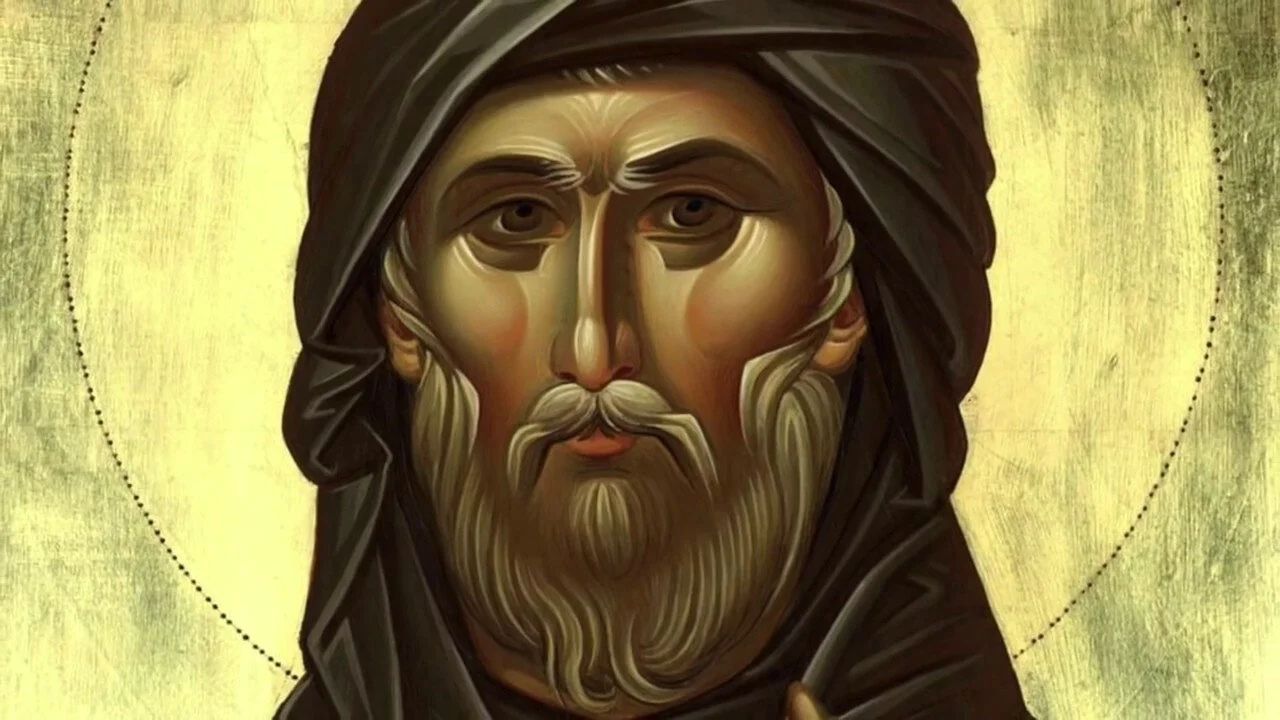
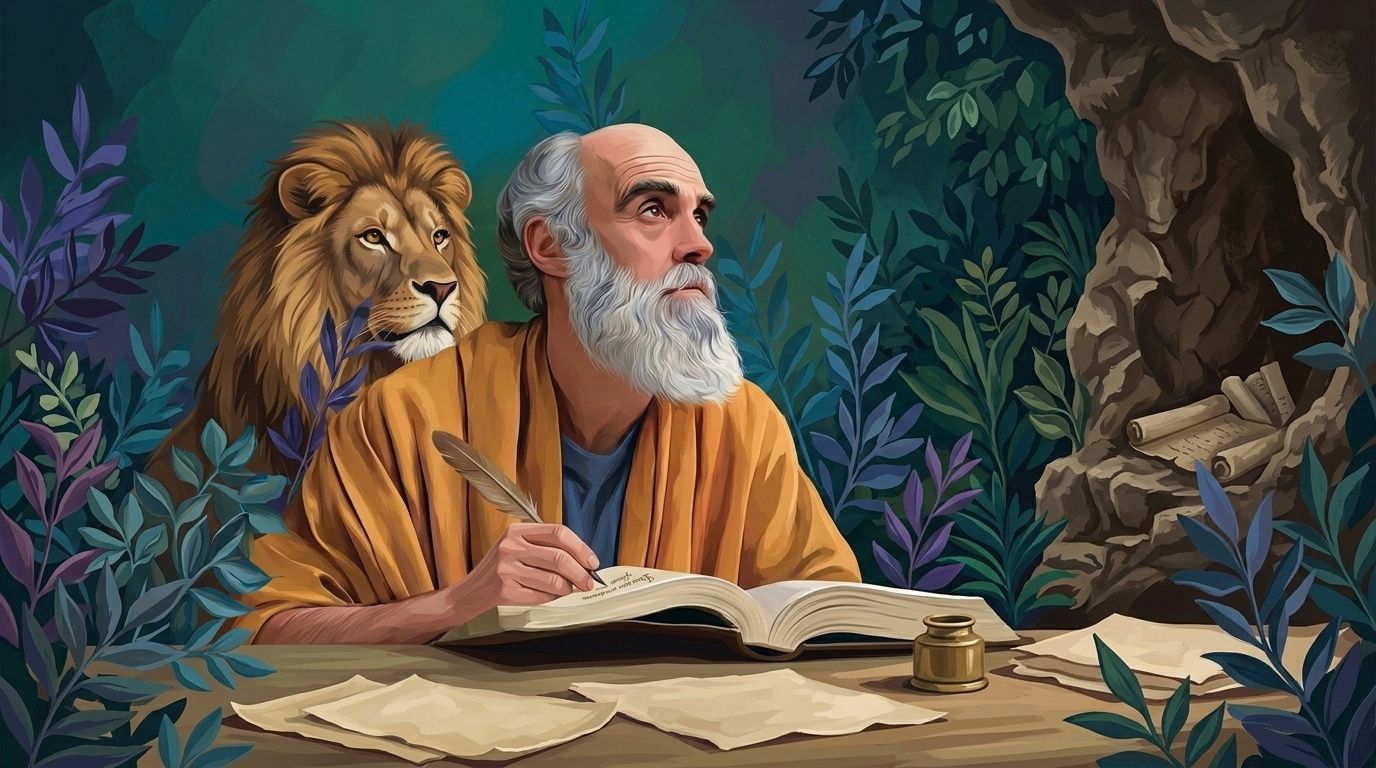
Image credit: Saint Basil
Saint Ephrem the Syrian: Life, Hymns, and Legacy of a Doctor of the Church
Few saints shaped the early Church through music quite like Saint Ephrem the Syrian did. Known as the “Harp of the Spirit,” he left behind hundreds of hymns and poems that still inspire believers today. Although historians know little about his childhood, his own writings reveal a man who discovered his faith through hardship rather than comfort. This single detail sets the tone for a life defined by trial, creativity, and unshakable devotion.
Saint Ephrem the Syrian’s Feast Day
The Catholic Church celebrates the feast day of Saint Ephrem the Syrian every June 9, the date tradition assigns to his death in 373. Interestingly, the Church observed his feast on June 18 for nearly five decades, from 1920 to 1969, and that older date still appears in the Extraordinary Form calendar today. Eastern Orthodox Christians, meanwhile, honour him on January 28 and again on the Saturday before Great Lent begins.
Early Life and Formation in Nisibis
Saint Ephrem the Syrian was likely born around the year 306 in Nisibis, a city in the Roman province of Mesopotamia, in what is now southeastern Turkey. Most historians believe his parents were already Christian, even though later legends claimed his father served as a pagan priest. Since baptism as an adult was common practice at the time, Ephrem was not baptized until later in life, an experience he described as the moment he truly understood the “greatness” of his faith.
Bishop Jacob of Nisibis, who attended the First Council of Nicaea in 325, appointed young Ephrem as a teacher and likely ordained him as a deacon. Under Jacob and three successive bishops, Ephrem developed his lifelong gifts for scripture commentary and poetic composition.
Fighting Heresy Through Song
Rather than debating opponents point by point, Saint Ephraim the Syrian chose a more creative weapon: music. According to tradition, heretical groups had already been spreading false teaching through popular songs, so Ephraim responded by composing his own hymns to correct them. He specifically targeted Bardaisan, a Syrian teacher who denied the resurrection of the body, and he later wrote extensively against Arianism, Marcionism, and Manichaeism.
This approach proved remarkably effective. Because Ephraim’s hymns combined rich imagery with genuine musical skill, they captured the hearts of ordinary believers in a way that formal debate never could. As a result, he is widely credited with awakening the wider Church to the power of music and poetry as tools for teaching and safeguarding the faith.
Surviving War and Siege
Life in Nisibis was rarely peaceful. Shapur II, the King of Persia, besieged the city three separate times, and Ephraim lived through all of them. During the third siege in 350, Persian engineers diverted a river to flood the city walls. However, the flood backfired: Shapur’s own army became trapped in the resulting mud, and the defenders of Nisibis, including Ephraim, seized the opportunity to drive the invaders back. Ephraim later compared the city to Noah’s Ark, floating safely above the chaos.
Nisibis eventually fell anyway. After Shapur defeated Emperor Jovian in battle, the Romans surrendered the city as part of a peace treaty, and Persia forced its entire Christian population into exile. Around 363, in his late fifties, Ephrem became a refugee alongside his community.
Later Years in Edessa
Saint Ephraim the Syrian eventually settled in Edessa, where he continued teaching and writing despite the presence of rival sects like the Arians and Gnostics. There, he reportedly trained all-female choirs to perform his hymns in the city’s public square, a striking practice that gave women a genuine voice within worship at a time when few other outlets existed.
When famine struck Edessa in 372, Ephraim discovered that some citizens were hoarding food rather than sharing it with the needy. So respected was his reputation that, when he volunteered to personally distribute food himself, no one objected. He organized relief efforts until the famine ended the following year. Shortly afterward, while ministering to plague victims, Ephraim contracted the disease himself and died in 373.
Lasting Legacy and Sainthood
Ephrem’s literary output was staggering. The historian Sozomen credited him with writing three million verses across his lifetime, and roughly four hundred authentic hymns still survive today. His major collections include hymns On Virginity, On the Nativity, On Paradise, and his especially influential Hymns Against Heresies, which defended the full humanity and divinity of Christ against early doctrinal confusion.
On October 5, 1920, Pope Benedict XV named him a Doctor of the Church, giving him the title “Doctor of the Syrians.” You can read more about the Doctors of the Church on the Vatican’s official website. Today, believers still remember Saint Ephraim the Syrian as the Deacon of Edessa, the Sun of the Syrians, and a Pillar of the Church, a legacy built not on power or politics, but on song.

Leave a Reply