
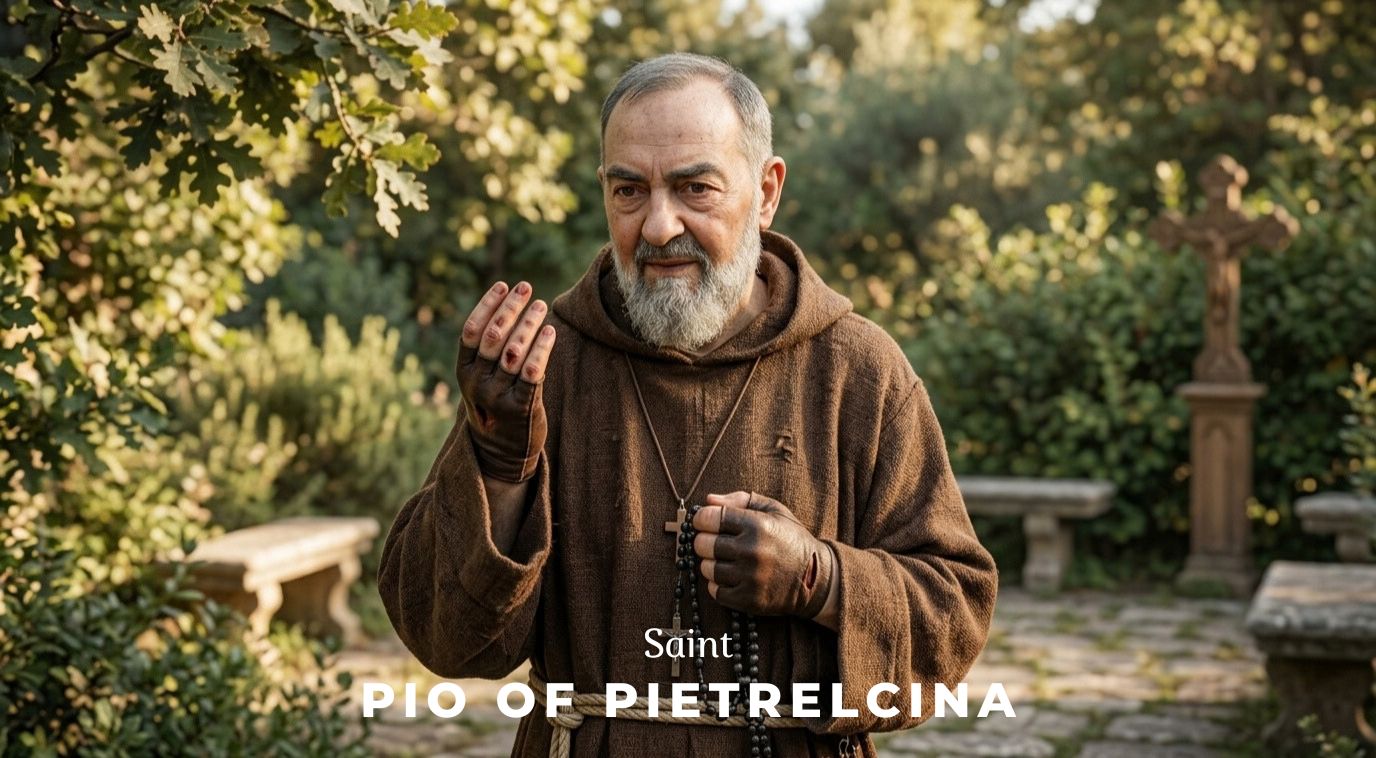
The Stigmatist Priest’s Extraordinary Life
The Catholic Church honours Saint Pio of Pietrelcina every year on September 23, marking the anniversary of his death. Millions worldwide know him affectionately as Padre Pio, a humble Capuchin friar renowned for extraordinary spiritual gifts. Consequently, his life remains among the most thoroughly documented and widely venerated within 20th century Catholic history. Furthermore, his story blends genuine mysticism with remarkable pastoral dedication, drawing countless pilgrims toward his southern Italian shrine. Therefore, exploring his journey helps explain why devotion toward him has never diminished since his death.
Born Francesco Forgione in 1887, within the small village of Pietrelcina, he showed unusual spiritual sensitivity from early childhood. At just 5 years old, he reportedly consecrated himself entirely toward God, surprising his devout farming family considerably. By 15, he entered the Capuchin novitiate, receiving the religious name Pio in honour of an earlier pope. Despite persistent poor health throughout his studies, he pressed forward faithfully, eventually reaching ordination as a priest in 1910. Afterwards, fragile health forced him to remain largely at home for several years before finally settling permanently at San Giovanni Rotondo.
Everything changed dramatically on September 20, 1918, while Padre Pio prayed quietly before a crucifix. He suddenly received the stigmata, visible wounds mirroring those Christ suffered during his own crucifixion. Doctors estimated that these wounds caused him to lose roughly a cup of blood daily for the following fifty years. Remarkably, despite their severity, the wounds never became infected or inflamed throughout this entire lengthy period. Understandably, Padre Pio preferred remaining hidden from public attention, yet word of his condition spread rapidly regardless of his wishes.
Beyond the stigmata itself, witnesses attributed numerous additional spiritual gifts toward Padre Pio throughout his lengthy ministry. These included reported bilocation, meaning credible witnesses claimed seeing him present simultaneously within two separate locations. Furthermore, many described his apparent ability to read hearts, often addressing penitents’ hidden sins before they confessed anything aloud. Some accounts also mention physical confrontations with demonic forces, leaving him bruised following particularly difficult spiritual battles. Consequently, Padre Pio devoted up to 16 hours daily hearing confessions, describing this sacrament beautifully as “the soul’s bath.”
Church authorities initially responded toward these extraordinary reports with considerable caution and repeated official investigation. At certain points, the Holy See even prohibited him from publicly celebrating Mass or hearing confessions. However, Pope Pius XI eventually lifted these restrictions during the early 1930s, allowing his ministry to flourish freely. In the 1920s, Padre Pio also established prayer groups, which today include more than four hundred thousand members worldwide. Additionally, in 1956, he founded the House for the Relief of Suffering, a hospital that continues serving thousands annually.
Padre Pio died on September 23, 1968, reportedly whispering “Jesus, Mary” during his final breaths. More than one hundred thousand mourners attended his funeral, demonstrating the profound impact he had achieved during his lifetime. Pope John Paul II beatified him in 1999, before canonising him formally on June 16, 2002. Notably, more than 300 thousand pilgrims gathered within Saint Peter’s Square, braving intense heat to witness this historic ceremony. During his homily, the Pope praised Padre Pio’s teaching on prayer, charity and the transformative power of accepted suffering.
The miracle approved for his canonisation involved a critically ill seven-year-old boy named Matteo Pio Colella. In 2000, Matteo suffered severe meningitis, with doctors eventually losing hope after nine of his organs stopped functioning properly. During an overnight prayer vigil, his condition suddenly improved, and he later described seeing an elderly, bearded friar offering reassurance. The Church formally approved this remarkable recovery as miraculous in December 2001, clearing the path toward canonisation. Today, Padre Pio’s incorrupt body rests within a specially constructed crypt at San Giovanni Rotondo, drawing pilgrims continuously.
Padre Pio consistently emphasised humility throughout his extraordinary life, often insisting he simply wished to remain “a poor friar who prays.” Despite widespread fame and countless extraordinary reports, he never issued prophecies concerning world events or challenged Church authority directly. Rather, his enduring legacy rests firmly upon prayer, confession and compassionate accompaniment toward suffering believers everywhere. Consequently, devotion toward him continues flourishing decades after his death, particularly among those seeking healing or spiritual guidance. For readers wishing to explore further biographical detail, additional information remains available through EWTN and Franciscan Media, alongside earlier articles published on this website concerning his original nine-day novena.
Leave a Reply