
Our Lady of La Salette: The Weeping Apparition and Her Message
The Catholic Church celebrates the feast of Our Lady of La Salette on September 19, marking a remarkable Marian apparition from 1846. On that afternoon, two shepherd children reported meeting a weeping woman bathed in brilliant light, high within the French Alps. Consequently, this encounter transformed the quiet village of La Salette-Fallavaux into one of France’s most visited pilgrimage destinations. Furthermore, the message she delivered continues resonating with believers concerned about spiritual complacency within modern society. Therefore, exploring this apparition’s history helps explain why devotion toward Our Lady of La Salette persists nearly two centuries later.
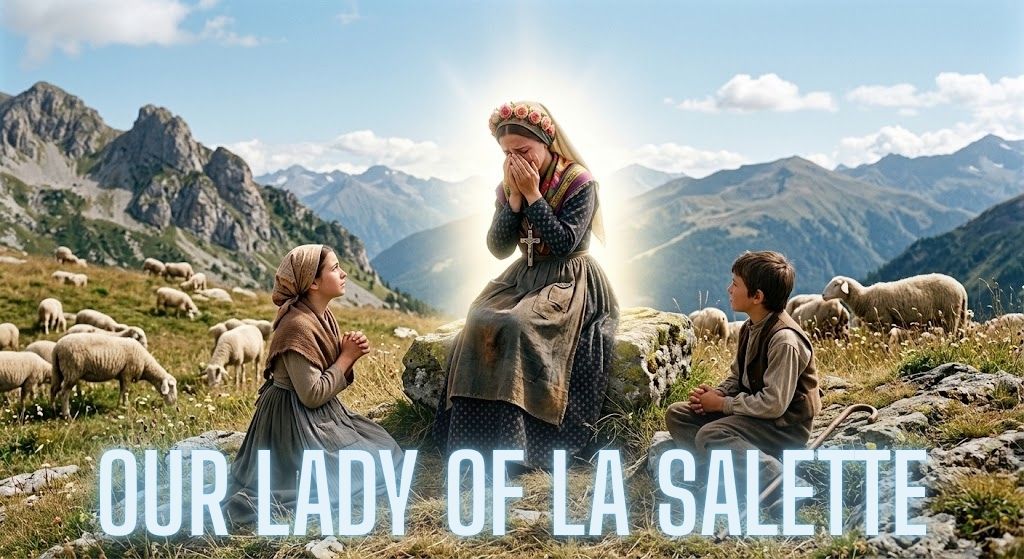
The events unfolded on September 19, 1846, around 3 o’clock in the afternoon, near a mountain pasture above the village. Mélanie Calvat, almost 15, and Maximin Giraud, just 11, were tending cattle together, having only met two days earlier. Suddenly, they noticed an intense globe of light, as though the sun itself had fallen upon that spot. Within this dazzling brightness, they gradually perceived a seated woman, her face buried tearfully within her hands. She rose and approached the frightened children, gently reassuring them and inviting them closer without fear.
Speaking alternately in French and local dialect, the beautiful Lady addressed the children for a considerable length of time. She lamented widespread religious neglect throughout France, particularly concerning Sunday observance and habitual, careless cursing among ordinary people. Furthermore, she warned that continued indifference toward faith would bring serious hardship, including failed harvests and lasting scarcity. Nevertheless, she balanced this warning with genuine hope, promising divine mercy toward anyone willing to sincerely repent. Before departing, she reportedly shared a private secret separately with each child, later documented and eventually forwarded to Rome.
According to witnesses, the apparition then climbed a steep pathway before rising gently into the surrounding air. Facing toward the southeast, she gradually faded until the brilliant light itself completely disappeared from view. Understandably, local authorities and Church officials approached these extraordinary claims with considerable caution and scepticism initially. Consequently, the Bishop of Grenoble, Philibert de Bruillard, ordered a lengthy, rigorous investigation spanning several years. Despite intense pressure, ridicule and repeated questioning, both children maintained identical, consistent accounts throughout this demanding process.
Finally, on September 19, 1851, exactly five years after the original apparition, Bishop de Bruillard issued his official judgement. He formally declared the apparition authentic, granting permission for public devotion and pilgrimage toward the sacred site. Consequently, the Sanctuary of Our Lady of La Salette soon developed into a significant destination, drawing pilgrims from across Europe. In 1852, Church authorities also established the Missionaries of Our Lady of La Salette, a religious congregation dedicated toward spreading her message. This order continues operating shrines and ministries worldwide, extending devotion well beyond France’s own mountainous borders.
Traditionally, artists depict Our Lady of La Salette dressed in regional Alpine peasant clothing, wearing a crown fashioned from roses. Many depictions also show her wearing a crucifix suspended from a chain, flanked by symbols representing Christ’s passion. This distinctive imagery reinforces her central message, often summarised simply as “Reconcile yourselves with God.” Consequently, believers frequently invoke her specifically as the Reconciler of Sinners, emphasising conversion and genuine repentance above all else. Her feast day, therefore, offers an annual opportunity for renewed reflection upon personal faithfulness and spiritual commitment.
The two young visionaries experienced remarkably different paths throughout the remainder of their lives. Maximin Giraud never married, living relatively quietly until his death in 1875, at just forty years old. Mélanie Calvat, meanwhile, entered religious life, residing within various convents across France, England and Italy. She later published additional details concerning her private secret, generating considerable theological debate that continues among scholars today. Nevertheless, the Church’s official recognition rests firmly upon the original 1846 apparition itself, rather than these later, more contested writings.
Today, devotion toward Our Lady of La Salette extends far beyond her original French homeland. Shrines dedicated toward her now exist across multiple continents, including notable sites within India and the Philippines. Consequently, pilgrims from wildly different cultures continue seeking her intercession, drawn toward her powerful message of reconciliation. This global reach demonstrates how a single apparition, witnessed by two uneducated shepherd children, ultimately shaped worldwide Catholic devotion. Therefore, her feast day each September remains genuinely significant within the broader Marian tradition, alongside other celebrated apparitions.
Ultimately, Our Lady of La Salette’s story combines dramatic supernatural encounter with a consistently practical spiritual message for believers. Rather than focusing solely upon miraculous details, her core teaching urges genuine conversion, humility and renewed commitment toward faith. For readers wishing to explore further Marian history, additional detail remains available through the official La Salette sanctuary website, alongside earlier articles published on this website concerning other significant Marian apparitions.





Leave a Reply