
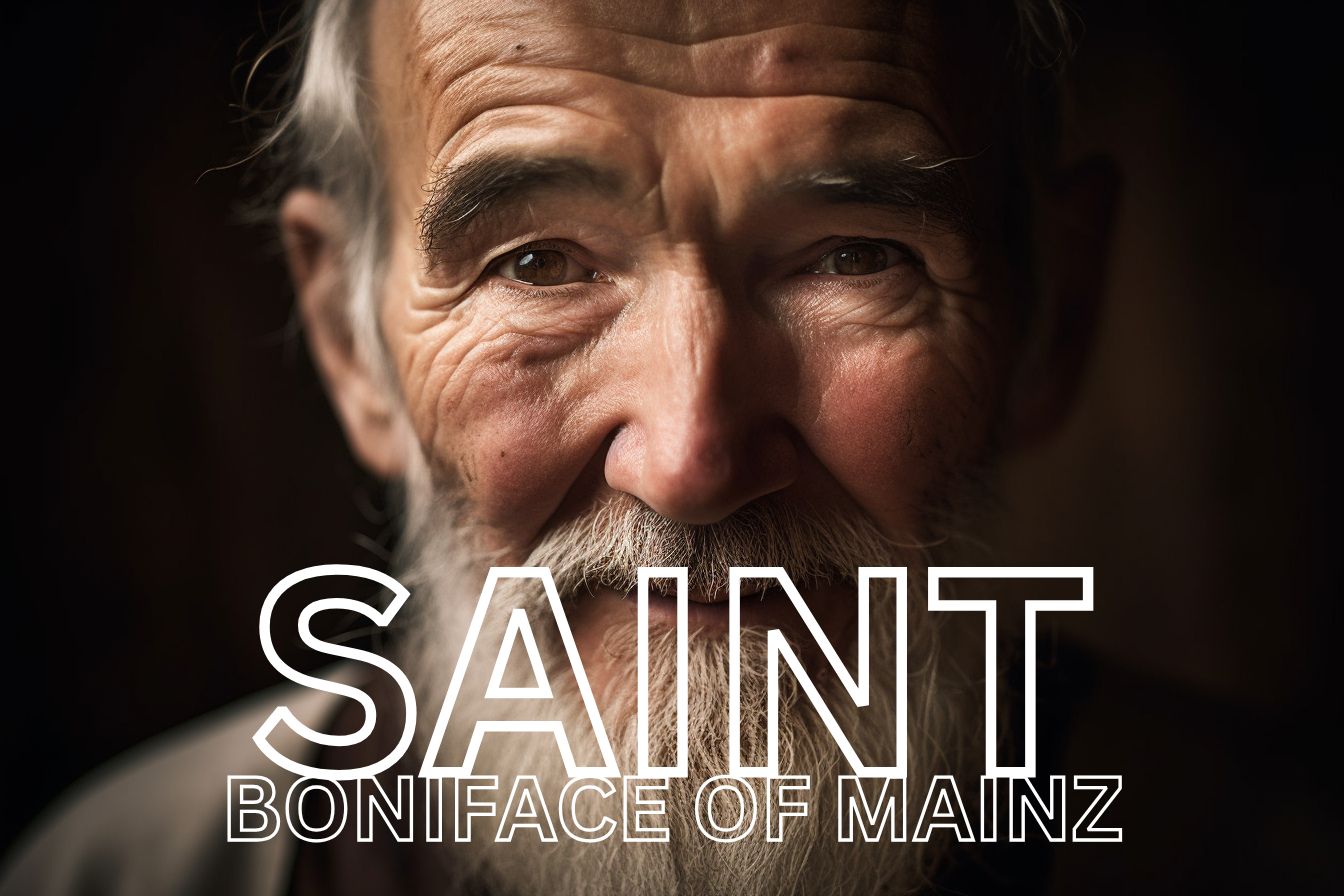
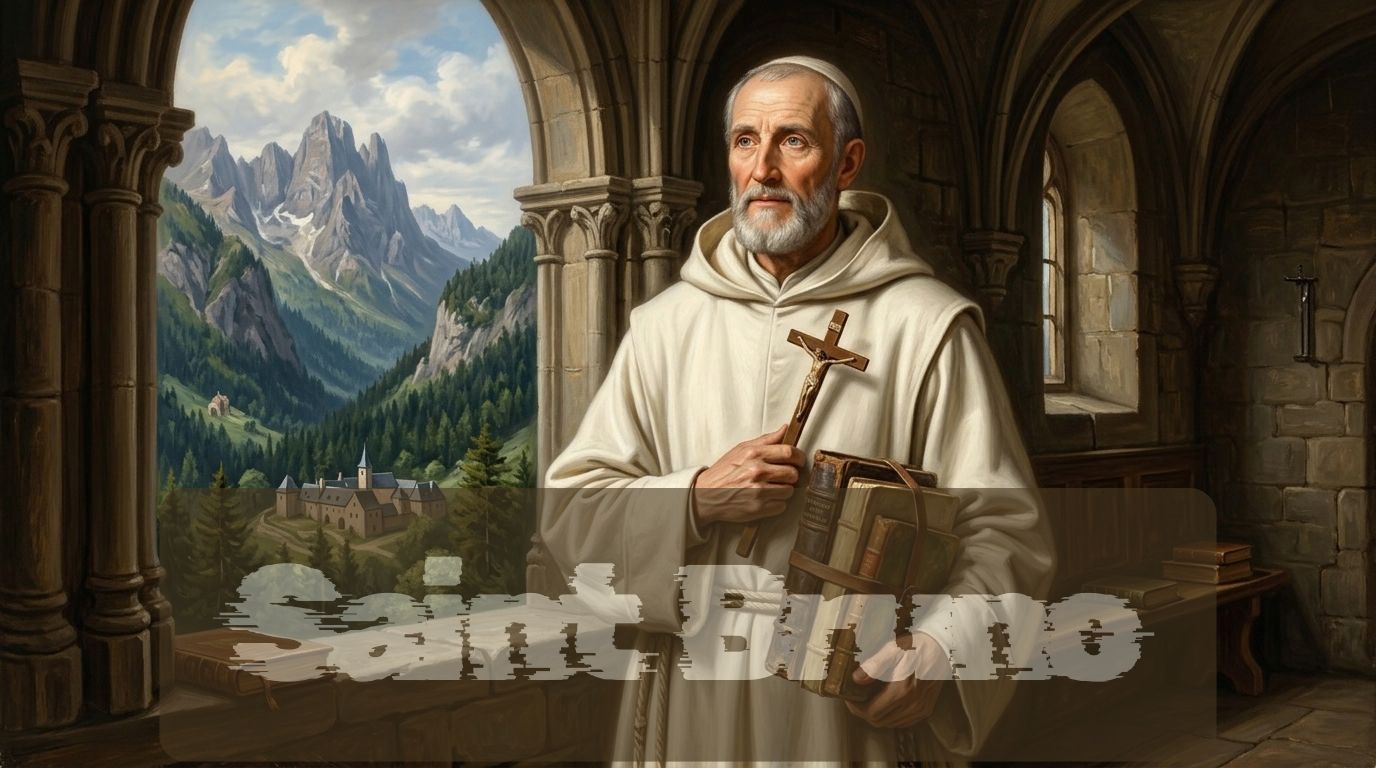
Image Credit: Saint of the Day
St. Boniface of Mainz: The English Monk Who Became Apostle of Germany
Feast Day – June 5
A Scholar Who Could not Stay Home
Winfrith had everything going for him. Born around 675 in Wessex, England, into a respected and prosperous family, he was bright, devout, and already making a name for himself as a teacher and scholar. At 30, he became a priest. When his abbot died, everyone expected him to take the top job at Nursling monastery. He was the obvious choice.
Instead, he said no.
Something had been stirring in Winfrith for years. He had met visiting monks who told stories of pagan lands desperate for the Gospel. While his father initially opposed his religious ambitions, the young man eventually entered the monastery school at Exeter, then moved to Nursling for advanced study. He wrote Latin grammars, composed poetry, and solved riddles in the style of the great Aldhelm. He was, by every measure, a successful English churchman.
But success wasn’t enough. Around 716, at age 40, Winfrith left for the continent. His destination was Frisia—modern-day Netherlands—where Saint Willibrord had been laboring for decades. Finally, Winfrith thought, he could do what he was born for.
It ended in disaster. The pagan ruler Radbod was at war with Charles Martel, and the violence spilled onto missionaries. Willibrord fled to his abbey at Echternach. Winfrith trudged back to England, mission aborted.
Most people would have quit. Winfrith learned something different: zeal alone isn’t enough. Missionary work needs preparation, unity with the Church, and spiritual authority. He had the fire. Now he needed the framework.
The Pope Gives Him a New Name
In 718, Winfrith set out again. This time, he went straight to Rome.
Pope Gregory II was impressed. Here was a man who had failed, learned, and returned for more. The pope commissioned him as missionary to the Germanic peoples in 719. He also gave him a new name: Boniface, likely honoring an early Christian martyr. It was a fresh start with ancient roots.
Boniface would never see England again. Yet he wrote to his countrymen throughout his life, maintaining bonds across the Channel while building something entirely new in Europe.
His first years back were frustrating. He worked in Thuringia and Hesse, regions where paganism wasn’t just religion—it was culture, identity, and power. Superstition ran deep. The people feared their gods, sacrificed to them, and structured their lives around appeasing forces they barely understood.
Then came the moment that changed everything.
The Oak of Thor Comes Down
Near Geismar, in northern Hesse, stood a massive oak tree sacred to Thor. The locals called it Donar’s Oak, and they believed the god himself dwelt within it. This wasn’t a gentle nature spirituality. It was terror-based religion, where Thor’s hammer promised destruction to anyone who defied him.
Boniface announced he would cut it down.
The crowd gathered, expecting divine punishment. Thor would strike this foreign monk dead, they were certain of it. Boniface started chopping. According to his biographer Willibald, a great wind suddenly blew and the ancient oak toppled. It split into four parts as it fell, forming—some said—the shape of a cross.
Nothing happened to Boniface. No lightning, no hammer. No wrath.
The silence was deafening. If Thor couldn’t protect his own tree, what power did he have? Many converted on the spot. Boniface built a chapel from the oak’s wood, then a monastery. The place became Fritzlar, a Christian center that outlasted the paganism it replaced.
Modern scholars suggest this was carefully planned, not impulsive. The Frankish fortress of Büraburg was nearby, offering protection. Boniface knew exactly what he was doing. But that doesn’t diminish the courage required. He was confronting not just a tree but an entire worldview, and he did it with an axe in one hand and faith in the other.
Building the Church in Europe
Boniface didn’t stop at tree-felling. He spent decades organizing what he had evangelized.
With protection from Charles Martel and later the Carolingian dynasty, he established dioceses across Germanic lands: Würzburg in 741, then Salzburg, Regensburg, Freising, and Passau in Bavaria. In 732, Pope Gregory III made him archbishop. By 745, he held Mainz as metropolitan see. The pope also appointed him papal legate for Germany, giving him authority to reform the Frankish Church.
That reform was desperately needed. Frankish churchmen were essentially nobles with clerical titles, collecting revenues from lands Charles Martel had donated to churches while paying little attention to Rome. Boniface called councils—most notably the Concilium Germanicum in 743—to impose discipline, require celibacy, and standardize practice. He brought English monks and nuns to help build Christian culture, creating a transnational network of faith that shaped medieval Europe.
His greatest foundation was Fulda Abbey, established by his disciple Sturm in 742 with support from Carloman, Charles Martel’s son. Boniface intended it as his burial place, and he got his wish. Fulda became a powerhouse of learning and evangelization, a center that outlasted its founder by centuries.
The Return to Frisia and Martyrdom
Despite everything—age, authority, accomplishment—Boniface never forgot his first failure. In 754, at nearly 80 years old, he returned to Frisia, the place that had broken him four decades earlier.
He baptized crowds. He planned a general confirmation gathering near Dokkum, between Franeker and Groningen. Then, while preparing converts, armed robbers appeared.
Boniface’s companions were armed too. He ordered them to lay down their weapons. “Cease fighting,” he said. “Lay down your arms, for we are told in Scripture not to render evil for evil but to overcome evil by good.”
The bandits killed him and his company. They ransacked the luggage, expecting gold and silver vessels. Instead, they found books—manuscripts of sacred texts, pages of Scripture. They tried to destroy them, but the effort was futile. The books survived, some showing sword and axe marks to this day. The Ragyndrudis Codex, held at Fulda, bears these scars as relics of the martyrdom.
Boniface died on June 5, 754, holding a Gospel book. Some accounts say he raised it as spiritual protection in his final moments. The book he held may have been the Codex Sangallensis 56, which shows damage along its upper margin.
Veneration and an Unlikely Patronage
His body traveled from Frisia to Utrecht, then to Mainz, and finally to Fulda, where it rests beneath the high altar of Fulda Cathedral. Veneration began immediately. Within ten years, his grave had a decorative tomb. Monks prayed for new abbots at his burial site. Every Monday, they prostrated themselves and recited Psalm 50 in his memory.
Pope Pius IX formally recognized what the faithful had long practiced. Boniface became a saint, celebrated on June 5 across the Catholic Church, Lutheran Church, Anglican Communion, and Eastern Orthodox Church.
He is patron of Germania, patron of brewers, and—since 2019—officially recognized as patron saint of Devon, England, his homeland. The brewer connection is charmingly practical: Boniface reportedly used beer to convert pagans, offering something familiar as a bridge to the new faith. Or perhaps it’s simply that monks brewed, and Boniface was monk to the core.
What Boniface Means Today
In an era of religious polarization, Boniface offers a model of confident, culturally engaged evangelization. He didn’t despise pagan culture—he transformed it. The oak became a chapel. The old gods’ powerlessness became a sermon. He worked with political authorities without becoming their pawn, maintaining independence through papal connection and Bavarian support.
His reform work reminds us that institutions need constant renewal. The Frankish Church was corrupt, worldly, and distant from Rome. Boniface didn’t abandon it; he reformed it through councils, discipline, and personal example. He appointed his own followers as bishops to ensure fidelity. He used every tool available—political, organizational, spiritual—to build something lasting.
His martyrdom at 79, returning to the scene of his first failure, speaks to perseverance that outlasts youth. Boniface didn’t need to go back to Frisia. He could have retired to Fulda, written letters, and died in peace. Instead, he chose the harder path, the unfinished work, the place that had once defeated him.
And he died with a book in his hands. For a scholar who had written grammars and poetry, who had composed riddles and treatises, there was poetic symmetry in this. The word he had studied, taught, and preached became his final shield and his lasting legacy.
St. Boniface of Mainz, Apostle of Germany, pray for us. Pray for missionaries who still face danger, for reformers who confront corruption and for scholars who serve the Church. And yes, pray for brewers too—because holiness, like good beer, takes time, patience, and the right ingredients.

Leave a Reply