
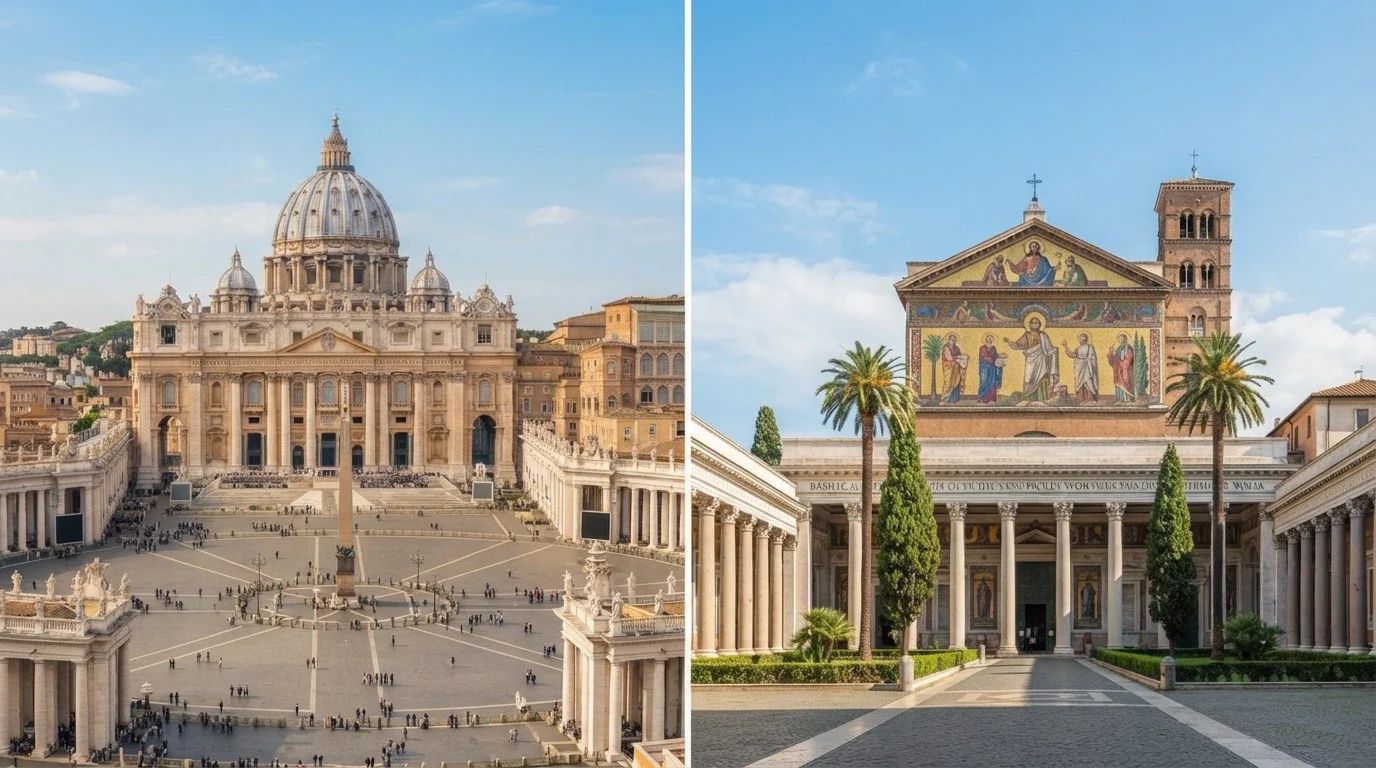
Why the Dedication of the Basilicas of Saints Peter and Paul Still Matters
The Church celebrates the Dedication of the Basilicas of Saints Peter and Paul on November 18. This feast is an optional memorial on the Roman calendar. It honours two great churches in Rome. Both stand above the graves of the apostles. Therefore, the day invites every believer to reflect on the courage of the earliest Christians.
To begin with, the word basilica comes from a Greek term for a royal hall. Roman officials used such halls for courts and public meetings. Later, Christians adopted the long and spacious design for worship. As a result, the shape suited large crowds of the faithful.
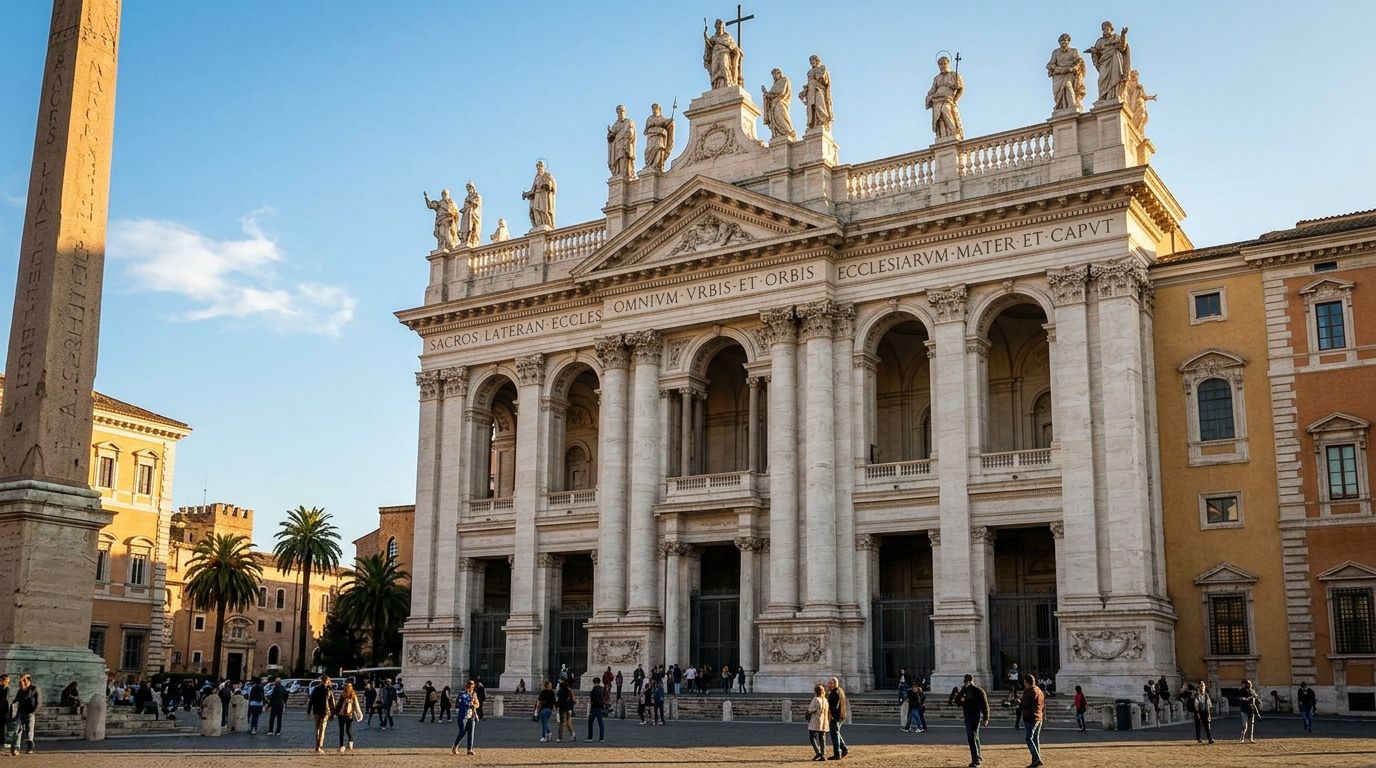
The story of these two churches starts with Emperor Constantine. After the persecutions ended, he gave Christians freedom to worship in public. In addition, he funded grand churches in Rome. Among them were the basilicas over the tombs of Peter and Paul. According to tradition, Pope Sylvester I consecrated them around the year 326. Together with Saint John Lateran and Saint Mary Major, they form the four major basilicas of Rome.
Why did Constantine choose those exact sites? The answer lies in the deaths of the apostles. Around the year 64, a great fire swept through Rome. Emperor Nero blamed the Christians for the disaster. Consequently, many believers faced arrest and execution. Tradition teaches that Peter died by crucifixion, while Paul died by beheading. Afterwards, the faithful buried Peter on Vatican Hill and Paul along the Ostian Way. Around the year 200, a Roman priest named Gaius wrote that he could point out the monuments of both apostles. Clearly, Christians never forgot where their leaders rested.
Meanwhile, the first basilica of Saint Peter rose on Vatican Hill. It stood for more than a thousand years. Over time, however, the old building weakened. Therefore, Pope Julius II laid the foundation stone of a new church on April 18, 1506. Many famous artists then shaped the project. Bramante, Michelangelo, Maderno and Bernini all left their mark. Finally, Pope Urban VIII consecrated the new basilica on November 18, 1626. That date fell exactly 1,300 years after the traditional consecration of the first church.
Likewise, the Basilica of Saint Paul Outside the Walls has a rich past. It stands beside the Ostian Way, close to the place of Paul’s burial. Later emperors enlarged the original church into a far grander building. However, a terrible fire destroyed most of it in July 1823. Fortunately, the flames spared the area around the altar above the apostle’s tomb. Over the following decades, builders rebuilt the church with great care. Pope Pius IX consecrated the new basilica on December 10, 1854. Bishops who had gathered in Rome for the proclamation of the Immaculate Conception joined the ceremony. Eventually, the Church moved the commemoration to November 18 so that it matched the feast of Saint Peter’s.
Interestingly, the liturgy of this day contains a rare feature. Although the feast recalls two churches, the Mass uses a single opening prayer for both. Moreover, before the reforms that followed the Council of Trent, almost no church outside Rome kept this feast. Afterwards, it spread across the Roman rite. Besides, the Dedication of the Basilicas of Saints Peter and Paul differs from the Solemnity of Saints Peter and Paul on June 29. That solemnity honours the apostles themselves, whereas today honours the churches built over their tombs.
Today, these basilicas still welcome pilgrims from every continent. In addition, every diocesan bishop travels to Rome at regular intervals to pray at the tombs of the apostles. The Latin name for this journey is ad limina apostolorum, which means to the thresholds of the apostles. Furthermore, Pope Pius X set the five-year rhythm of these visits in 1909. Thus, the graves of two martyrs still unite the Church around the world.
Furthermore, the Gospel for this memorial comes from Matthew chapter 14, verses 22 to 33. In this passage, Peter steps onto the water towards Jesus. Then fear overtakes him, and he begins to sink. Immediately, Christ reaches out and catches him. Therefore, the reading fits the feast perfectly. The Church rests on weak men who rely on the hand of the Lord. Similarly, Paul, once a persecutor, became the apostle to the Gentiles. Peter led the Church as the first pope, while Paul carried the message to foreign nations.
In conclusion, the Dedication of the Basilicas of Saints Peter and Paul reminds Catholics that faith needs a firm foundation. Moreover, the feast shows that both stones and prayers matter. Readers who wish to study further can visit the Catholic Culture liturgical calendar and the New Liturgical Movement article on the feast. In addition, the Opus Dei meditation for November 18 offers a helpful reflection for the day.
Leave a Reply