
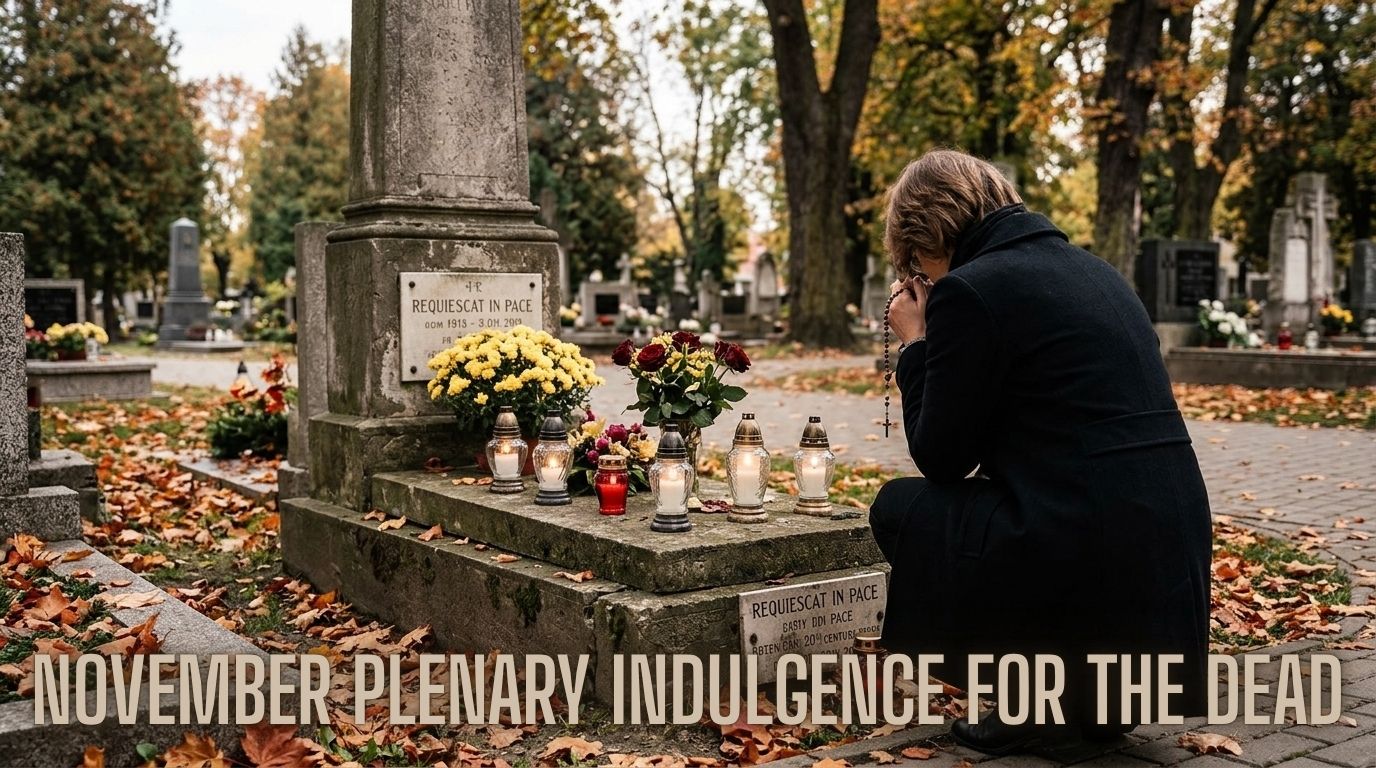
November Plenary Indulgences for the Dead: What Catholics Must Do
Every year, the Church offers special help to the faithful departed during the first eight days of November. In 2026, these days run from Sunday, November 1, to Sunday, November 8. During this time, Catholics who visit a cemetery and pray for the dead can gain a plenary indulgence each day. Moreover, these November plenary indulgences for the dead apply only to souls in purgatory. This guide explains the rules and clears up common confusion.
First, understand what an indulgence is. The Church teaches that sin has two consequences. Sin harms our friendship with God, and it also leaves a temporal punishment that needs purification. Sacramental confession forgives the sin itself. However, an indulgence deals with the remaining punishment. Therefore, an indulgence never replaces confession, and it does not forgive sin. Instead, it assumes that the sin has already been forgiven.
Next, look at the two main opportunities in early November. First, a plenary indulgence is available on each day from November 1 to November 8 for devoutly visiting a cemetery and praying for the departed. You may pray aloud or silently. Second, on All Souls’ Day, November 2, you can gain a plenary indulgence by devoutly visiting a church or public oratory and reciting the Our Father and the Creed. With your bishop’s permission, some places move this to a nearby Sunday or to All Saints’ Day.
What are the usual conditions? The Church asks for four things. First, you must go to sacramental confession. Second, you must receive Holy Communion. Third, you must pray for the intentions of the Pope, and an Our Father and a Hail Mary suffice. Fourth, you must be free from all attachment to sin, including venial sin. In addition, you must have the intention to gain the indulgence. Without all these conditions, the indulgence is only partial.
Timing also matters. Ideally, confession, Communion and the prayer for the Pope’s intentions take place on the same day as the indulgenced work. However, this is not always possible. Therefore, the Church allows you to complete confession and the other conditions within about twenty days before or after the cemetery visit. One confession can cover several plenary indulgences. Nevertheless, you need a separate Communion and a separate prayer for the Pope’s intentions for each indulgence.
Now consider the limits. First, you can gain only one plenary indulgence per day, with a narrow exception for a person at the point of death. Second, these November indulgences apply only to the souls in purgatory. You cannot gain them for yourself or for other living people. Third, the Church offers them by way of prayer, so God decides how to apply them. EWTN News reports that you can possibly release one soul per day. However, the Church does not promise a specific result. Therefore, avoid saying that a soul is certainly freed.
Some people ask about a cemetery visit after November 8. In that case, you may gain only a partial indulgence for the dead. In 2020, the Vatican extended these indulgences to the whole month of November, because of the pandemic. However, that was a special decree for that year. As a result, you should assume that the normal rule of November 1 to 8 applies, unless your bishop or the Apostolic Penitentiary announces otherwise. People who cannot leave home, such as the sick or elderly, should ask their priest for guidance.
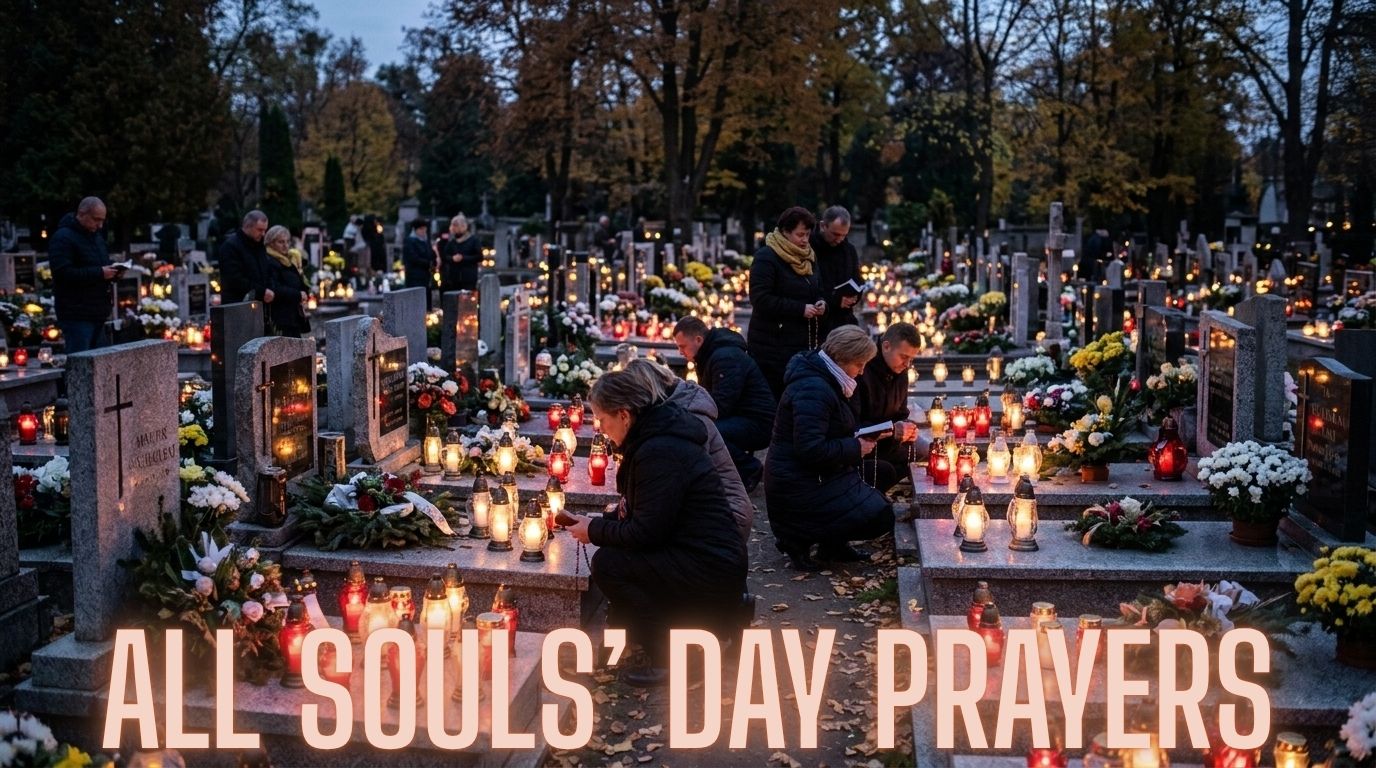
How can you prepare? First, plan your confession early in the week. Second, choose a cemetery and a time. Third, pray for your departed loved ones, using a short prayer such as the Eternal Rest. In addition, you can pray for forgotten souls whom nobody remembers. You can also offer Mass for the dead. For more detail, read the EWTN and the EWTN UK. You can also read All Souls’ Day Prayer.
In conclusion, November plenary indulgences for the dead offer a real act of mercy. They combine confession, Communion and prayer with a visit to those we have lost. Likewise, they remind us that love continues beyond death. Therefore, prepare carefully and pray with trust. Ask your parish priest if you have questions about your own situation.


Leave a Reply