
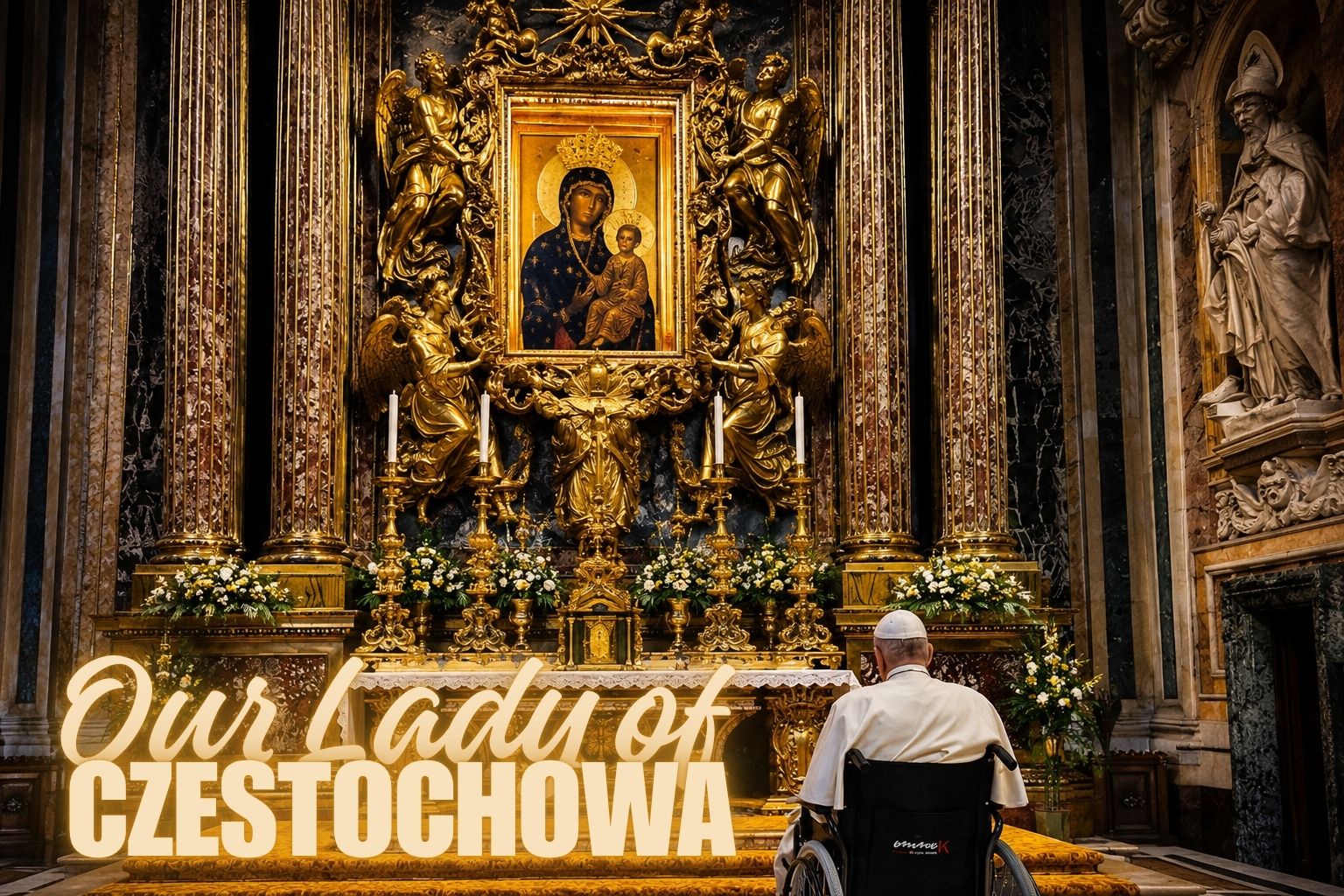
Image credit: Jasna Góra Monastery / Wikimedia Commons
Our Lady of Czestochowa: The Black Madonna Who Guards Poland
Our Lady of Czestochowa holds a place unlike almost any other Marian image in the Catholic world. Housed at the Jasna Góra Monastery in Poland, this darkened icon has survived arrows, swords and invading armies across nearly seven centuries. Her story blends ancient legend with documented history, and her continuing influence over Polish faith and identity remains genuinely remarkable.
Our Lady of Czestochowa’s Feast Day Falls on 26 August
The Catholic Church celebrates Our Lady of Czestochowa every year on 26 August, a date that draws thousands of pilgrims to Jasna Góra annually. The Eastern Orthodox Church honours the same image separately, on either 6 or 19 March depending on the calendar used. Pope Pius XI also established a secondary feast on 3 May, commemorating the Black Madonna’s role in Poland’s 1920 military victory over Soviet forces.
Legendary Origins Tracing Back to Saint Luke
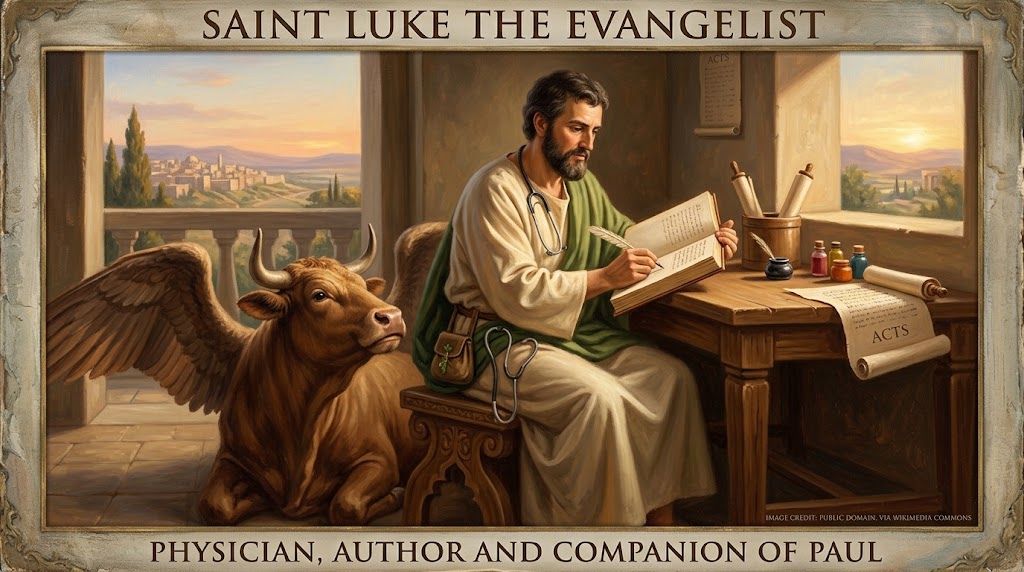
According to long-standing tradition, Saint Luke the Evangelist painted the original image on a cedar tabletop taken from the Holy Family’s own home. Legend holds that Saint Helena, mother of Emperor Constantine, discovered the painting in Jerusalem around 326 and carried it back to Constantinople. From there, the icon supposedly passed through numerous royal hands before eventually reaching Poland.
Art historians offer a more measured assessment, suggesting the painting likely originated as a Byzantine work created sometime between the sixth and fourteenth centuries. Regardless of its precise origin, historical documentation becomes considerably clearer once Prince Władysław of Opole acquired the image during the fourteenth century.
Why the Image Became Known as the Black Madonna
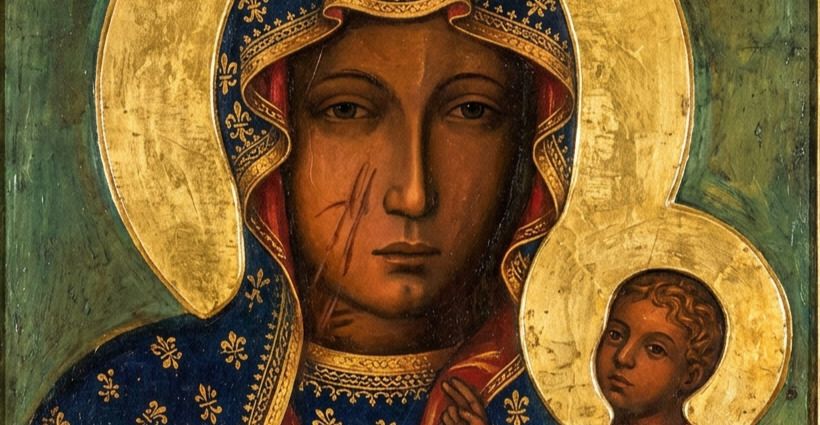
Our Lady of Czestochowa gradually darkened over centuries of candle smoke and protective handling, giving the icon its distinctive nickname. The image itself follows the traditional Hodegetria style, meaning Mary gestures toward the infant Jesus, directing all attention toward her son as humanity’s source of salvation. This artistic choice reflects a deliberately humble theological message embedded within the painting’s very composition.
Attacks That Left Lasting Scars
In 1382, Tartar raiders attacked Prince Władysław’s fortress at Belz, and an arrow reportedly struck the painting, lodging directly in Mary’s throat. Fearing further danger, the prince fled toward Częstochowa, eventually establishing the Pauline Monastery that still guards the image today. During this journey, legend recounts that his horses suddenly refused to move further, which he interpreted as a divine sign to leave the icon at Jasna Góra permanently.
Further violence followed in 1430, when Hussite raiders stormed the monastery attempting to steal the treasured painting. One attacker reportedly struck the image twice with his sword before collapsing in sudden agony and dying on the spot. Both the sword slashes and the earlier arrow wound remain visible on Mary’s cheek today, serving as permanent reminders of the icon’s turbulent history.
The Siege That Cemented Her Legacy
Our Lady of Czestochowa achieved lasting national significance during the 1655 Swedish invasion, when Charles X’s forces overran most of Poland. Jasna Góra Monastery famously withstood a prolonged siege, an outcome many Poles credited directly to Mary’s protective intercession. Following this victory, King Jan Kazimierz formally declared Mary Queen and Protector of the Polish Kingdom, cementing her enduring status as the nation’s spiritual guardian.
A Living Devotion Through Modern History
Devotion to Our Lady of Czestochowa continued strongly through the twentieth century, even amid tremendous political hardship. During the Nazi occupation, authorities banned pilgrimages to Jasna Góra entirely, yet countless Poles still travelled there secretly. A young seminarian named Karol Wojtyła, later Pope John Paul II, reportedly made such a clandestine visit himself, an experience that shaped his lifelong Marian devotion.
Communist authorities later grew so suspicious of a travelling copy of the icon that they officially “arrested” it in 1966, holding it in custody until 1972. Despite these repeated attempts at suppression, devotion to the Black Madonna never diminished, and Jasna Góra remains Poland’s most visited religious shrine today.
Why Our Lady of Czestochowa Still Matters
Our Lady of Czestochowa continues drawing pilgrims from across the globe, including a growing shrine dedicated to her in Doylestown, Pennsylvania. Readers wanting to explore more Marian devotions can browse our Marian Apparitions and Icons archive for further reading. For additional historical detail, Encyclopaedia Britannica’s overview of the Black Madonna offers useful further context.
Every 26 August, believers worldwide pause to honour an image that has quietly outlasted empires, wars and entire political systems, remaining Poland’s steadfast spiritual anchor throughout it all.

Leave a Reply