
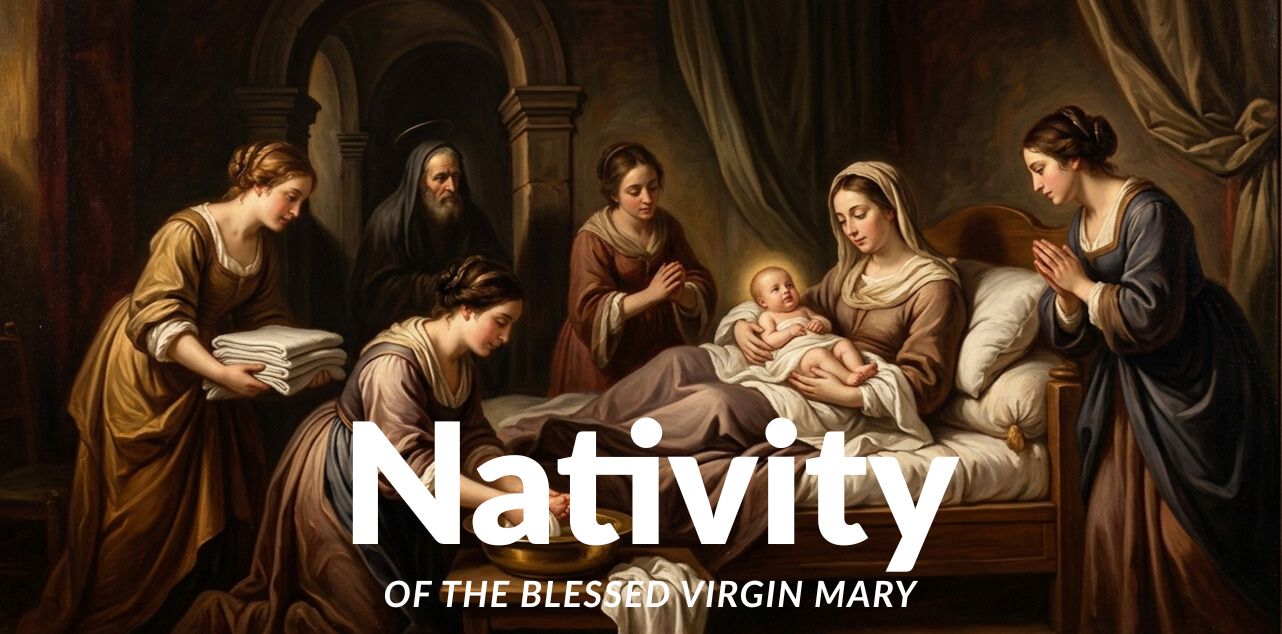
Nativity of the Blessed Virgin Mary: History and Meaning
The Nativity of the Blessed Virgin Mary ranks among the oldest and most beloved feasts of the Catholic Church. Indeed, it celebrates the very beginning of the story that leads to Christ’s birth. Let us explore the origins, traditions and the lasting significance of the Nativity of the Blessed Virgin Mary within Catholic worship.
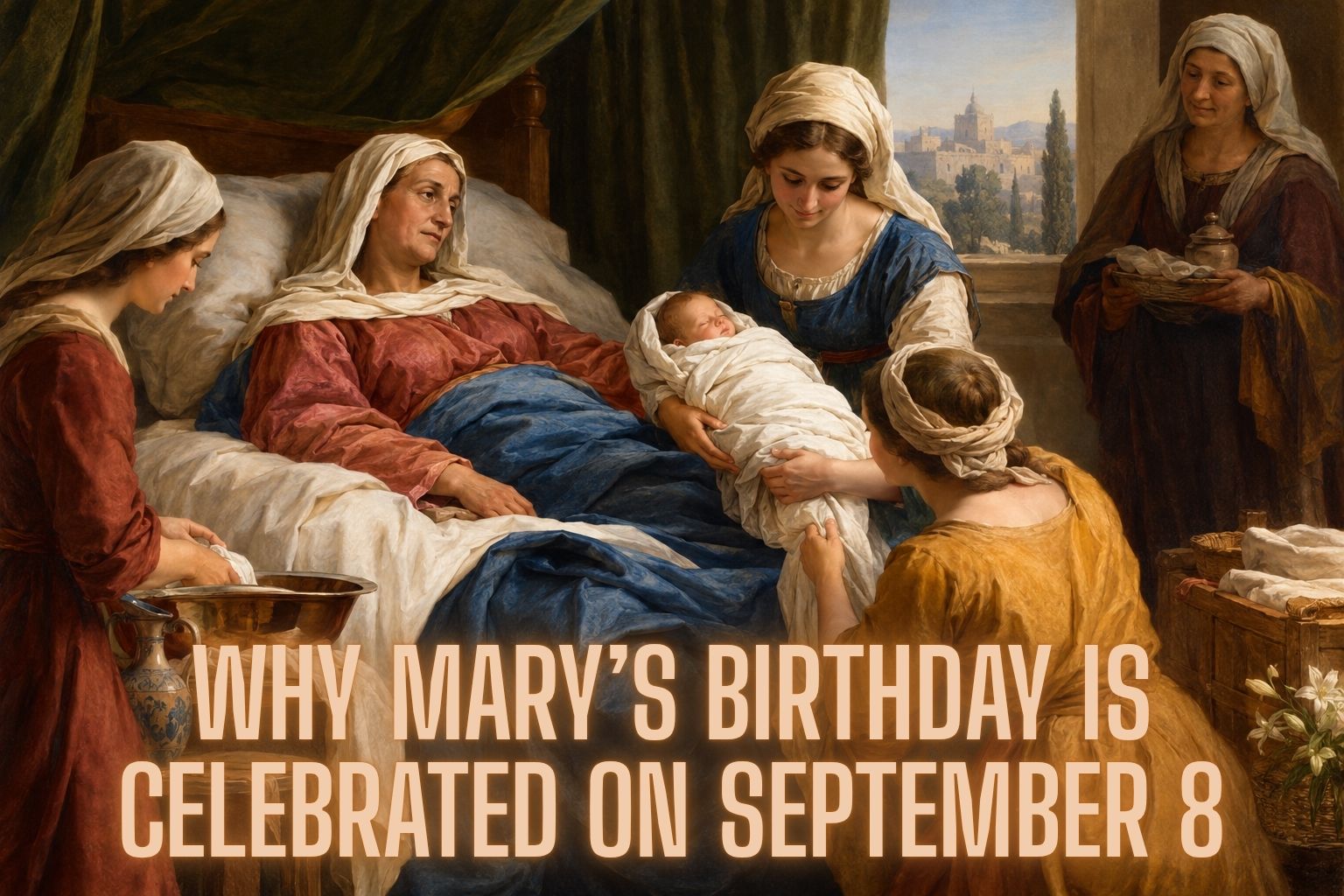
The Church celebrates the Nativity of the Blessed Virgin Mary every year on September 8. Remarkably, this date falls exactly nine months after the Solemnity of the Immaculate Conception on the eighth of December 8. Furthermore, the liturgical calendar recognises only three birthdays: that of Jesus, John the Baptist and Mary. Consequently, this feast holds a rare and honoured place among all the celebrations of the Church year.
The Nativity of the Blessed Virgin Mary began in Jerusalem, likely during the fifth or sixth century. Early Christians gathered near the Pool of Bethesda, close to a church now known as Saint Anne’s, since tradition placed Mary’s birthplace at that very site. Later, Pope Sergius I introduced the feast to Rome during his reign between 687 and 701. He also prescribed a litany and a solemn procession as part of its celebration. Afterwards, devotion to the Nativity of the Blessed Virgin Mary spread quickly throughout the Western Church, especially in France.
Scripture never actually records the birth of Mary, so the Church instead relies on an ancient text called the Protoevangelium of James. Although this second-century writing is not part of the Bible, it has shaped Christian tradition for centuries. According to this account, Mary’s parents, Saints Joachim and Anne, had remained childless for many years despite their devotion to God. One day, an angel appeared to Anne and promised that she would finally conceive a daughter. Consequently, Christians came to view Mary’s arrival as a joyful answer to years of faithful prayer.
Theologically, the Nativity of the Blessed Virgin Mary points directly towards the coming of Christ. Since Mary was conceived without sin, her birth marks the dawn of humanity’s redemption rather than an ordinary beginning. Pope Paul the VI once described her birth as the very “dawn of salvation” in his document Marialis Cultus. Therefore, the Church links this feast to the theme of light overcoming darkness, since Mary’s arrival prepares the way for Christ, the true Light of the World. Saint John Damascene likewise praised this day, calling it the beginning of the whole work of salvation.
Across the centuries, ordinary Catholics have developed charming customs around the Nativity of the Blessed Virgin Mary. In France, winegrowers nicknamed the feast “Our Lady of the Grape Harvest,” since it falls during the grape-picking season. On this day, they bring their finest grapes to church for a blessing and some families still attach small bunches to statues of Mary. Similarly, older forms of the Roman Ritual include a special blessing for autumn planting seeds. These agricultural traditions show how deeply this feast became woven into everyday rural life throughout Europe.
The Nativity of the Blessed Virgin Mary invites believers to reflect on hope after long waiting, much like Joachim and Anne experienced. Readers can find the full liturgical history of this feast on Vatican News’s official page.
The Nativity of the Blessed Virgin Mary reminds Catholics that even the smallest beginnings can carry immense significance. Her birth quietly opened the path towards the redemption of the whole world.
Leave a Reply