

Understanding the Feast of Our Lady of Sorrows and Why It Falls on the Fifteenth of September
Every year, on the fifteenth of September, the Catholic Church observes the Feast of Our Lady of Sorrows. This solemn day arrives immediately after the Feast of the Exaltation of the Holy Cross and therefore it carries a natural link to Christ’s passion. Consequently, the timing is far from accidental. As believers honour the Cross on the fourteenth, they then turn their attention to the woman who stood beside it. The Feast of Our Lady of Sorrows invites the faithful to reflect on the anguish that Mary endured throughout her earthly life. Furthermore, it reminds Catholics that Mary is not merely a distant figure of glory, but also a mother who suffered profoundly. As a result, many people find her example deeply comforting during their own trials.
The roots of this devotion stretch back to the twelfth century. Indeed, historians trace early expressions of Marian sorrow to that period, long before the feast received an official date. The Cistercians and the Servite Order later promoted the devotion with great enthusiasm. As a consequence, by the fourteenth and fifteenth centuries, the observance had spread widely across the Catholic world. In 1482, the feast entered the Roman Missal under a different title, namely Our Lady of Compassion. This name highlighted the depth of love that Mary showed while suffering alongside her Son. Notably, the word compassion originates from Latin roots meaning “to suffer with,” which perfectly captures her role at Calvary.
Later, in 1727, Pope Benedict XIII placed the Feast of Our Lady of Compassion within the Roman Calendar, fixing it for the Friday before Palm Sunday. Meanwhile, a separate observance known as the Seven Dolours had already been developing alongside it. In 1668, this feast was assigned to the Sunday following the 14th of September. Then, in 1814, Pope Pius VII extended the celebration to the entire Latin Church. He reportedly credited Mary’s intercession for his liberation from difficult exile and therefore he wished the whole Church to honour her. Finally, in 1913, Pope Pius X fixed the permanent date as 15th September. From that point onward, the title simplified to Our Lady of Sorrows and the earlier Friday observance was eventually suppressed during the 1969 calendar reforms.
Traditionally, devotees meditate upon seven specific sorrows that Mary experienced:
- Firstly, there is the prophecy of Simeon, who warned that a sword would pierce her heart.
- Secondly, the flight into Egypt tested her family’s safety and endurance.
- Thirdly, the loss of the child Jesus in the temple caused three days of anguished searching.
- Fourthly, Mary’s meeting with Jesus along the road to Calvary deepened her grief considerably.
- Fifthly, she witnessed the crucifixion itself while standing at the foot of the Cross.
- Sixthly, she received her Son’s body after it was taken down from the wood.
- Finally, she watched over his burial, completing this sorrowful sequence.
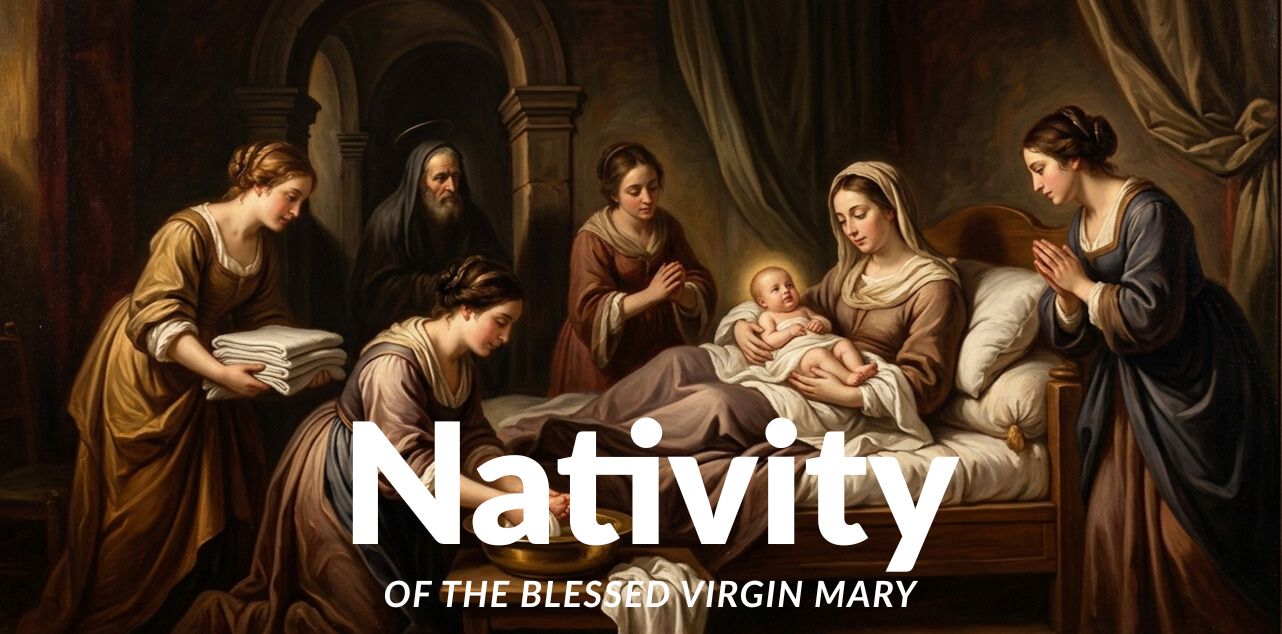
These seven moments form the basis of a specific prayer practice called the Seven Sorrows Rosary. Unlike the traditional Rosary, this devotion pairs each sorrow with one Our Father and seven Hail Marys. Consequently, it offers a distinct rhythm for contemplative prayer. Many parishes encourage this devotion particularly during September, since the month already contains both the Nativity of Mary on the eighth and this sorrowful feast on the fifteenth.
Interestingly, different cultures mark this feast with their own customs. In Italy, for example, the devotion carries the title Maria Santissima Addolorata and it began as early as the 1200s. She serves as patroness for numerous Italian towns and cities. In southern Italy specifically, communities celebrate La Festa della Madonna dei Sette Dolori, a festival instituted in 1423. This event features a traditional dish called cuccia salata, made from wheat berries simmered in meat broth and layered with either goat or pork. Such customs demonstrate how deeply this feast became woven into local identity across generations.
Within the Mass itself, the liturgy offers an optional sequence called the Stabat Mater, which may be sung or recited before the Gospel reading. This ancient hymn poetically describes Mary standing sorrowfully at the Cross. Moreover, the Gospel reading for the day often draws from Luke, recounting Simeon’s prophecy that a sword would pierce her soul. Scripture also notes that several women, including Mary the wife of Clopas and Mary Magdalene, stood near the Cross alongside the Blessed Mother.
Ultimately, this feast offers something universal, since suffering touches every human life eventually. Whether through illness, bereavement, or personal struggle, people naturally search for meaning amid pain. Therefore, Mary’s example becomes particularly relevant, because she remained faithful despite overwhelming grief. Her sorrow, unlike ordinary human sorrow, arose from watching her own divine Son suffer and die. Nevertheless, she did not abandon hope and this steadfastness continues to inspire believers worldwide.
Many shrines dedicated to Our Lady of Sorrows welcome pilgrims throughout September, offering quiet spaces for reflection and prayer. Visitors often bring their own burdens to her, trusting that she understands sorrow intimately. In this way, the feast becomes more than a historical commemoration. Rather, it functions as a living invitation to unite personal suffering with something greater.


Leave a Reply