
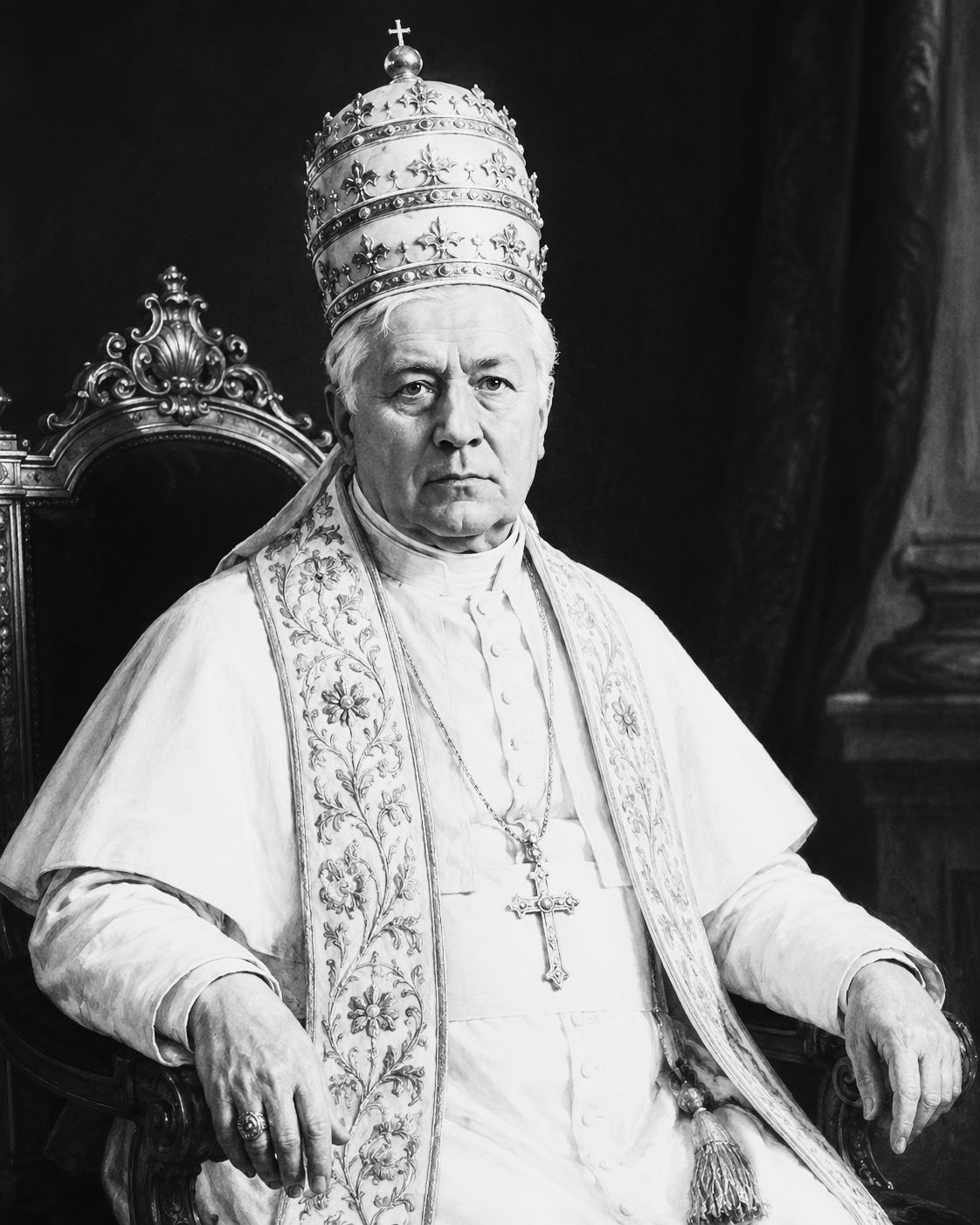
The Pope Who Restored All Things in Christ
Saint Pius X remains one of the most beloved popes in modern Catholic history, and the Church honours him every year on 21 August. Born into poverty, he rose to lead the Catholic Church for eleven years, yet he never let go of the simplicity that shaped his childhood. His story offers a refreshing reminder that holiness often grows from humility rather than grandeur.
Saint Pius X’s Feast Day Falls on 21 August
The Church celebrates Saint Pius X’s feast day on 21 August, close to the anniversary of his death on 20 August 1914. He originally received a September feast date after his 1954 canonisation, but the Church moved it in 1969 so the faithful could mark his memory nearer the actual day he died. Catholics around the world now mark the occasion with special Masses and many parishes named after him hold parish feasts.
Humble Beginnings in Northern Italy
Giuseppe Melchiorre Sarto was born in 2 June 1835 in Riese, a small town in the Austrian Empire that later became part of Italy. He grew up as the second of ten children in a poor household; his father delivered the post and his mother raised the family with strict but loving discipline. Despite their limited means, his parents valued education highly and young Giuseppe walked several kilometres to school each day.
He received the tonsure in 1850 and later earned a scholarship to the Seminary of Padua. Bishop Giovanni Antonio Farina ordained him a priest on 18 September 1858. Sarto then served as a parish priest, then as a bishop in Mantua and eventually as Patriarch of Venice, where Pope Leo XIII made him a cardinal in 1893.
Saint Pius X Rises to the Papacy in 1903
Following Pope Leo XIII’s death, cardinals gathered for the 1903 conclave. Sarto reportedly hoped he would not be chosen, yet the votes swung decisively in his favour after a controversial veto attempt by Austria-Hungary derailed the leading candidate. The cardinals elected him on 4 August 1903 and he took the name Pius X out of respect for his predecessors who also suffered greatly for the faith.
As pope, he adopted the motto Instaurare omnia in Christo — “to restore all things in Christ.” He famously kept wearing an inexpensive pectoral cross at his coronation and refused to grant his own sisters noble titles, telling critics that they were already “sisters of the Pope.”
Saint Pius X Reshapes Catholic Worship
Saint Pius X left a lasting mark on Catholic liturgy and devotion. He championed Gregorian chant through his 1903 document Tra le sollecitudini and encouraged frequent, even daily, reception of Holy Communion. In 1910, his decree Quam singulari lowered the age for First Communion from twelve to seven, a change that transformed how families approach the sacrament to this day.
He also pushed for wider catechesis, requiring every parish to establish the Confraternity of Christian Doctrine so children could receive proper religious instruction. Alongside these reforms, he began the process that eventually produced the Church’s first unified Code of Canon Law in 1917, work that his successors completed after his death.
Saint Pius X Confronts Modernism
Saint Pius X viewed Modernism as a serious threat to Catholic doctrine and he responded with unusual firmness. His 1907 decree Lamentabili sane exitu condemned dozens of Modernist propositions and his encyclical Pascendi Dominici gregis labelled the movement the “synthesis of all heresies.” He even required clergy to take an Anti-Modernist oath, a policy that stirred controversy but reflected his deep concern for doctrinal unity.
His firm stance also shaped Church relations abroad. He clashed with the French government over the 1905 law separating Church and state and he maintained a cautious distance from several secular governments that challenged papal authority.
Death and Enduring Legacy
World War I broke out just as Saint Pius X’s health declined sharply and friends said the looming conflict deepened his sorrow. He died on 20 August 1914, only hours before German forces entered Brussels. True to his lifelong simplicity, he asked that his body not be embalmed, a wish his successors have honoured ever since.
Pilgrims soon began visiting his tomb beneath Saint Peter’s Basilica and devotion to him grew steadily over the following decades. When his body was exhumed in 1944 for the beatification process, examiners found it remarkably well preserved.
Canonisation of Saint Pius X
Pope Pius XII beatified him in 1951 and canonised him on 29 May 1954, following the recognition of miraculous healings attributed to his intercession. He became the first pope canonised since Pius V, more than two centuries earlier. Today, Catholics know him as the “Pope of the Blessed Sacrament,” and parishes across Italy, Germany, Canada and the United States carry his name.
For readers who want to explore more saints connected to the liturgical calendar, our Catholic Saints archive offers further profiles worth reading. Those interested in verifying the historical record can also consult the Vatican’s official biography of Pius X for primary source material.
Saint Pius X’s life shows that genuine reform in the Church often starts with humility, not ambition. His feast day, 21 August invites Catholics to reflect on simplicity, devotion to the Eucharist and steadfast faith in the face of change.
Leave a Reply