
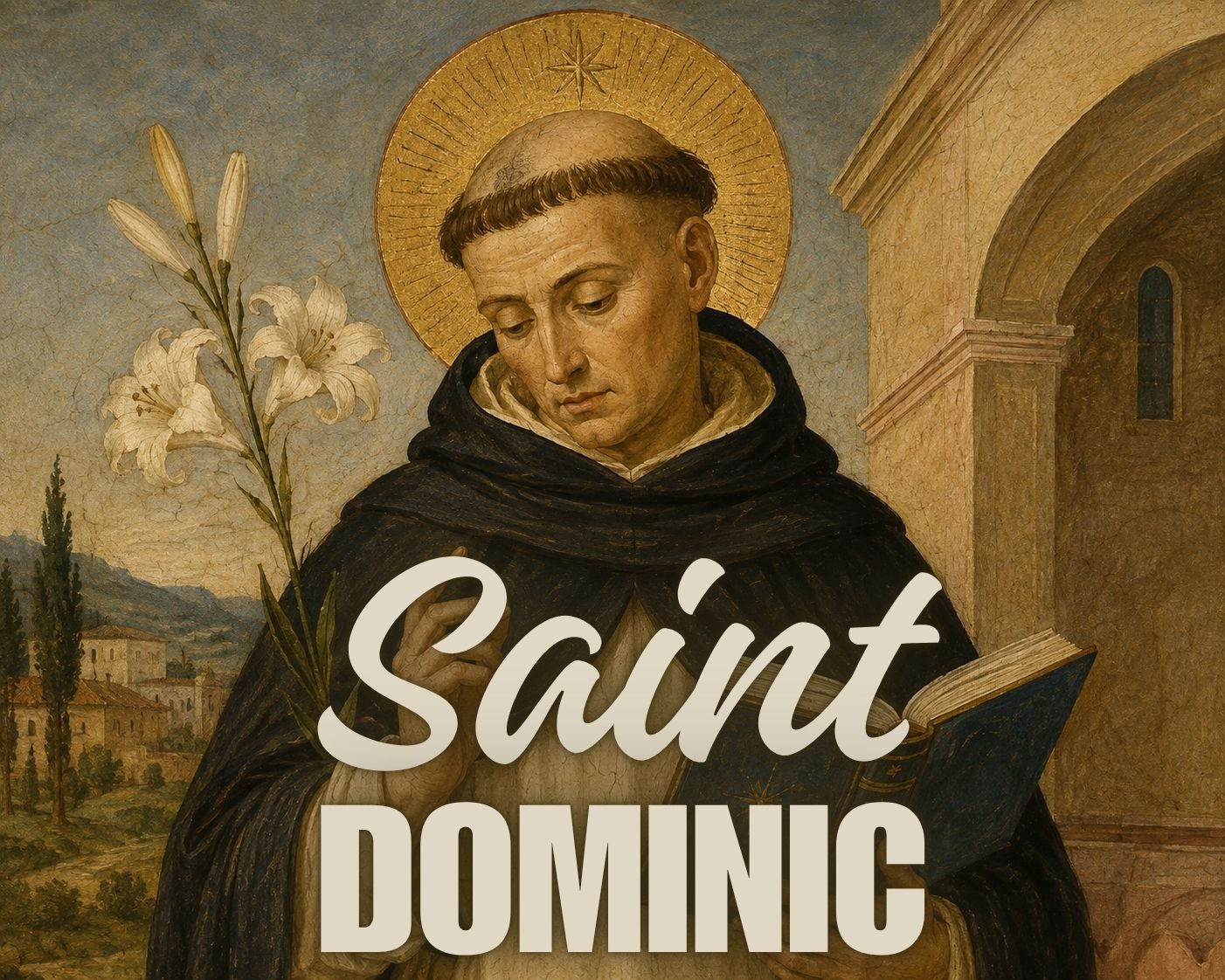
The Feast of Saint Dominic falls every year on August 8, honouring the thirteenth-century priest who founded the Order of Preachers and spread devotion to the Holy Rosary. Surprisingly, though, Dominicans themselves treat this date rather modestly. According to Dominican Father Angelo Giuseppe Urru, the August feast remains meaningful, but it is not the order’s primary celebration. That distinction instead belongs to a lesser-known feast held every May.
The Feast of Saint Dominic Takes a Back Seat to May 24
While the August feast is always meaningful to the order, Dominicans celebrate more solemnly on May 24, marking the Solemnity of the Translation of Saint Dominic. This unusual feast commemorates the day his remains were moved from their original burial spot to a more prominent place within the same Bologna church. For many Dominican provinces around the world, this May date represents the true highlight of their liturgical year.
A Body Moved at the Pope’s Request
The translation took place in 1233, carried out at the request of Pope Gregory IX roughly one year before Dominic’s canonization on July 13, 1234, just thirteen years after his death. Dominic had originally been buried behind an Altar at the church of San Nicolò delle Vigne in Bologna, Italy. Blessed Jordan of Saxony, one of the earliest leaders of the Dominican Order, documented the event firsthand in a personal letter that survives to this day.
An Unexpected Fragrance Instead of Decay
According to Jordan, the friars genuinely feared a foul odor before exhuming the body because water and heat had damaged the poorly built tomb. Instead, witnesses reported a remarkably sweet perfume rising from the coffin the moment it opened, astonishing everyone present and moving many to tears. Jordan wrote that this fragrance lingered afterward, transferring instantly to anyone who touched the body or any nearby object. He described the phenomenon as clear evidence of how completely the saint had embodied what Scripture calls the good fragrance of Christ.
From Parish Church to Basilica
By 1240, the church housing Dominic’s remains had been significantly expanded and renamed in his honour, eventually becoming the basilica that still bears his name in Bologna today. Meanwhile, the Basilica of Santa Sabina in Rome, the Dominicans’ mother church, now hosts the order’s annual May 24 Mass. Tradition calls for a Franciscan priest to celebrate and preach at this liturgy, after which the procession pauses at the basilica’s first side chapel to sing the “O Lumen,” a traditional antiphon written in Dominic’s honour.
Few Physical Relics Remain Today
Beyond his tomb in Bologna, remarkably few physical relics of Dominic still exist. A notable exception is a fragment of his skull, which rests at Rome’s Santa Maria del Rosario on Monte Mario. Tradition says students from Bologna took it there generations ago for their own chapel. A small breviary once used by Dominic also survives among the order’s few remaining artifacts.
Continued Growth Eight Centuries Later
In 2016, the Dominicans marked the 800th anniversary of their founding with a jubilee year, capped by an International Congress for the Mission of the Order held in Rome that January. Father Urru expressed gratitude for the vocations still sustaining the order’s work worldwide, noting particular growth in provinces across Vietnam, Africa and even the United States. Numerous initiatives continue across the globe today, much as they have for the past eight centuries, though Urru acknowledged that the order’s long-term future ultimately rests in God’s hands.
Why This Distinction Still Matters
Understanding the Feast of St. Dominic alongside its lesser-known May counterpart offers a fuller picture of how the Dominican order remembers its founder. For readers exploring the saint’s original biography, our profile of Saint Dominic covers his life and the founding of the Order of Preachers in full. This story was first reported by EWTN News, building on original reporting first published in 2017.
Leave a Reply