
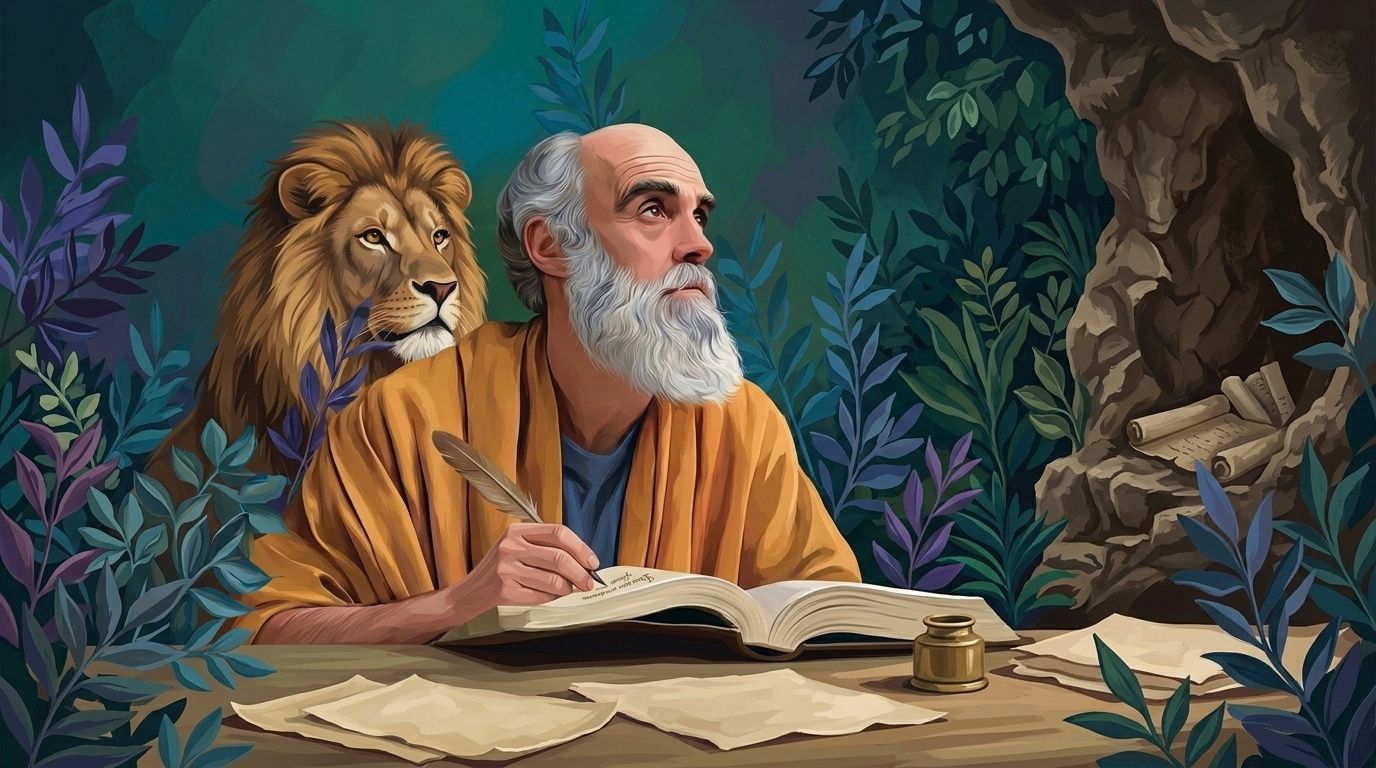
Image Credit: America Needs Fatima, modified by Canva
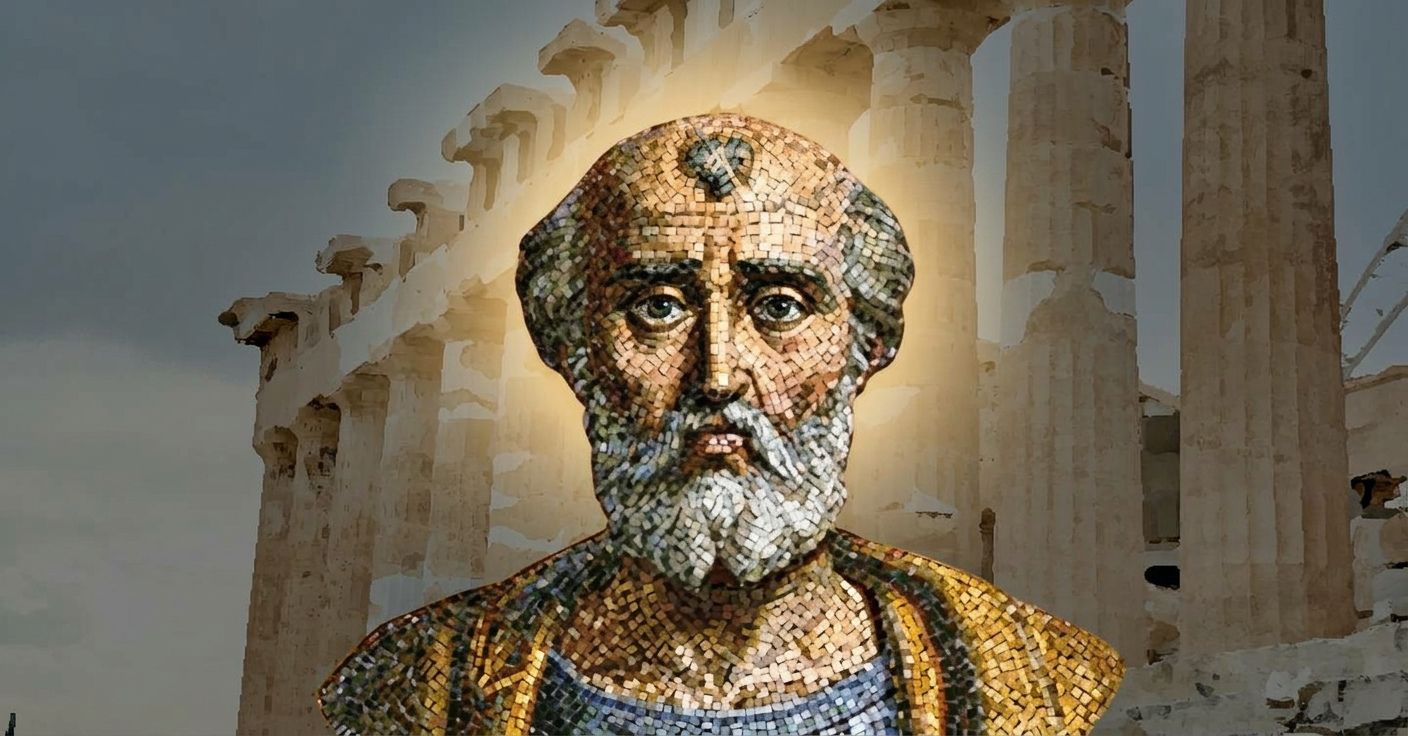
Saint Silverius: The Pope Who Starved for the Faith
Feast Day: June 20
The Church remembers St. Silverius on June 20, honoring a pope whose brief reign ended in political betrayal, exile, and martyrdom. He died in 537, a victim of the power struggles between East and West, between Gothic and Byzantine ambitions, that convulsed 6th-century Italy.
Son of a Pope, Raised for the Throne
Silverius was born in Frosinone, Lazio, the legitimate son of Pope Hormisdas. This papal parentage gave him unusual status from birth. However, his father had not yet entered the priesthood when Silverius was born, making him technically eligible for papal office himself—a significant detail in an era when nepotism was common yet still controversial.
When Hormisdas became pope in 514, Silverius grew up in the Lateran Palace, surrounded by ecclesiastical politics. He witnessed his father’s efforts to heal the Acacian Schism between Rome and Constantinople. He learned diplomacy, administration, and the treacherous currents that swirled around the papal throne.
By 536, Silverius was a subdeacon—a relatively low rank in the Roman clergy. Then King Theodahad of the Ostrogoths intervened.
A Forced Election in Treacherous Times
Theodahad, nephew of the great Theodoric, wanted a pro-Gothic pope. The Gothic War was looming. Byzantine Emperor Justinian I was preparing to reconquer Italy. Theodahad needed someone on the papal throne who would support his cause.
Silverius was his choice. Historian Jeffrey Richards suggests that Theodahad “had passed over the entire diaconate as untrustworthy,” finding in the subdeacon Silverius a candidate he could control. The Liber Pontificalis alleges that Silverius purchased his elevation from the king—whether this was true or merely hostile rumor remains unclear.
Silverius was probably consecrated on June 8, 536. He had barely settled into office when events exploded around him.
On December 9, 536, the Byzantine general Belisarius entered Rome with Silverius’s approval. Theodahad’s successor, Witiges, gathered an army and besieged the city for months. Rome suffered privation and starvation. The Gothic War had begun in earnest, and Silverius was caught between competing powers.
Deposed by a General’s Wife
Empress Theodora in Constantinople wanted a different pope. She favored monothelitism—a Christological position that Silverius opposed. She wanted someone more compliant, more Eastern in orientation. Her instrument was Belisarius, but the general needed a pretext.
Enter Antonina, Belisarius’s wife. She accused Silverius of conspiring with the Goths. The charge was politically convenient, whether true or false. Belisarius deposed Silverius in March 537. The pope was stripped of his vestments, dressed as a monk, and exiled to Patara in Lycia.
At Patara, the local bishop was outraged. He petitioned Emperor Justinian for a fair trial. Justinian, rattled by this appeal, ordered Silverius returned to Rome for proper proceedings.
However, Vigilius intervened. Vigilius was the papal apocrisiarius—legate—in Constantinople, and Theodora’s chosen candidate. Instead of a trial, Belisarius handed Silverius over to Vigilius, who banished him to the desolate island of Palmarola in the Pontine Islands.
There, deprived of sufficient food, Silverius starved to death. The date was December 2, 537—barely a year and a half after his election.
Competing Accounts and Historical Debate
The sources disagree on details. The Breviarium of Liberatus of Carthage portrays Vigilius as “a greedy and treacherous pro-Monophysite who ousted and virtually murdered his predecessor.” Liberatus claims Vigilius promised Theodora to restore the deposed Patriarch Anthimus of Constantinople in exchange for the papacy.
The Liber Pontificalis offers a slightly different version. It agrees that Anthimus’s restoration motivated Silverius’s deposition, but claims Vigilius initially tried to persuade Silverius to agree to this rather than replace him. When Silverius refused, Vigilius manufactured false witnesses accusing him of writing to Witiges offering to betray Rome. Belisarius didn’t believe the accusation, but Vigilius persisted until the general relented.
Procopius, the secular historian, omits religious controversy entirely. He writes that Silverius was accused of offering to betray Rome to the Goths, deposed, dressed as a monk, and exiled to Greece. Several senators suffered similar fates.
Modern historian Jeffrey Richards attempts reconciliation. He points out that Liberatus wrote during the Three-Chapter Controversy, when Vigilius was regarded as anti-Christ by opponents. Remove these religious polemics, Richards argues, and “the whole episode was political in nature.” Justinian needed a pro-Eastern pope for his Italian reconquest. Vigilius, whose principal motivation was always becoming pope, served this purpose perfectly.
From Obscurity to Popular Saint
Silverius perished without fanfare in the 6th century. Yet popular devotion transformed him into a saint.
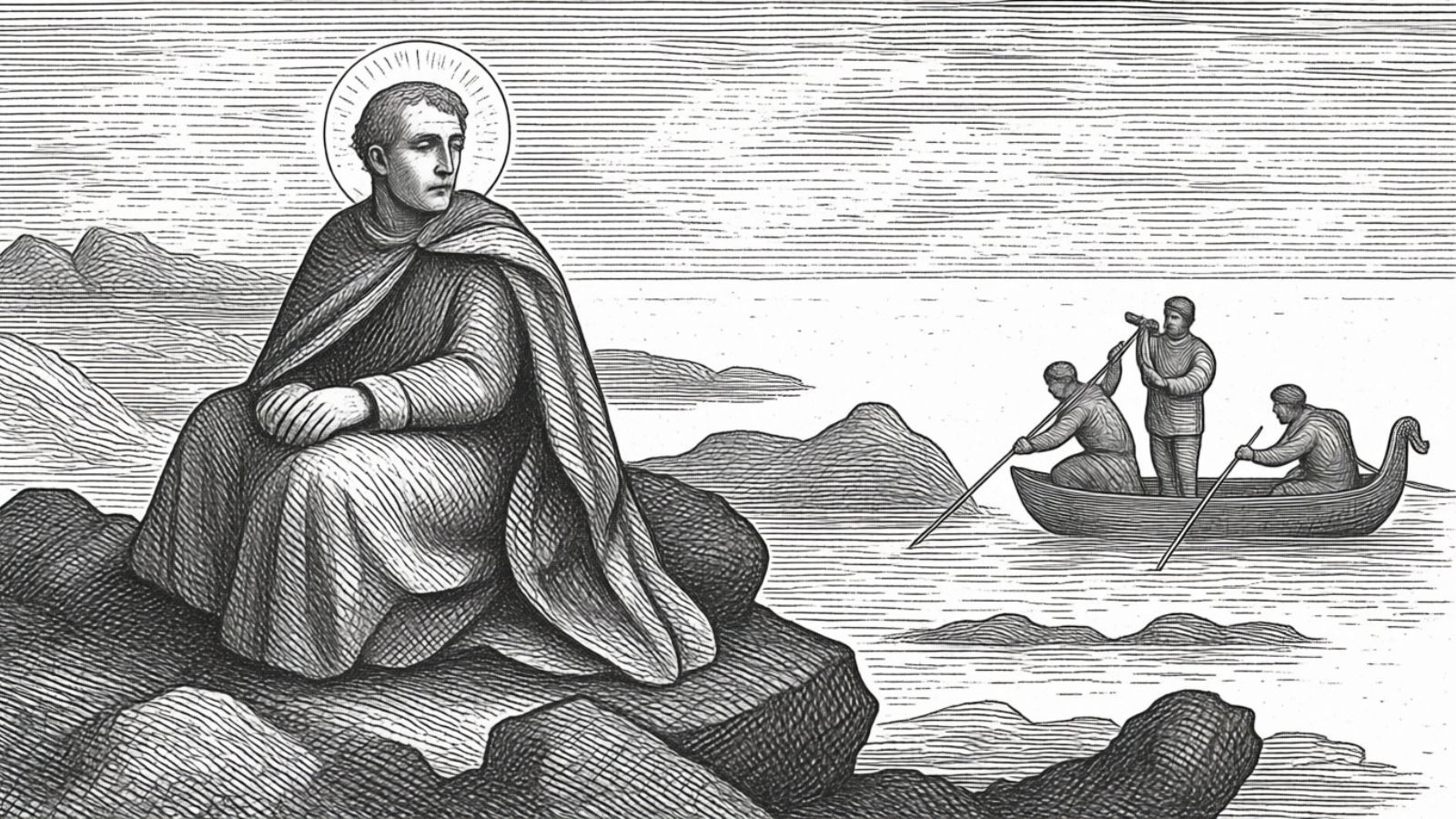
According to Ponza Islands legend, fishermen in a small boat faced a storm off Palmarola. They called on Saint Silverius for help. An apparition directed them to Palmarola, where they survived. This miracle established his cult. The first mention of his name in a saint list dates to the 11th century.
He became patron of Ponza, Italy. Ponzese emigrants brought his devotion to the United States, particularly to the Morrisania section of the Bronx. There, they celebrated the Festival of San Silverio at Our Lady of Pity Church on 151st Street and Morris Avenue.
In 1987, the San Silverio Committee of Morris Park Inc. was founded, allowing devotees to celebrate closer to home. They gather at Saint Clare of Assisi Church for Mass and neighborhood procession on June 20. The committee also honors Saint Anthony and the Immaculate Conception with novenas and processions.
After Our Lady of Pity was deconsecrated in November 2017, the statue of San Silverio found a home at St. Ann’s Church in Yonkers, New York. The feast continues there every June 20 with special Mass and procession.
What Silverius Teaches Us
His story is tragedy without obvious triumph. He did not reform the Church, write influential theology, or perform dramatic miracles during his lifetime. He was a political pawn, elevated by one power, destroyed by another, forgotten by history until popular devotion rescued him.
Yet precisely this obscurity makes him relatable. Most Christians do not change history. They endure it. They suffer circumstances beyond their control, betrayed by the powerful, abandoned by allies, silenced before they can speak. Silverius represents these forgotten faithful.
His martyrdom—starvation on a desolate island—echoes countless anonymous deaths in persecutions, wars, and political purges. He didn’t die gloriously. He died slowly, painfully, unjustly. This is the martyrdom of many saints, even if hagiography prefers quicker, more dramatic ends.
His patronage of Ponza and the Ponzese diaspora reveals how devotion travels. Immigrants carry their saints with them, planting old-world faith in new-world soil. The Bronx procession, the Yonkers Mass, the neighborhood gathering—these are modern expressions of ancient loyalty.
Saint Silverius, martyred Pope, pray for us. Pray for those caught in political crossfire, for the forgotten dead whose names history does not record, for immigrants preserving their faith in foreign lands and pray for the Church, that she may always remember those who suffered for her without recognition or reward.


Leave a Reply