
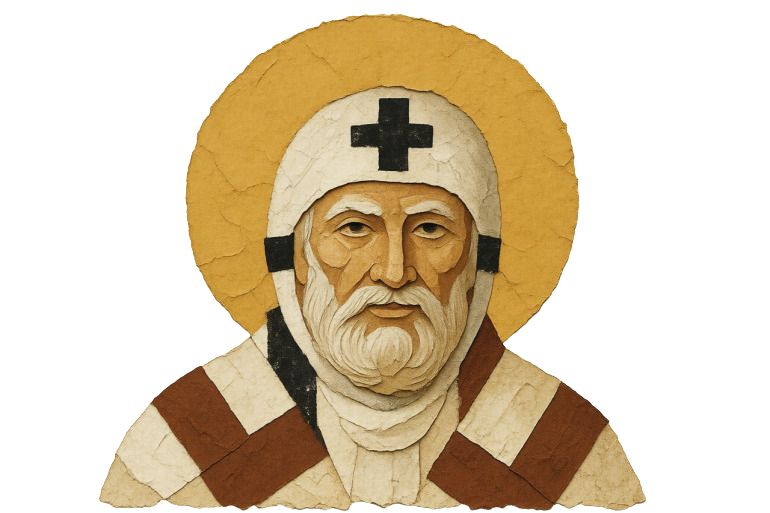
Saint Methodius I of Constantinople: The Monk Who Restored the Icons – Feast Day – June 14
A Sicilian Nobleman Who Chose the Monastery
Methodius could have had a very different life. Born around 788 in Syracuse, Sicily, to wealthy parents, he was sent to Constantinople as a young man for the education befitting his status. The plan was straightforward: finish his studies, secure a position at the imperial court, and enjoy the privileges of his class.
Instead, he entered a monastery in Bithynia. Eventually, he became abbot. The court career was abandoned for a life of prayer, study, and manuscript work. Methodius was well-educated and intellectually gifted, engaging in both copying and writing manuscripts throughout his life. His literary output would later include polemical works, hagiography, liturgical texts, sermons, and poetry.
This choice would prove costly. The Byzantine Empire was entering one of its most turbulent religious periods, and monasteries were on the front lines.
The Iconoclast Storm
Iconoclasm—the destruction and prohibition of religious images—erupted for a second time under Emperor Leo V the Armenian, who ruled from 813 to 820. The first wave had convulsed the empire in the 8th century. Now it returned with renewed ferocity.
Patriarch Nicephorus I of Constantinople refused to comply with the imperial decrees mandating icon destruction. He was exiled for his defiance. In 815, Methodius traveled to Rome, perhaps as Nicephorus’s envoy, seeking papal support for the iconodule cause. The journey was dangerous and politically sensitive. Rome and Constantinople were already strained; adding iconoclasm made everything worse.
Methodius returned to Constantinople in 821. The welcome was not warm. The iconoclast regime under Emperor Michael II arrested him, scourged him, and threw him into prison. He would spend seven years in confinement for refusing to abandon the veneration of icons.
Seven years. Think about that span. Most of us struggle with seven days of inconvenience. Methodius endured seven years of isolation, discomfort, and uncertainty for a theological conviction that many around him considered trivial or dangerous.
Escape, Hiding, and Imperial Debate
In 828, Michael II moderated the persecution and proclaimed a general amnesty. Methodius was released and returned to Constantinople. Perhaps he hoped for peace. If so, he was disappointed.
Michael II died and was succeeded by his son, Theophilos, who continued his father’s policies. Methodius was arrested again and imprisoned once more. This time, he escaped. Friends hid him, risking their own safety to protect this stubborn monk.
Theophilos, seeing that punishment wouldn’t break Methodius, tried a different approach. He engaged him in debate. The emperor was intelligent and theologically informed; perhaps he could persuade this recalcitrant iconodule. Their discussion was lengthy and substantive. The result was surprising: Methodius partly persuaded Theophilos. Or at least, the emperor moderated his position. Toward the end of his reign, the persecution eased.
It wasn’t total victory. Icons were still officially suppressed. But the worst violence subsided, and Methodius had survived to fight another day.
The Triumph of Orthodoxy
Theophilos died in 842. His son Michael III was only two years old, so Empress Mother Theodora served as regent. Theodora was secretly an iconodule, and the influential minister Theoktistos shared her convictions. Together, they moved quickly.
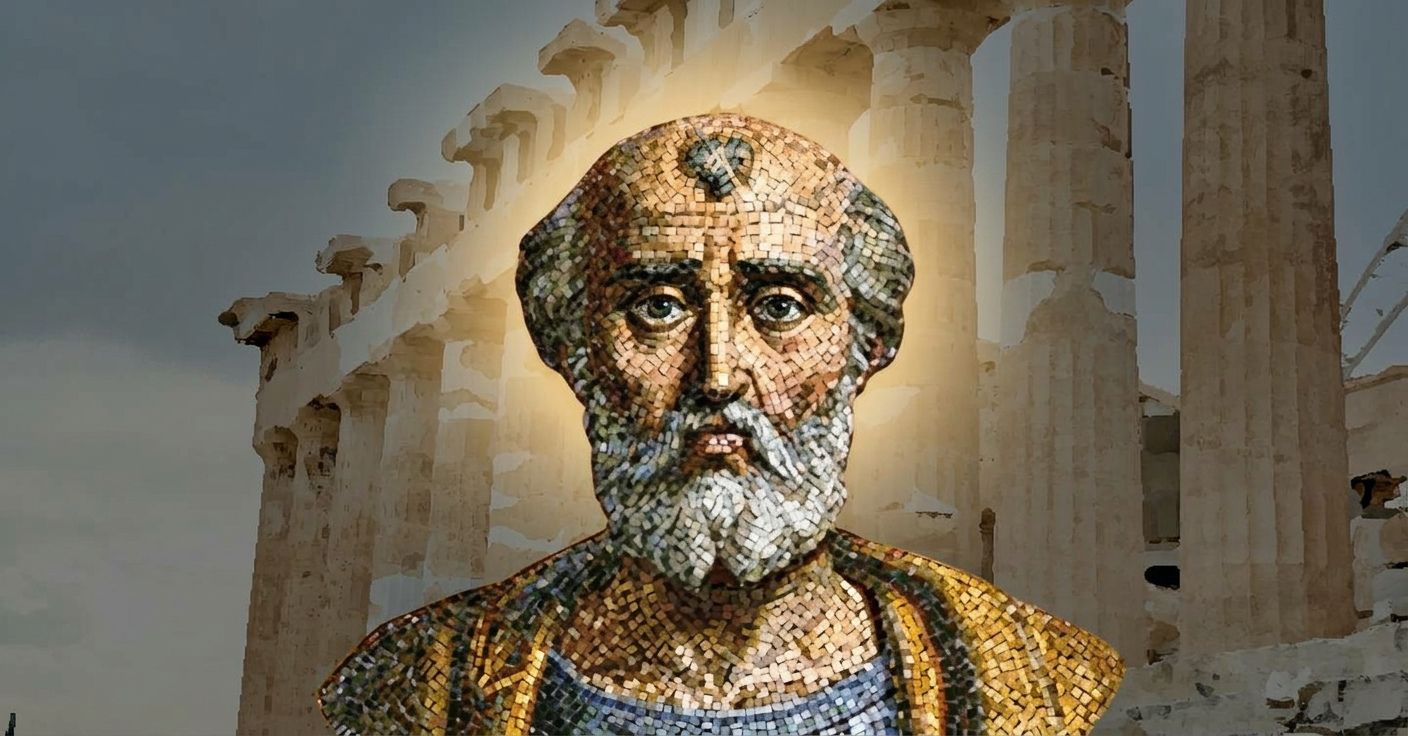
Theoktistos convinced Theodora to permit the restoration of icons. He then deposed the iconoclast Patriarch John VII and secured Methodius’s appointment as Ecumenical Patriarch of Constantinople. The date was March 843.
A week after his appointment, Methodius convened the Council of Constantinople. With Theodora, young Michael III, and Theoktistos accompanying him, he made a triumphal procession from the Church of Blachernae to Hagia Sophia on March 11, 843. The icons were restored to their places. The long nightmare of iconoclasm—spanning over a century with interruptions—was finally over.
This event became a permanent feast in the Byzantine Church: the Triumph of Orthodoxy, celebrated every year on the First Sunday of Great Lent. It remains one of the most significant liturgical commemorations in Eastern Christianity, honoring not just Methodius but all who suffered for icon veneration.
A Moderate Patriarch
Methodius’s patriarchate lasted only four years, from 843 to 847. Yet he used that brief time wisely. He tried to pursue a moderate line, accommodating clergy who had previously supported iconoclasm. This wasn’t weakness or political calculation. It was pastoral realism. The Church needed healing, not purges. Those who had compromised under pressure needed reintegration, not perpetual suspicion.
His literary work continued. He wrote a life of St. Theophanes, the chronicler who had suffered under iconoclast persecution. He produced polemical defenses of orthodoxy, hagiographies of martyred iconodules, liturgical texts, sermons, and poetry. His scholarly output was remarkable for someone who had spent so many years in prison and hiding.
Methodius died on June 14, 847, in Constantinople. His feast day is celebrated on June 14 in both the Eastern and Western Churches—a rare ecumenical convergence that testifies to his significance for all of Christendom.
Why Icons Mattered—And Still Matter
The iconoclast controversy can seem arcane today. Why did people die over pictures? The answer goes to the heart of Christian theology.
Icons aren’t mere decoration. They’re theological statements. To venerate an icon of Christ is to affirm the Incarnation—God truly became human, truly took flesh, truly can be depicted. To destroy icons is to edge toward a denial of Christ’s full humanity, toward a spiritualized religion that can’t touch material reality.
Methodius and his fellow iconodules understood this. They weren’t fighting for art. They were fighting for the Gospel. The icon was the visible proof that God had entered history, become tangible, redeemed matter itself. Without icons, Christianity risked becoming a disembodied philosophy rather than a faith rooted in God’s actual arrival in time and space.
This has modern resonances. Our culture is iconoclastic in different ways—reducing everything to information, to data, to abstractions. We struggle to recognize sacred presence in material reality. The icon tradition, which Methodius nearly died to preserve, insists that God meets us in visible, tangible forms: in the Eucharist, in the sacraments, in the faces of the poor, in the beauty of creation.
What Methodius Teaches Us
His story is one of persistence through apparent futility. For decades, iconoclasm seemed triumphant. Emperors supported it. Armies enforced it. Bishops compromised. Methodius was scourged, imprisoned, exiled, and forced into hiding. Yet he never abandoned his conviction. He debated emperors, escaped prison, and outlasted regimes. When the political wind finally shifted, he was ready.
His moderation after victory is equally instructive. He did not seek revenge against former iconoclasts, did not purge the clergy who had cooperated with persecution but he pursued accommodation and healing, recognizing that the Church’s unity mattered more than scoring points.
His intellectual life flourished despite circumstances. Prison didn’t stop him writing. Hiding didn’t silence his pen. He produced works across multiple genres, contributing to the Church’s theological, liturgical, and hagiographical treasury.
St. Methodius I of Constantinople, pray for us. Pray for perseverance when truth seems defeated, for wisdom to debate rather than merely denounce, for moderation in victory and courage in persecution and pray for the Church, East and West, that we may always recognize Christ’s presence in the visible, tangible, icon-bearing reality he created and redeemed.

Leave a Reply