
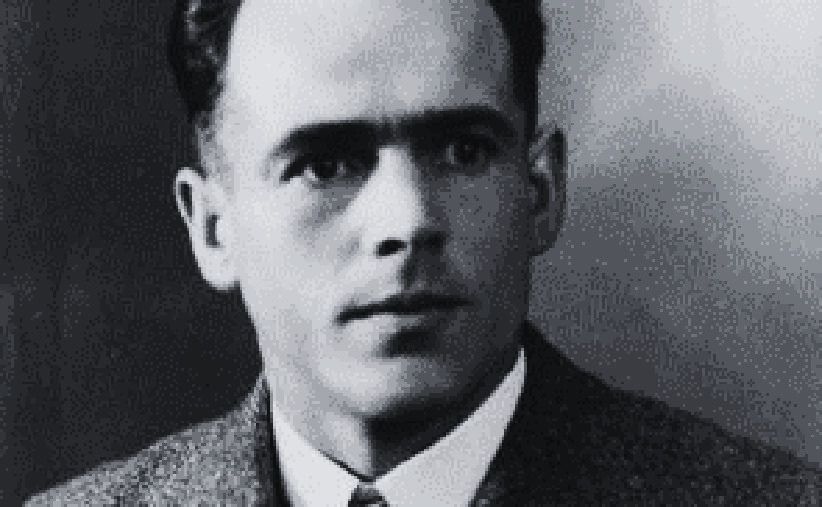
Image Credit: Simply Catholic
Blessed Franz Jägerstätter: The Farmer Who Said No to Hitler
An Ordinary Life in Extraordinary Times
Franz Jägerstätter was nobody special—at least by the world’s standards. Born on May 20, 1907, in St. Radegund, a small village in Upper Austria, he was the illegitimate child of a chambermaid named Rosalia Huber. His father, Franz Bachmeier, was a farmer who died in World War I when Franz was just a boy. Rosalia later married Heinrich Jägerstätter, whose surname the young Franz adopted.
He was a wild youth by his own admission. He fathered an illegitimate daughter in 1933, rode a motorcycle, and was known as the “village strongman.” Yet something was shifting beneath the surface. In 1936, he married Franziska Schwaninger, a deeply religious woman. Their honeymoon pilgrimage to Rome planted seeds that would transform his life.
Then came 1938. The Anschluss. Nazi Germany swallowed Austria whole. And Franz Jägerstätter made a decision that would define everything.
The Moment of Conscience
When the Nazis held their plebiscite in April 1938, Franz was the only person in St. Radegund to vote against the Anschluss. The only one. Think about that isolation. Your entire village, your neighbors, your friends—all swept up in nationalist fervor or pragmatic accommodation. And you alone stand against it.
This wasn’t performative virtue. Franz wasn’t seeking attention. He was a farmer with a growing family, eventually three daughters, trying to make a living on land he didn’t even own. Yet his conscience wouldn’t let him participate in what he recognized as evil.
His initial refusal was local and limited. He declined positions in the Nazi Party, avoided the Hitler Youth for his children and stopped attending events where the Nazi salute was required. These were small acts, almost invisible, but they accumulated.
Then came the military summons.
The Refusal That Sealed His Fate
In 1940, Franz was called up for military service. He reported, trained briefly, then returned home under an agricultural exemption. In 1943, the summons came again. This time, there would be no exemption.
Franz consulted his bishop, his pastor, his friends. Nearly everyone advised him to serve. The arguments were pragmatic and persuasive: your family needs you, resistance is futile, other Catholics are serving, you won’t actually kill anyone, your duty is to your country. Even his parish priest told him he had a moral obligation to obey.
Franz listened. Then he went to the induction center at Enns and announced his refusal to take the military oath. He would not fight for Hitler. He would not pledge loyalty to a regime he believed was anti-Christian and evil.
The response was swift and severe. He was arrested, tried by a military tribunal in Berlin, and sentenced to death for “undermining military morale.” The court offered him a way out: simply accept non-combatant service. Franz refused. Any service to this regime, he believed, was complicity in its crimes.
Prison, Letters, and Unwavering Peace
Franz spent his final months in prisons in Linz, Tegel, and Brandenburg. During this time, he wrote extraordinary letters to his wife Franziska, his pastor, and others. These documents reveal a man at profound peace with his decision, even as he anguished over his family’s fate.
“I am completely bound in inner union with the Lord,” he wrote. He understood that his death would seem meaningless to many. “Neither prison nor chains nor sentence of death can rob a man of the Faith and his free will,” he insisted. His conscience, formed by Catholic teaching, would not permit cooperation with evil, regardless of consequences.
His wife Franziska supported him completely, despite the hardship his decision imposed. She would raise their daughters alone, face village hostility, and struggle financially for decades. Yet she never wavered in her belief that Franz had done right.
On August 9, 1943, Franz Jägerstätter was executed by guillotine at Brandenburg-Görden prison. He was 36 years old. His final recorded words: “I am completely bound in inner union with the Lord.”
Decades of Silence and Eventual Recognition
For years, Franz’s story remained largely unknown outside his village. The world was busy rebuilding. Austria was occupied, then independent, then prosperous. The Holocaust dominated moral reflection on the Nazi era. A single farmer’s refusal seemed insignificant against such vast horror.
Slowly, however, his witness gained attention. Gordon Zahn’s 1964 biography, In Solitary Witness, brought his story to English-speaking audiences. Thomas Merton wrote about him. Peace activists claimed him. The Vatican began investigating his cause.
The path wasn’t straightforward. Some questioned whether his refusal was truly martyrdom, since he died for conscience rather than explicit faith. Others saw his stand as politically inconvenient—too absolute, too judgmental of those who had compromised.
Yet Pope Benedict XVI, himself German and deeply shaped by the Nazi era, understood Franz’s significance. On June 1, 2007, Franz Jägerstätter was beatified in Linz, Austria. The Church officially recognized what his village had long known: this farmer’s conscience-driven death was a martyrdom for the faith.
What Franz Jägerstätter Teaches Us
His story challenges nearly every comfortable assumption. He wasn’t a theologian or a monk. He was a layman, a husband, a father, a farmer with limited formal education. His spiritual formation came from marriage, pilgrimage, village Mass, and personal reading—not from academic sophistication.
He acted alone. There was no resistance movement supporting him, no community of dissenters encouraging his stand. His bishop advised compliance, his pastor urged obedience and his neighbors largely supported the regime. The isolation must have been crushing, yet he persevered.
His refusal was total. He wouldn’t accept non-combatant service, wouldn’t compromise with partial cooperation. This absolutism troubles many. Couldn’t he have served as a medic? Couldn’t he have found some accommodation? Franz believed that any service to the Nazi war machine was service to evil. His conscience allowed no middle ground.
His family paid dearly. Franziska and their daughters faced poverty, ostracism, and decades of struggle. Franz knew this would happen. His letters express anguish for their suffering, yet he believed his example would ultimately benefit them more than compromised survival.
He was right about the regime. History has vindicated his judgment completely. The Nazi system was anti-Christian, genocidal, and fundamentally evil. Those who served it, however reluctantly, however minimally, participated in that evil. Franz’s refusal, however impractical, however isolated, was morally correct.
A Saint for Our Polarized Age
In an era of political polarization, Franz offers something different from partisan alignment. He wasn’t resisting conservatism or liberalism, left or right. He was resisting evil dressed in nationalist, racist, and totalitarian clothing. His framework was Catholic moral teaching, not political ideology.
His beatification homily emphasized this point. Pope Benedict XVI highlighted Franz’s “lucid and radical” choice, his willingness to sacrifice everything for conscience. The Church doesn’t beatify political positions. It beatifies holiness. And Franz’s holiness consisted in obeying God rather than men, even when obedience to God looked like political folly.
For modern Catholics, Franz raises uncomfortable questions. What would we do in similar circumstances? Would we recognize evil in its populist, nationalist forms?, resist when resistance meant isolation, poverty, and death? avould we listen to conscience when every authority figure urged compromise?
These aren’t abstract questions. Political evil hasn’t disappeared. Conscience-driven resistance remains necessary. Franz Jägerstätter’s witness reminds us that holiness isn’t found in comfort or consensus. It’s found in fidelity to truth, regardless of cost.
Blessed Franz Jägerstätter, pray for us. Pray for courage when conscience demands unpopular stands, for discernment to recognize evil in its respectable forms, for families who suffer when one member chooses righteousness and for the Church, that she may always support conscience even when its demands are difficult.




Leave a Reply