
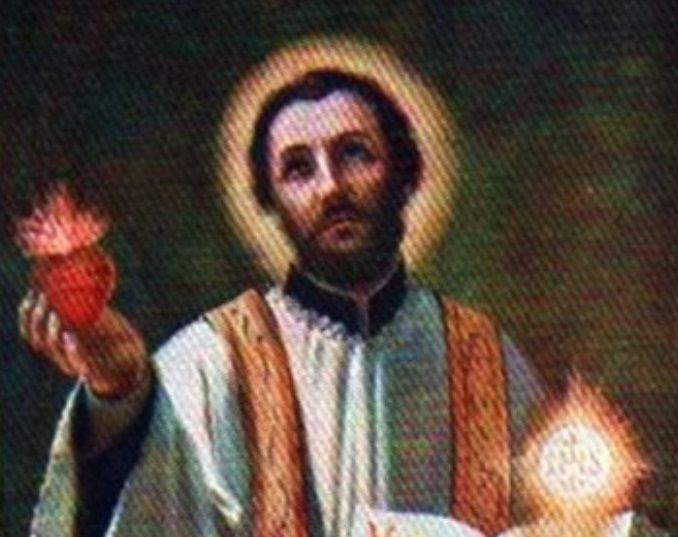
Saint Francis Caracciolo: The Priest Who Could not Stay Away from the Eucharist
A Vow Made in Desperation
Some saints begin with dramatic conversions. Francis Caracciolo started with a skin disease.
Born Ascanio dei Caracciolo Pisquizi on October 13, 1563, in Villa Santa Maria, Abruzzo, he belonged to the noble Caracciolo family in the Kingdom of Naples. From childhood, people noticed his gentleness and uprightness—rare qualities in an age of political intrigue and family ambition.
Then, at 22, disaster struck. A severe skin malady attacked him, one of those conditions broadly labeled “leprosy” in that era. His case was considered hopeless. Death seemed imminent.
Facing his own end, Francis made a desperate bargain with God. If he recovered, he would devote his entire life to divine service and the good of others. The vow worked—perhaps miraculously so. He healed rapidly, far faster than anyone expected. His cure was widely regarded as supernatural.
True to his word, Francis headed immediately to Naples to study for the priesthood. He wasn’t playing games with God.
A Letter That Changed Everything
Five years into his studies, a strange coincidence redirected his life entirely. A letter arrived from Giovanni Agostino Adorno of Genoa, addressed to another Caracciolo—Fabrizio—begging him to help found a new religious institute. Through some postal mishap, the letter landed in Ascanio’s hands instead.
He read it as providence rather than mistake. Here was confirmation, he believed, that God wanted him in this new venture. In 1588, he joined Adorno and Fabrizio Caracciolo in drafting rules for what would become the Order of the Clerics Regular Minor, often called the “Adorno Fathers.”
Pope Sixtus V approved the congregation on July 1, 1588. Pope Gregory XIV confirmed it on February 18, 1591, and Pope Clement VIII reconfirmed it on June 1, 1592. The new order was intentionally demanding: contemplative yet active, severe yet loving.
Its members took four vows instead of the usual three. Beyond poverty, chastity, and obedience, they promised never to seek ecclesiastical dignities—neither outside the order nor within it. This radical humility shaped everything they did.
The Risen Christ and Round-the-Clock Adoration
Francis and Adorno made their religious profession on Low Sunday, April 9, 1589. They chose the motto “Ad majorem Resurgentis gloriam”—”To the greater glory of the Risen One.” Upon profession, Ascanio took the name Francis, honoring the poor man of Assisi who had revolutionized religious life four centuries earlier.
The order’s spirituality centered on something almost unheard of at the time: perpetual Eucharistic adoration. By rotation, brothers maintained continuous prayer before the Blessed Sacrament. Self-mortification accompanied this devotion—daily fasting on bread and water for one brother, the discipline for another, the hair shirt for a third. Later, Francis added a daily hour of prayer before the Eucharist for every member.
He was ordained around 1590—either June 16 or September 22, historians aren’t certain. What is certain is how quickly he poured himself into priestly ministry.
Superior General and Servant of All
Giovanni Adorno died in early 1593. Despite his personal reluctance, Francis was elected Superior General on March 9, 1593, in the order’s first house at Naples—St. Mary Major, a gift from Pope Sixtus V.
Even as leader, Francis refused special treatment. He swept rooms, made beds, and washed dishes alongside the newest novices. In the confessional, he spent countless hours, and God blessed him with remarkable gifts: prophecy and the ability to read hearts. He begged in the streets for the poor, giving away nearly everything he owned.
But it was his nights that defined him. Francis loved the Holy Eucharist with an intensity that seemed almost excessive. He would spend almost entire nights in adoration, catching what little sleep he allowed himself on the altar steps. This wasn’t performative piety. It was genuine, consuming love.
Foundations Across Europe
Francis didn’t stay in Naples. He made three journeys to Spain, establishing houses under royal protection. Madrid received the Holy Ghost foundation on January 20, 1599. Valladolid welcomed Our Lady of the Annunciation on September 9, 1601. Alcalá gained St. Joseph’s house around the same time, dedicated to teaching science.
In Rome, he secured St. Leonard’s Church, later exchanging it for Sant’Agnese in Agone on September 18, 1598. Eventually, Pope Paul V granted him San Lorenzo in Lucina through a papal bull—though this was later annulled by Pope Pius X in 1906.
Pope Paul V himself wanted to make Francis a bishop, offering an important see. Francis refused steadfastly. He hadn’t founded an order to climb ecclesiastical ladders. He had done it to kneel before the Eucharist and serve the poor.
The Strain of Leadership
After seven years as Superior General, Francis obtained Pope Clement VIII’s permission to resign. The position had exhausted him—not just physically, though his health was always delicate, but spiritually. In expanding the order, he faced opposition, misrepresentation, and outright malicious lies.
He became prior of Santa Maria Maggiore and novice-master instead. Here, he continued his apostolic work in the confessional and pulpit. People called him “The Preacher of the Love of God” because he spoke so constantly and movingly about divine mercy. Hagiographers record numerous miraculous healings performed through his prayers and the sign of the cross.
His prayer life intensified. He would lie prostrate before the tabernacle, bathing the ground with tears, repeating Psalm 68: “Zelus domus tuae comedit me”—”Zeal for your house consumes me.” This wasn’t metaphorical language. Something was literally burning inside him.
The Final Journey and Mysterious Death
In 1608, Francis accepted an invitation from the Oratorians at Agnone in the Molise region. They wanted to convert their house into a college for his congregation. He set out eagerly, but first stopped at Loreto to pray overnight in the Basilica della Santa Casa, the shrine of the Holy House.
That night, Giovanni Adorno appeared to him—whether in dream or vision, sources aren’t clear. The deceased founder announced Francis’s approaching death. Saint Francis Caracciolo received the news without fear.
He arrived at Agnone apparently healthy, yet he knew better. On June 1, 1608, fever seized him. It escalated rapidly. Despite his illness, he dictated a fervent letter urging his brothers to remain faithful to their rule.
On the Vigil of Corpus Christi, Wednesday, June 4, 1608, he seemed lost in meditation. Then, an hour before sunset, he suddenly cried out: “Let us go, let us go to heaven!” Shortly after, he died. He was 44 years old.
The Heart That Burned
When they opened his body after death, physicians found something extraordinary. His heart appeared burnt up, as if consumed by fire. Around it were imprinted the words he had prayed so often: “Zelus domus Tuae comedit me”—”The zeal of Thy house hath consumed me.”
The metaphor had become literal.
Veneration and Unlikely Patronage
Pope Clement XIV beatified Francis on June 4, 1769—exactly 161 years after his death. Pope Pius VII canonized him on May 24, 1807. His liturgical feast falls on June 4.
In 1838, Naples chose him as patron saint. His body rests there, having been translated from its original burial in St. Mary Major to Santa Maria di Monteverginella after the order’s suppression during the French Revolution.
Perhaps most surprisingly, Francis became patron saint of Italian cooks. The connection isn’t immediately obvious for a man who fasted on bread and water and spent nights on altar steps. Perhaps it’s his service—washing dishes, doing humble work. Perhaps it’s the warmth of his personality, the generosity that made him beg for the poor. Or perhaps it’s simply that Italians recognize holiness in unexpected places, even in kitchens.
What Francis Caracciolo Teaches Us
In an age of religious minimalism, Saint Francis Caracciolo demands more. He asks whether our love for the Eucharist matches our talk about it. He challenges us to spend time—not just occasional minutes, but serious, sacrificial time—in the presence of Christ.
His refusal of ecclesiastical ambition feels almost revolutionary today. He had opportunities for power and walked away from all of them. The order he founded explicitly forbade seeking such advancement. This wasn’t anti-institutional cynicism. It was institutional reform from within, based on the conviction that humility serves the Church better than ambition.
His heart, literally consumed by zeal, reminds us that faith isn’t supposed to be comfortable. It’s supposed to burn. The Psalm he repeated—”Zeal for your house consumes me”—was prayed by Jesus himself when cleansing the temple. Francis took it as his own, and God took him at his word.
For Italian cooks, for Neapolitans, for anyone who kneels before the Blessed Sacrament, Saint Francis Caracciolo offers a model of passionate, hidden, transformative devotion. He wasn’t famous in his lifetime. He didn’t write bestselling books or reform the papacy. He simply loved God with everything he had, until that love consumed him entirely.
And in the end, that’s exactly what we’re all called to do.
Leave a Reply