
The Pope Who Faced Attila, Defended the Faith and the City of Rome
The Church celebrates the memorial of Saint Leo the Great on November 10. He was Pope from 440 to 461 and he is one of only two popes whom the Church calls “the Great”. Moreover, Pope Benedict XIV named him a Doctor of the Church in 1754. Therefore, his life offers a rich lesson in courage, clarity and care for the faithful. This year, many Catholics also remember him because the current Pope shares his name.
Leo was born in Tuscany, in central Italy, at the end of the fourth or the start of the fifth century. Few details survive about his youth. However, we know that he served as a deacon in Rome under Pope Celestine I and Pope Sixtus III. In that role, he gained a reputation for wisdom and skill. Furthermore, the imperial court trusted him with delicate tasks. As a result, he soon stood out among the clergy.
In 440, Leo was in Gaul on a mission to settle a quarrel between two Roman generals. While he was away, Pope Sixtus III died. The Roman clergy and people elected Leo as the new pope and they sent messengers to bring him home. He was consecrated on September 29, 440. Thus, his papacy began in a moment of crisis. It would last more than twenty-one years and become one of the most important in Church history.
First, Leo guided the Church through a great doctrinal storm. In his day, some teachers argued over the nature of Christ. One group claimed that Christ had only one nature, so that his humanity was absorbed into his divinity. In 449, Leo wrote a long letter, known as the Tome, to the Patriarch of Constantinople. In it, he explained that Christ is one person with two natures, fully God and fully human. Initially, a council at Ephesus rejected the letter.
Then, in 451, the Council of Chalcedon met near Constantinople. Leo could not attend, but his legates read his Tome aloud. The bishops listened and responded with strong approval. According to tradition, they cried out that Peter had spoken through Leo. As a result, the Council adopted his teaching as the faith of the Church. Even today, Catholics, Orthodox and many Protestants rely on this teaching about Christ.
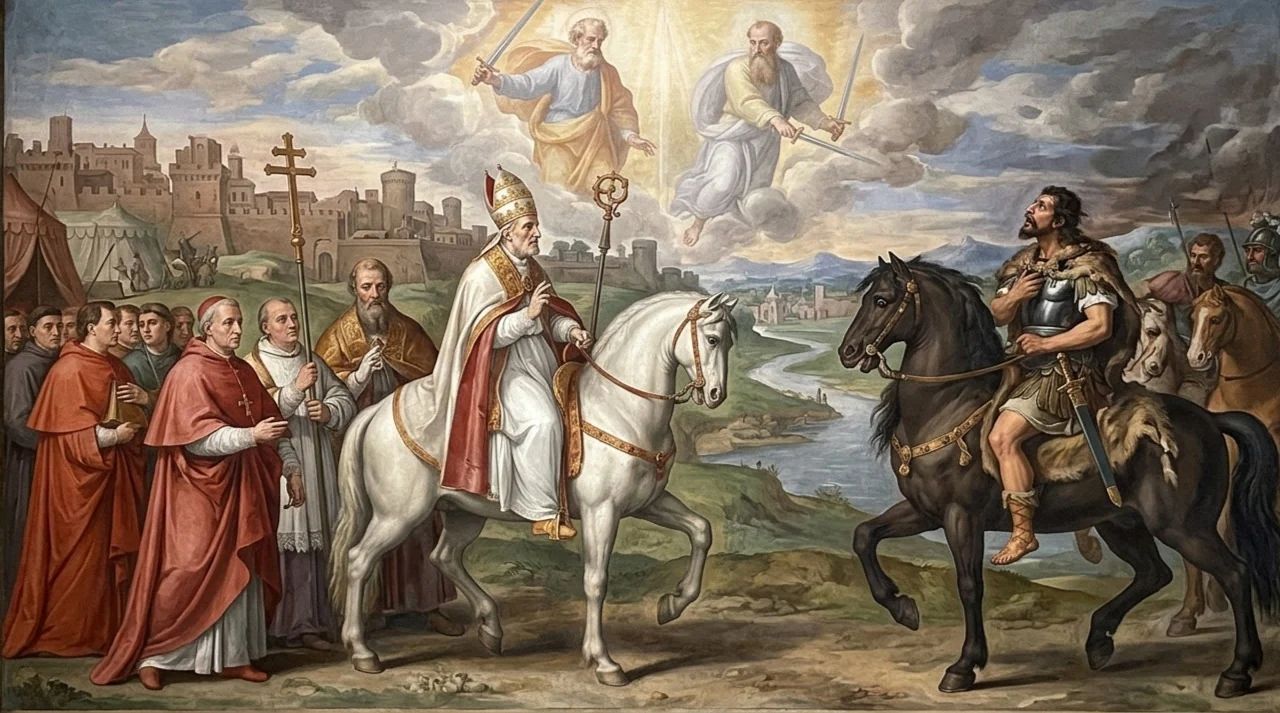
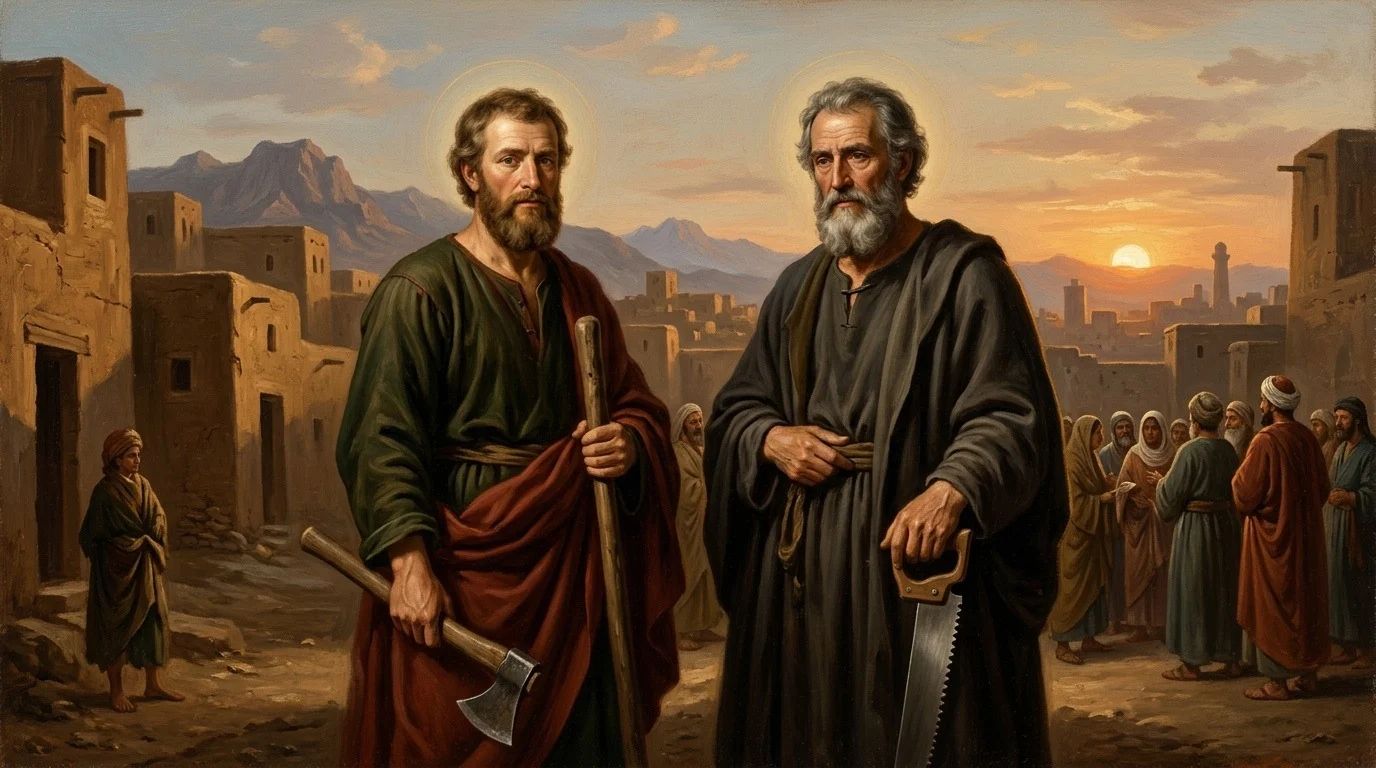
Next, Leo faced a military threat. In 452, Attila, king of the Huns, invaded northern Italy and destroyed many cities. Rome had few soldiers to defend it. Therefore, the emperor sent Leo with a Roman delegation to meet Attila near Mantua. The two men spoke, and Attila turned back. Historians still debate why he left. However, many credit Leo’s courage. Later stories add that Attila saw a vision of Saints Peter and Paul, although the sources do not confirm this.
Three years later, in 455, another danger arrived. Genseric, king of the Vandals, sailed from Africa and approached Rome. Once again, Leo went out to meet him. This time, he could not stop the invasion. Nevertheless, he persuaded the king to spare the city from burning and to limit the killing. The Vandals plundered Rome for two weeks. However, the major basilicas remained safe. Thus, Leo’s efforts saved many lives.
Leo also strengthened the authority of the bishop of Rome. He taught that the pope, as the successor of Saint Peter, has a special responsibility for the unity of the Church. In addition, he preached often to the Roman people. Nearly one hundred of his sermons survive, along with about one hundred and forty letters. Their language is clear, elegant and warm. Consequently, readers still find them helpful today, especially his Christmas and Lenten sermons.
Leo died on November 10, 461 and the Church buried him in Saint Peter’s Basilica. Many historians regard him as the first pope buried inside the basilica. Today, his relics rest beneath an altar there. The Church honours him on November 10, while the Byzantine Churches keep his memory on February 18. To learn more, read the General Audience of Pope Benedict XVI on Saint Leo the Great.
In conclusion, Saint Leo the Great shows that truth and courage belong together. He taught clearly, and he served his people in danger. Likewise, he reminds us that faith in Christ gives strength in every crisis. Therefore, let us ask for his prayers. May we, too, speak the truth with love and stand firm in hard times.
Leave a Reply