
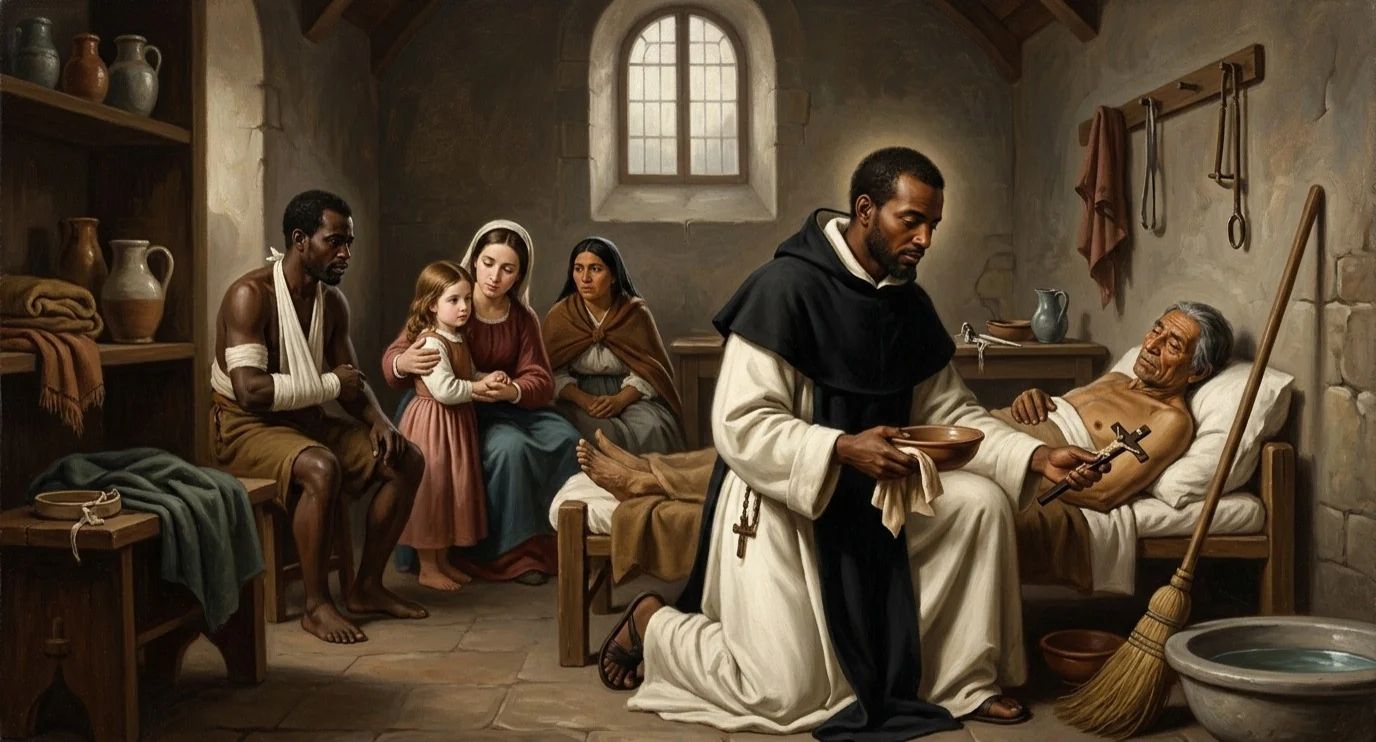
Patron of Racial Harmony Who Healed Bodies and Broke Barriers
The Church honours Saint Martin de Porres on November 3. This optional memorial remembers a Peruvian friar who served the poor with gentle courage. Moreover, many Catholics also call him the patron of racial harmony. His life shows how faith can overcome prejudice, poverty and pride. Therefore, his story speaks clearly to our own divided world.
Martin was born in Lima, Peru, on December 9, 1579. His father, Juan de Porres, was a Spanish nobleman. His mother, Ana Velázquez, was a freed woman from Panama and sources describe her as African or possibly Indigenous. Because of Martin’s mixed heritage, colonial society treated him as an outsider. Furthermore, his father soon left the family. Ana supported her children by washing clothes. Thus, Martin grew up in poverty and rejection.
As a boy, he learned the trade of a barber and a healer. In that age, barbers also practised basic surgery and dispensed herbal medicine. He worked hard and showed great skill. At the same time, he prayed for long hours and gave much of his small pay to the poor. Consequently, the people of his neighbourhood trusted him. His reputation for kindness began early.
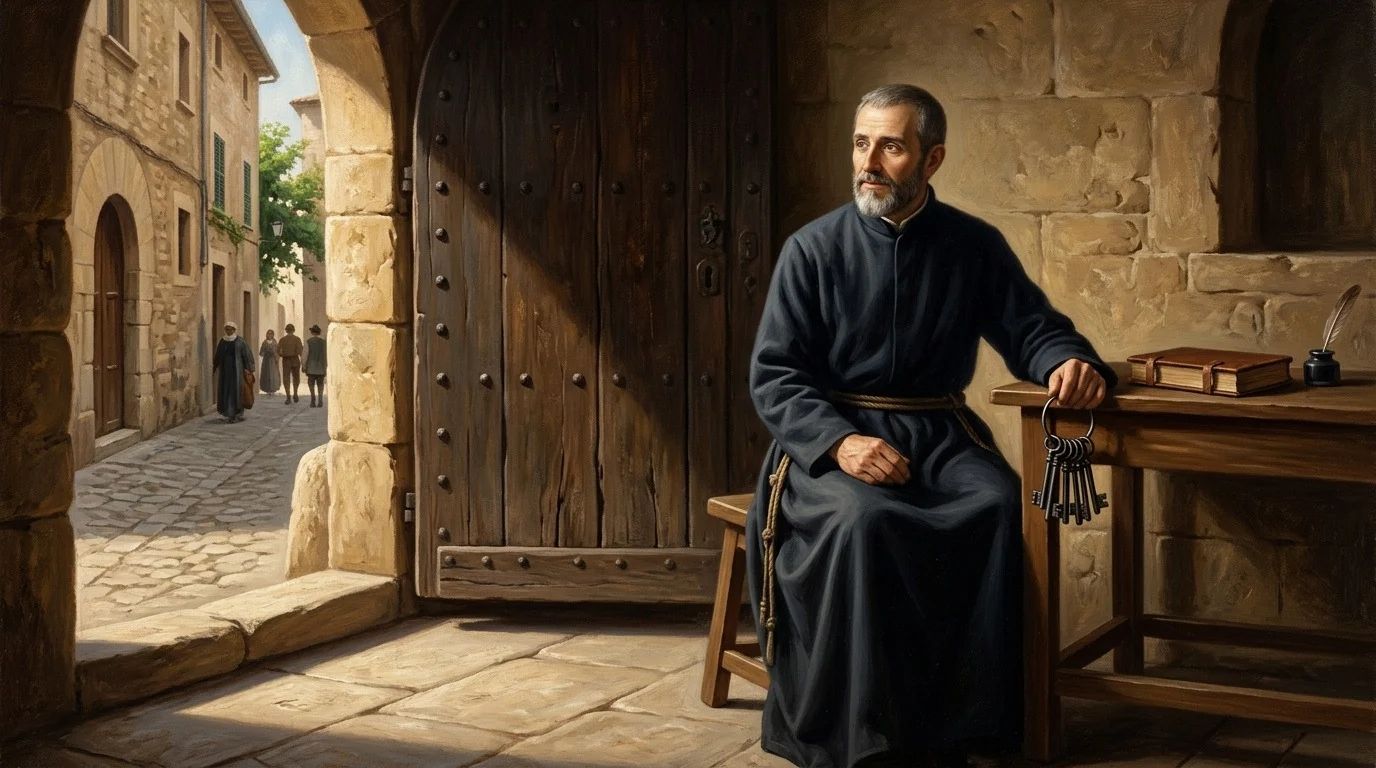
At 15, Martin asked to join the Dominican priory of the Holy Rosary in Lima. At first, the community accepted him only as a servant. Colonial rules also limited the entry of people of mixed race into religious orders. Nevertheless, he accepted the humble role with joy. He swept floors, cleaned the infirmary and cared for the sick. In 1603, at the age of twenty-four, the Dominicans finally allowed him to profess vows as a lay brother.
As infirmarian, Martin cared for everyone who came to the priory door. He tended wealthy Spaniards, enslaved Africans and poor Indigenous people alike. When an epidemic struck, he worked tirelessly to nurse the sick. According to tradition, he once laid a beggar in his own bed. When a brother complained, he replied that compassion matters more than cleanliness. In addition, he fed hundreds of poor people each day. Thus, his charity reached across every social line.
His love extended beyond Lima’s streets. He founded a home for orphans and abandoned children and he helped to give them an education. Moreover, he reportedly arranged dowries for poor girls so that they could marry. Many stories also describe his gentle bond with animals. In one tale, a dog, a cat and a mouse ate from the same dish. Although these stories are traditions, they show how people saw his peaceful spirit.
People also reported remarkable events in his life. Witnesses said that he healed the sick by prayer and that he sometimes appeared in two places at once. Some also reported that he gave counsel through closed doors. However, Martin never boasted about such gifts. Instead, he called himself a poor mulatto and chose to sweep, clean and serve. He also became friends with other saints, including Saint Rose of Lima and Saint Juan Macías.
Martin died of a fever on November 3, 1639, at the age of 59. The whole city mourned him. According to tradition, the viceroy knelt at his bedside and prominent leaders carried his coffin. Pope Gregory XVI beatified him in 1837. Finally, Pope John XXIII canonised him on May 6, 1962. Today, the Church invokes him as patron of mixed-race people, barbers, innkeepers and public health workers.
What can we learn from him? First, we must see Christ in every person, whatever their race or rank. Second, humble work can become holy service. In addition, he teaches that healing includes both body and spirit. Artists often show him with a broom, because he believed that no task was too small. To learn more, read the Dominican Province of Saint Martin de Porres and the Britannica.
In conclusion, Saint Martin de Porres shows that love can break every barrier. He faced prejudice, yet he answered with service. Likewise, he reminds us that compassion needs no title. Therefore, let us ask for his prayers on this memorial. May we, too, welcome every person as a brother or sister.

Leave a Reply