
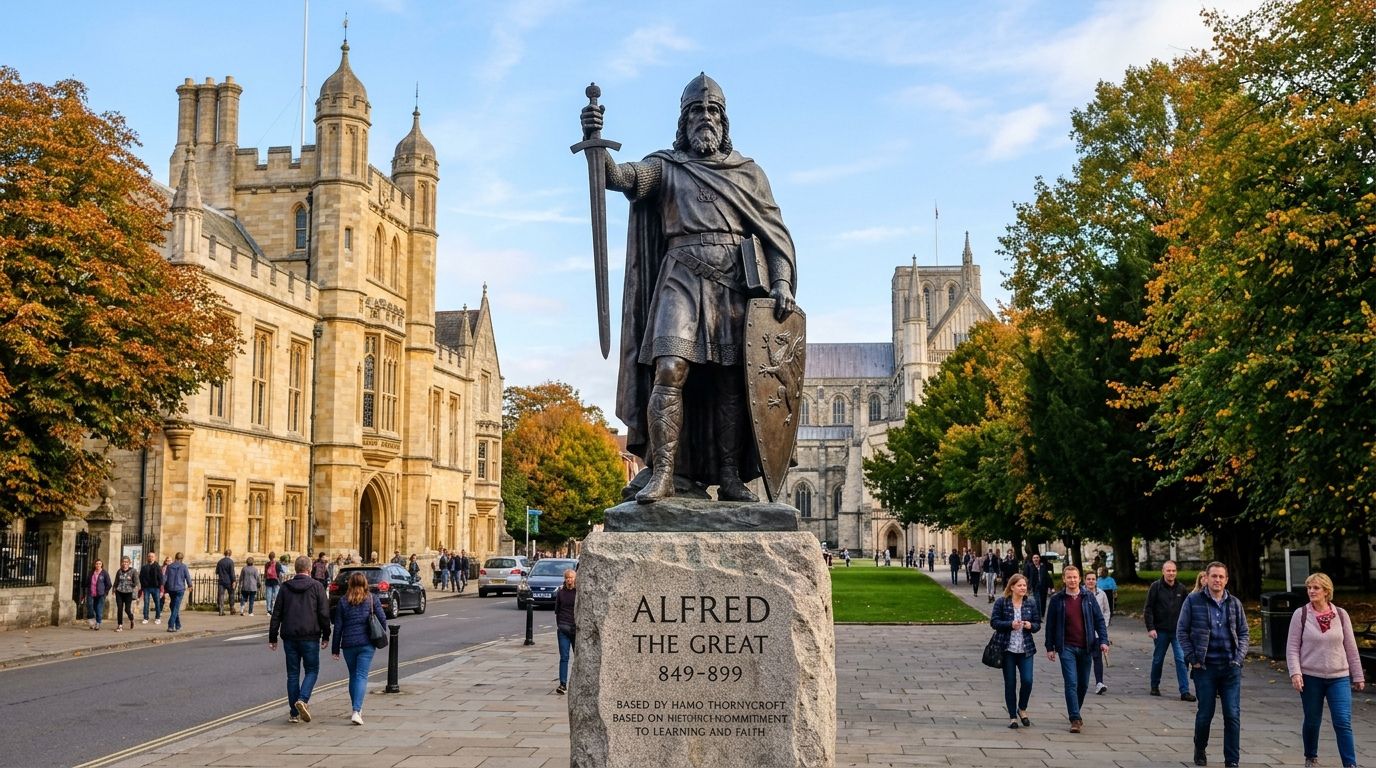
The Christian King of Wessex Who Defended Faith, Law and Learning
Christians remember Saint Alfred the Great on October 26. Indeed, However, one point needs clarity. The Catholic Church has never formally canonised him and the Roman Martyrology does not list him. Nevertheless, Anglicans keep a lesser festival in his honour, and some Catholics and Orthodox Christians also venerate him. Therefore, this article tells the story of an English king whom many people call a saint.
Alfred was born in 849 in Wantage, in the English county of Berkshire. He was the fifth son of King Æthelwulf of Wessex, so nobody expected him to rule. As a boy, he travelled to Rome and met the Pope. Moreover, he learned to love books and prayer at an early age. His biographer, Asser, writes that his mother promised a book of poems to the first son who could read it. Alfred won the prize.
Then danger arrived from across the sea. Danish Vikings had conquered much of England, and they now threatened Wessex. In 871, Alfred became king after the death of his brother Æthelred. At first, he lost battles and paid tribute. Finally, in January 878, a surprise attack at Chippenham forced him to flee. Consequently, he hid with a small band in the marshes of Somerset, near Athelney.
From that hiding place, Alfred rebuilt his strength. Later stories tell how he burned some cakes while sheltering in a peasant’s cottage. Historians treat that tale as a legend, but it shows how people remembered his humility. Meanwhile, he gathered troops from Somerset, Wiltshire and Hampshire. In May 878, his army defeated the Danish leader Guthrum at Edington. Thus, the tide of the war turned.
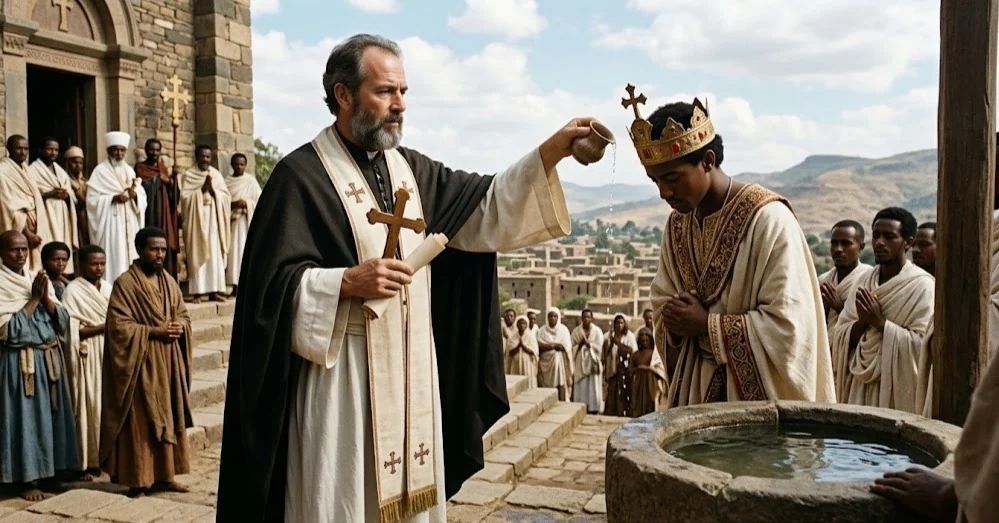
After the victory, Alfred showed unusual mercy. He did not destroy Guthrum. Instead, he persuaded him to accept baptism, and Alfred himself stood as his godfather. The two men then agreed a peace treaty. As a result, the Danes settled in the region later known as the Danelaw and Wessex survived. Furthermore, Alfred used the peace to strengthen his realm. He built fortified towns, called burhs and he created a small navy.
Alfred also cared deeply about justice. He collected the laws of earlier kings and issued a code that drew on Christian teaching. In addition, he judged cases personally and corrected unjust officials. The code begins with the Ten Commandments, which shows his faith. Likewise, he insisted that rulers must serve their people and not simply rule them. For this reason, many historians admire his sense of duty.
Perhaps his greatest gift was his love of learning. Years of war had destroyed many monasteries and libraries. Therefore, Alfred invited scholars from Wales, Mercia and the continent to his court. He also set up a school for the sons of nobles. In addition, he translated or sponsored English versions of important Latin works. These included Pope Gregory the Great’s Pastoral Care, the Consolation of Philosophy by Boethius and part of the Psalms. Consequently, he helped to shape written English.
His faith shaped his daily life. According to Asser, he attended Mass regularly and prayed at all hours. Moreover, he gave generously to the poor and to the Church. He also suffered from poor health for most of his life and he bore it patiently. Alfred died on October 26, 899, at about fifty years old. Burial followed in Winchester and his remains later moved to Hyde Abbey. He remains the only English monarch known as “the Great”.
Why do some call him a saint? Medieval writers praised his piety and pilgrims honoured his tomb. In 1441, King Henry VI asked Pope Eugene IV to canonise him, but the request failed. Even so, devotion continued. Today, the Church of England commemorates him on October 26 and Winchester holds a memorial service every year. To learn more, read the OrthodoxWiki.
In conclusion, Saint Alfred the Great shows that faith and leadership can work together. He defended his people, yet he also forgave his enemy. Likewise, he reminds us that learning serves both the Church and the nation. Therefore, let us learn from his courage and humility. May we, too, serve our communities with wisdom and mercy.


Leave a Reply