
Patron Saint and Founder of the City
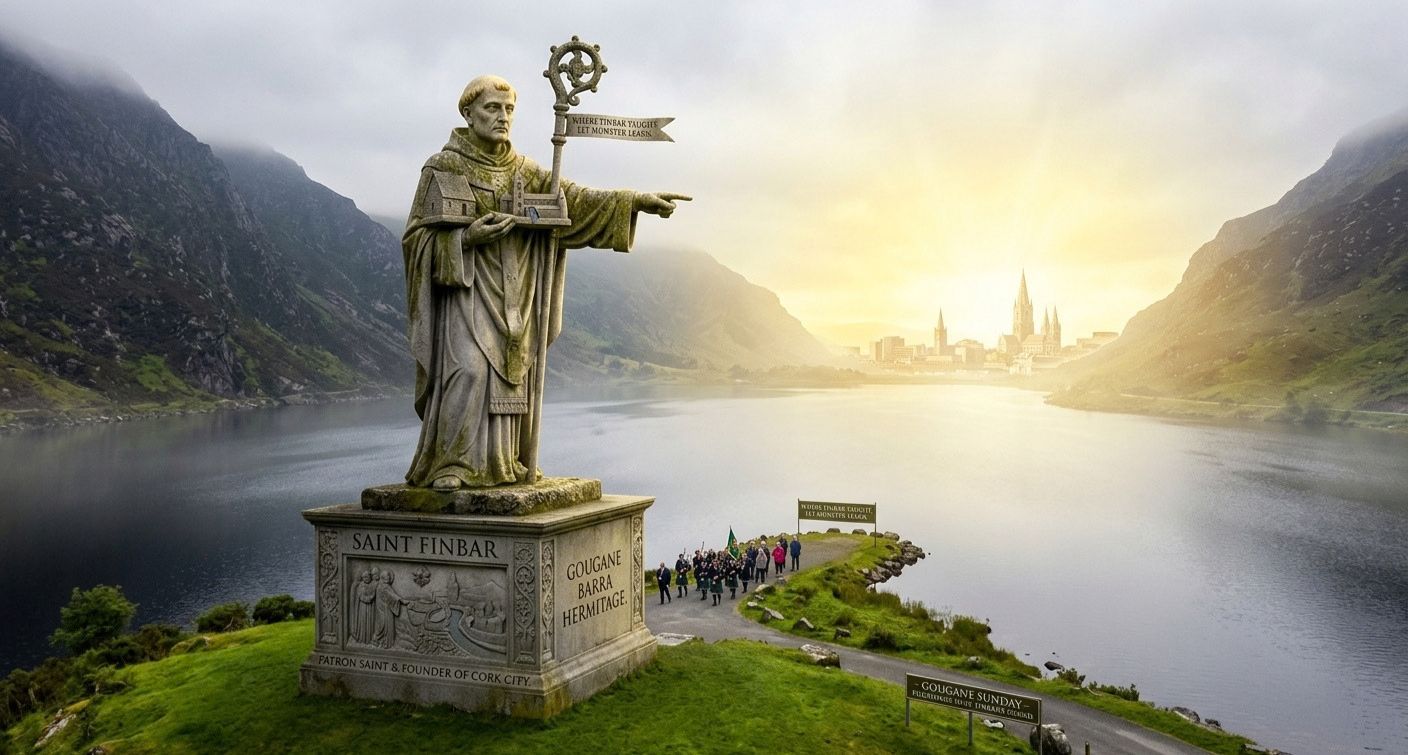
The Church honours Saint Finbar of Cork every year on September 25, marking his death around 623. Locally, this occasion carries the affectionate nickname “Gougane Sunday,” drawing pilgrims toward his remote mountain hermitage. Consequently, this sixth-century monk remains deeply woven into Cork’s civic and spiritual identity even today. Furthermore, his life story blends genuine historical detail alongside centuries of cherished local legend and tradition. Therefore, exploring his biography reveals why an entire Irish city still proudly claims him as its founding patron.
Finbar was born around 550, likely near Bandon in County Cork, though some accounts place his birthplace within Connaught instead. Originally named Lóchán, he was the son of Amergin, a skilled craftsman hailing from Galway. Later, he received the name Fionnbharra, meaning “fair head,” reflecting his distinctive appearance during childhood. Consequently, this name eventually evolved into Finbar, Finbarr or simply Barra, depending upon regional spelling and pronunciation. He pursued his early religious education at Kilmacahil, within present-day County Kilkenny, studying diligently under respected local monks.
Following his studies, Finbar undertook a significant pilgrimage toward Rome, accompanied by several fellow monks from his community. During his return journey, he reportedly stopped within Wales, visiting the renowned Saint David personally. Afterwards, he settled temporarily as a hermit upon a small island within Loch Irce, seeking solitude and deeper prayer. This peaceful location eventually became known as Gougane Barra, honouring his own name permanently within the landscape. According to popular legend, an angel later guided him from this remote hermitage toward the mouth of the River Lee.
There, around the year 606, Finbar founded a monastery positioned upon a limestone cliff overlooking the flowing river. This particular site, now known as Gill Abbey, gradually developed into what eventually became the city of Cork itself. Consequently, believers and historians alike credit Finbar directly with founding one of Ireland’s most significant modern cities. His monastery quickly attracted numerous students and disciples, transforming the settlement into a genuinely important centre of learning. Indeed, University College Cork still proudly uses the motto “Where Finbar taught, let Munster learn” today.
Beyond Cork itself, Finbar’s missionary influence extended considerably further across southern Ireland’s wider countryside. Historical accounts mention his evangelising work within Gowran, Coolcashin and Aghaboe, spreading Christianity steadily throughout the region. Furthermore, several place names across Scotland, particularly the Isle of Barra, likely reflect his disciples’ own missionary journeys rather than his personal travel. Nevertheless, this widespread geographical connection demonstrates just how far his spiritual influence eventually travelled beyond Cork’s original borders. Some modern scholars, including Pádraig Ó Riain, have even suggested Finbar might represent an alias for Finian of Movilla.
Finbar reportedly died around 623, though certain sources suggest dates ranging anywhere between 610 and 633. He passed away at Cell na Cluaine, now called Cloyne, while returning from a final visit toward Gougane Barra. Afterwards, his followers buried him within the cemetery attached to his own cathedral back in Cork. According to enduring local legend, the sun remarkably did not set for two entire weeks following his death. Whether interpreted literally or symbolically, this striking tradition reflects the profound reverence surrounding his memory throughout subsequent centuries.
Today, Finbar remains the official patron saint of both Cork city and its wider Catholic diocese. His original monastic site now hosts Saint Finbarre’s Cathedral, though this particular building belongs toward the Church of Ireland. Meanwhile, Cork’s Catholic community instead worships within the North Cathedral, dedicated toward Saint Mary and Saint Anne. Nevertheless, both traditions continue honouring Finbar’s memory faithfully, reflecting his shared significance across different Christian denominations. Each September, pilgrims still travel toward Gougane Barra, following bagpipe processions before praying the Rosary together devotedly.
This annual pilgrimage typically begins with the Ballingeary Pipe Band leading pilgrims across the peaceful, mountainous valley toward Finbar’s island hermitage. Afterwards, the Bishop of Cork celebrates Mass, connecting contemporary believers directly toward this ancient, enduring monastic tradition. Consequently, Gougane Barra remains a genuinely beautiful, spiritually significant destination, drawing visitors regardless of their particular religious background. Furthermore, this tradition demonstrates how thoroughly Finbar’s legacy continues shaping Cork’s cultural and religious identity today. Therefore, his feast day offers genuine opportunity for reflecting upon faith, learning and dedicated, lifelong service toward community.
Ultimately, Saint Finbar of Cork’s story combines genuine historical achievement alongside centuries of cherished, evolving local legend. Whether remembered as a scholar, missionary or hermit, his influence upon Cork remains genuinely undeniable and lasting. For readers wishing to explore further Irish saints, additional detail remains available through CatholicIreland.net and the Diocese of Cork’s official website, alongside earlier articles published on this website concerning other celebrated monastic founders.
Leave a Reply