
Saint William of Vercelli: The Hermit Who Tamed a Wolf and Founded a Congregation
Saint William of Vercelli emerged from noble origins yet chose a path of radical simplicity. As a 12th-century Italian hermit, he transformed personal suffering into spiritual strength, attracting followers who would become the Williamites. His legendary miracle with a Wolf and his founding of Monasteries across southern Italy secured his place among Catholicism’s most fascinating medieval saints.
The Feast Day of Saint William of Vercelli
The Church commemorates Saint William of Vercelli on June 25, marking the day he died in 1142. This date falls immediately after the nativity feast of Saint John the Baptist, placing William within a rich liturgical season that celebrates prophetic voices and founding figures. He serves as patron of Irpinia, a region in southern Italy where his spiritual influence remains deeply rooted.
Noble Origins and Early Loss
William was born in 1085 within a distinguished family of Vercelli, a city in northwestern Italy. Tragedy struck early when both parents died, leaving him an orphan. Rather than destroying his spirit, this loss redirected him toward deeper spiritual pursuits. A relative raised the young boy, yet William increasingly sensed that conventional aristocratic life could not satisfy his soul.
As a young man, William undertook an arduous pilgrimage to Santiago de Compostela in Spain. This journey shaped his entire future. During the trek, he requested that a blacksmith forge an iron implement to encircle his body. William wore this painful device throughout the pilgrimage, deliberately increasing his physical suffering as an offering to God. Such extreme asceticism characterized his approach to faith from the very beginning.
From Robbery to Revelation
After completing his Compostela pilgrimage, William intended to continue eastward toward Jerusalem. However, thieves attacked him in southern Italy, beating him severely and stealing his possessions. Most travelers would view this as mere misfortune. William interpreted it differently. He understood the robbery as divine guidance, a clear sign that God wanted him to remain in southern Italy rather than proceed to the Holy Land.
Consequently, William abandoned his Jerusalem plans and climbed Monte Vergine, a mountain situated between Nola and Benevento. At that time, locals called it Monte Vergiliana. Here he embraced complete solitude, living as a hermit in the wilderness. His reputation for holiness spread rapidly, and soon others sought him out, drawn by his intense prayer life and uncompromising devotion.
Founding Montevergine and the Miracle of the Wolf
By 1119, William’s followers had grown numerous enough to form an organized community. They united under the Benedictine rule as the Hermits of Monte Vergine, later known simply as the Williamites. William served as their founding abbot, guiding the congregation with strict discipline and profound spiritual insight.
The community’s austerity eventually created tension. Some monks found William’s rule excessively severe, complaining about the privations and rigorous fasting he demanded. Moreover, the constant stream of pilgrims seeking William’s counsel disrupted the hermit life he cherished. The very success of his ministry threatened its original purpose.
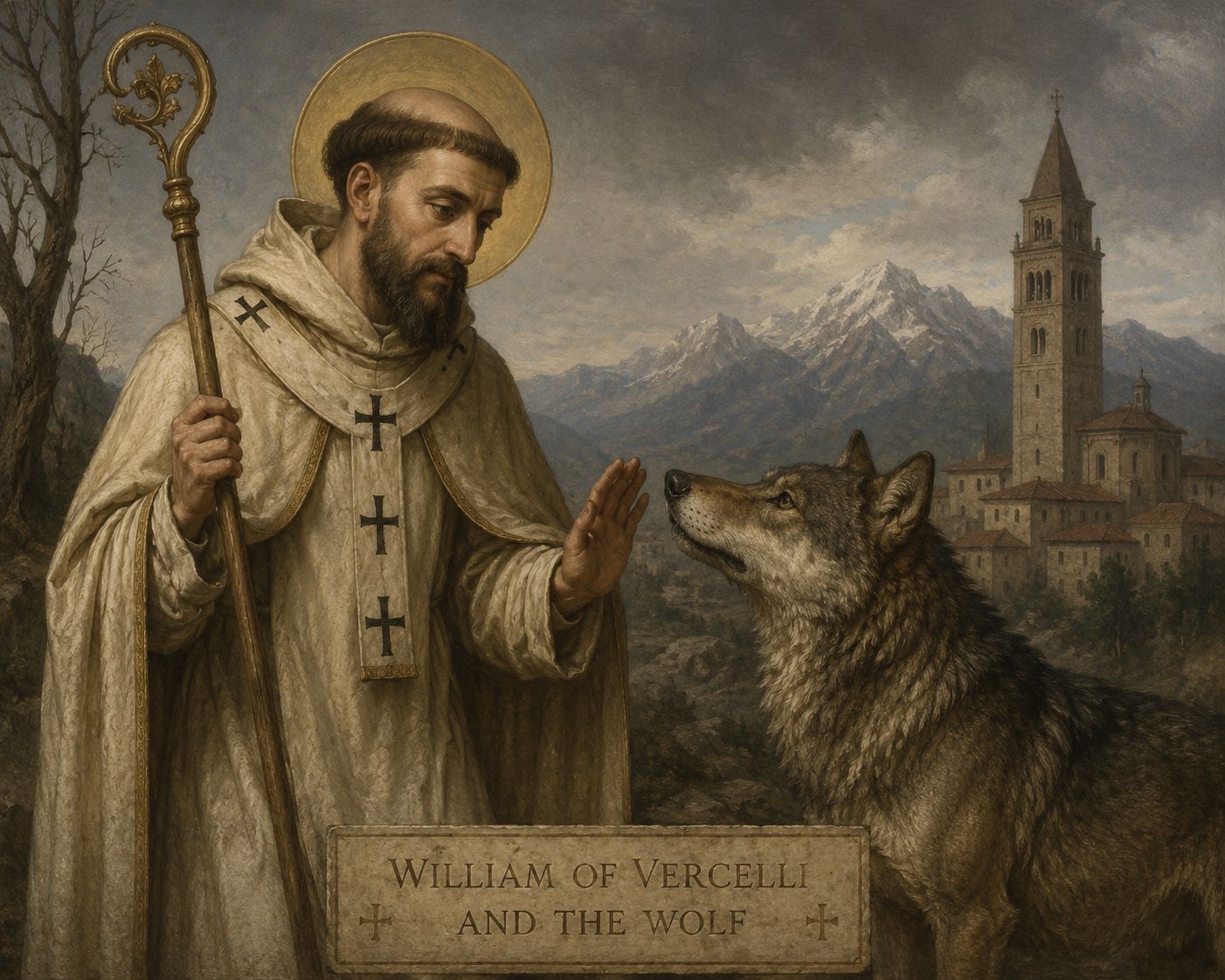
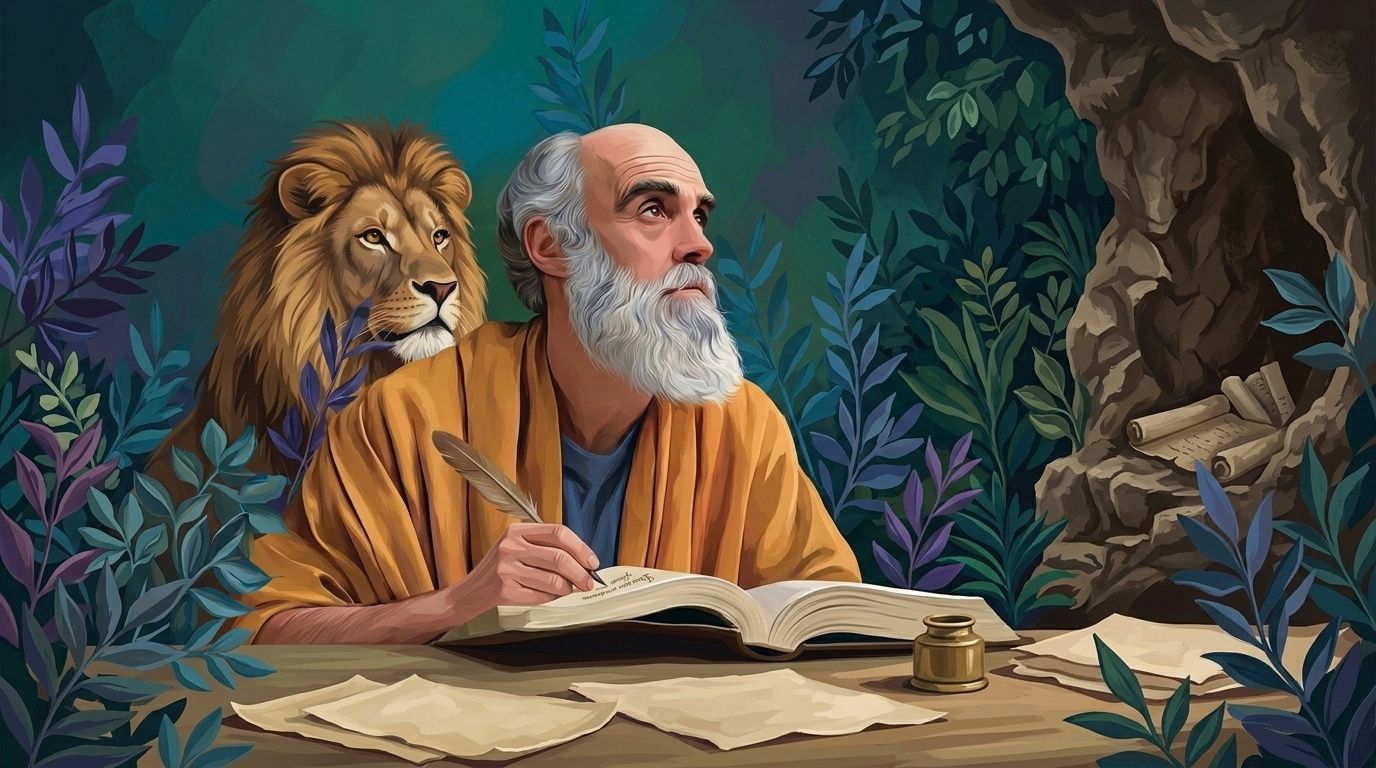
Amid this discord, William performed his most celebrated miracle. A wolf had attacked and killed his donkey, the animal that hauled supplies and performed essential tasks. William confronted the predator directly. He commanded the wolf to submit and take over the donkey’s duties. According to tradition, the wild beast immediately became docile, serving William faithfully thereafter. This “Miracle of the Wolf” became his defining emblem, and artists still depict him alongside a tame wolf.
Royal Patronage and New Foundations
King Roger II of Sicily heard about William’s holiness and invited him to court. The monarch became a generous patron, recognizing that William’s spiritual authority could bless his kingdom. Roger constructed a monastery opposite his palace in Salerno, ensuring the saint remained nearby. This royal support enabled William to expand his work dramatically.
Throughout Sicily and southern Italy, William established numerous monasteries for both men and women. Each community followed the same rigorous rule that had defined Montevergine. Roger’s patronage proved crucial, yet William never compromised his ascetic principles for political convenience.
The Fire Test and a Prostitute’s Conversion
During his time at Roger II’s court, William faced an extraordinary test of his virtue. A prostitute, possibly acting at the king’s suggestion, attempted to seduce him by entering his bedchamber. William responded with characteristic ingenuity. He placed burning embers upon his bed and lay down upon them, inviting the woman to join him. Naturally, she recoiled from the flames.
This dramatic demonstration shamed the woman and moved her profoundly. She repented immediately and embraced a religious life. Later traditions identify her as Agnes of Venosa, who founded a monastery where she lived out her days in holiness. However, early hagiographer Tommaso Costo questioned this extended narrative, noting that the primary source, the Legenda de vita et obitu sancti Guilielmi Confessoris et heremitae, mentions only the bed of coals without naming the woman or her subsequent foundation.
Leaving Montevergine for Goleto
The internal dissatisfaction at Montevergine reached a breaking point in 1128. Rather than fight his own monks, William chose departure over division. He left the monastery he had founded and settled on the plains at Goleto, within the territory of Sant’Angelo dei Lombardi, straddling Campania and Basilicata. There he established the Abbey of San Guglielmo al Goleto, which became his primary residence.
From Goleto, William continued founding monasteries across the region. He traveled occasionally to Apulia, yet mostly remained near his new abbey. Despite leaving Montevergine behind, his spiritual influence only expanded. New communities sprang up under his guidance, each carrying forward the Benedictine tradition he had adapted for his congregation.
Foreseeing Death and Eternal Rest
Catholic tradition maintains that William received special revelation about his approaching death. He understood that his earthly pilgrimage was ending. On June 25, 1142, he died peacefully at Goleto, surrounded by the monks who had remained faithful to his vision.
His body was interred at Goleto, where it rested for centuries. In 1807, King Gioacchino Murat of Naples ordered his remains transferred to Montevergine, reuniting the founder with his original foundation. Today, portions of his relics reside in cathedrals and churches throughout Italy, including Benevento, allowing devotees across the country to venerate this remarkable hermit.
The Williamite Legacy
The Congregation of Monte Vergine that William established continues his spiritual heritage. The Williamites, as they became known, preserved Benedictine monasticism while adapting it to the eremitical impulses that had driven their founder. His combination of solitary prayer and community leadership created a model that influenced Italian religious life for generations.
Saint William of Vercelli teaches contemporary believers several enduring lessons. First, suffering can become a pathway to holiness when offered with faith. Second, success sometimes requires stepping away from what we have built, as William did when he left Montevergine. Third, even wildness submits to sanctity, symbolized by the tamed wolf. Finally, royal courts and mountain caves alike can become arenas for sanctification when God calls us there.
His feast day on June 25 invites us to examine our own response to hardship. William chose the fire of coals over the fire of temptation, the wilderness over the palace, and obedience over popularity. In doing so, he discovered something that still draws seekers to Monte Vergine nearly nine centuries later: the peace that comes from surrendering everything to God.



Leave a Reply