
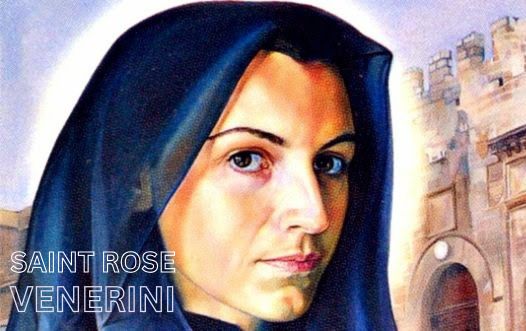
The Italian Educator Who Transformed Girls’ Education and Faith
Born in Viterbo, Italy, in 1656, Saint Rose Venerini became one of the Catholic Church’s great pioneers in the education of girls and young women. At a time when many women lacked access to proper education and religious instruction, she courageously devoted her life to teaching, spiritual formation, and helping the poor discover their dignity through faith and learning. Her feast day is celebrated on May 7.
Rose Venerini, also known as Rosa Venerini, was born into a respected and deeply religious family. Her father, Goffredo Venerini, was a successful physician, while her mother, Marzia Zampichetti, came from an old noble family in Viterbo. From childhood, Rose demonstrated a strong spiritual inclination. At only seven years old, she reportedly made a personal vow to dedicate her life entirely to God.
As a young woman, Rose initially appeared destined for married life. However, the sudden death of the man courting her changed the course of her future. Seeking a deeper relationship with God, she entered the Dominican Monastery of Saint Catherine in Viterbo, where one of her relatives was already a nun. There she learned the disciplines of silent prayer, meditation, and contemplation.
Her time in the convent was brief. After the death of her father, Rose returned home to care for her widowed mother and help support her family through several personal tragedies, including the deaths of siblings. Although she had left the cloister, God was preparing her for a different mission—one that would transform the lives of countless women and children.
In 1684, Rose began gathering women and girls from her neighborhood in her family home to pray the Rosary in the evenings. During these gatherings, she discovered how little religious and educational formation many of them had received. The widespread ignorance among ordinary women deeply troubled her. She realized that many lived in spiritual darkness simply because they had never been taught the faith properly or given opportunities to learn.
Under the guidance of her Jesuit spiritual director, Father Ignatius Martinelli, Rose came to understand that her true vocation was not hidden within a convent but active in the world as a teacher and evangelizer. Encouraged by this direction, she opened her first school in Viterbo on August 30, 1685, together with two companions, Gerolama Coluzzelli and Porzia Bacci.
This school became the first public school for girls in Italy. Its purpose was not only to teach reading and practical skills but also to provide Christian formation and moral education. Rose believed that education could restore dignity to women and strengthen families and society. Her methods were innovative for the time, especially because formal education for girls was often neglected.
The school quickly became successful and gained recognition from both Church and civil authorities. Rose possessed a natural gift for teaching. She communicated with clarity, wisdom, and compassion, and she also trained other women to become effective teachers themselves. Her work soon spread beyond Viterbo.
However, her mission was not without opposition. Some clergy resisted her efforts because they believed religious instruction belonged exclusively to priests. Others criticized the idea of women taking public leadership roles in education. In some places, the hostility became violent. According to historical accounts, houses connected to her schools were attacked, and teachers were even threatened physically.
Despite these difficulties, Rose remained steadfast. Her patience, courage, and trust in God allowed her to continue her mission. Wherever her schools opened, communities soon noticed significant moral and spiritual improvement among young people. Families became stronger, and girls who once lacked opportunities began receiving both religious and practical instruction.
Between 1692 and 1694, Cardinal Giovanni Barbarigo invited Rose to Montefiascone to help organize schools and train teachers throughout the diocese. During this period, she established numerous schools in towns surrounding Lake Bolsena and throughout the Lazio region. Her work in teacher formation became one of the most influential parts of her ministry.
It was also during this time that Rose became a mentor and close friend to Saint Lucy Filippini, who later founded the Religious Teachers Filippini. Together, they helped advance Catholic education for girls in Italy.
Rose long desired to establish a school in Rome, but her first attempts were unsuccessful. After years of perseverance, she finally succeeded in founding a school near the Capitoline Hill in 1713. Her educational work in Rome attracted widespread admiration. In 1716, Pope Clement XI personally visited one of her schools together with several cardinals. Impressed by the instruction and discipline he observed, the pope praised Rose and her teachers, reportedly telling her that through these schools she would help sanctify Rome itself.
By the end of her life, Rose Venerini had established more than forty schools across Italy. Her spirituality combined deep contemplative prayer with active service. Influenced by the spirituality of Saint Ignatius of Loyola, she believed that education was a powerful tool for evangelization and human development.
Rose dedicated herself entirely to God’s will. One of her well-known statements reflects her total surrender: “I want what God wants. I desire to serve Him in the way that pleases Him most.”
Saint Rose Venerini died in Rome on May 7, 1728. Soon after her death, devotion to her began spreading as miracles were attributed to her intercession. Her mission continued through the Religious Teachers Venerini, the congregation that grew from her work. The Venerini Sisters later expanded internationally, serving immigrants and establishing schools, childcare centers, and missions in countries including the United States, Brazil, India, Nigeria, Cameroon, Romania, Venezuela, and Albania.
She was beatified on May 4, 1952, and canonized on June 3, 2007, by Pope Benedict XVI. Today, Saint Rose Venerini is remembered as a courageous educator who transformed society through faith-filled teaching and compassionate service to women and children.








Leave a Reply