
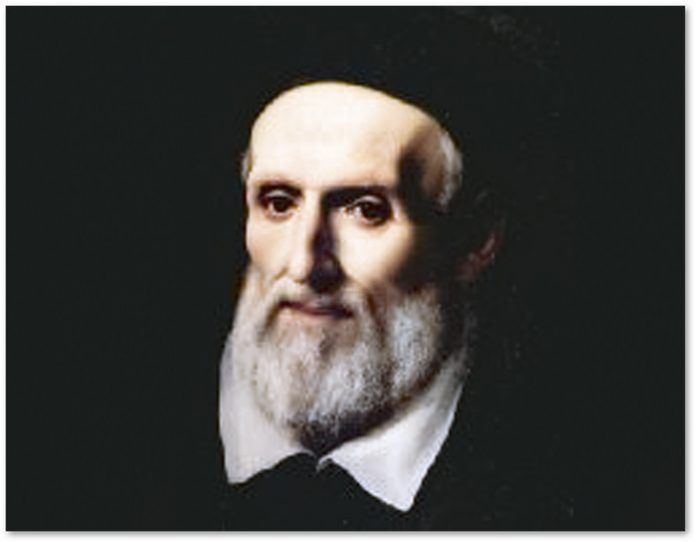
Image Credit – Carlo Dolci
Saint Philip Neri: The Apostle of Rome Who Laughed His Way to Holiness
Saint Philip Neri was not a typical saint who cracked jokes in confession, organized picnics with music, walked pilgrims through seven churches while singers performed and wine flowed. He was called “good little Phil” as a child, became the Apostle of Rome, founded the Oratorians and converted cardinals and kings through friendship, not force. He died at eighty on May 26, 1595. The Church celebrates him on May 26. He is patron of Rome, US Special Forces, humor, and joy.
A Mystical Vision in San Germano
Philip was born in Florence on July 21, 1515. His parents were Francesco Neri, a lawyer, and Lucrezia da Mosciano, from a noble family serving the state. He was one of four children. Dominican friars at San Marco monastery taught him early. They called him “good little Phil.” He was cheerful. He was obedient. These traits never left him.
At eighteen, his family sent him to San Germano. He was to assist his uncle Romolo, a wealthy merchant. He was possibly to inherit the business. A mystical vision changed everything. Philip encountered the Lord. He described it as his Christian conversion. He lost interest in property. He lost interest in commerce. The Holy Spirit called him to serve Jesus Christ and His Church.
He set out for Rome in 1533.
Tutor, Hermit, and Street Evangelist
In Rome, Philip tutored the sons of a Florentine aristocrat named Galeotto Caccia. The boys improved in life and faith under his guidance. This revealed Philip’s gift. He brought out the best in people. He made them better without making them miserable.
His first two years in Rome were solitary. He prayed. He ate bread, water, and a few vegetables. He practiced asceticism. In 1535, he studied theology and philosophy at the Sapienza and at St. Augustine’s monastery. He was a promising scholar. After three years, he abandoned ordination plans. He chose a different path. He would help Rome’s poor. He would re-evangelize a city that had lost its first love.
Philip talked to people on street corners and made acquaintances in public squares. People compared him to Socrates. He started conversations and led listeners to consider a better way of life. He caught attention with warmth and humour, asked one question constantly: “Well, brothers, when shall we begin to do good?”
He converted conversation into action. He led followers to hospitals. They served the sick. He led them to churches. They prayed. They encountered Christ.
His days were for others. His nights were for solitude. He prayed in churches. He prayed in the catacombs beside the Appian Way.
The Globe of Fire and the Broken Ribs
In 1544, on the eve of Pentecost, Philip saw a globe of fire. It entered his mouth. He felt his heart dilate. Divine love overwhelmed him. He screamed: “Enough, enough, Lord, I can bear no more.” A swelling appeared over his heart. It caused no pain.
When his body was examined after death, two ribs were broken. This was attributed to the expansion of his heart while praying fervently in the catacombs around 1545. Benedict XIV later decided it was an aneurysm. Modern biographers suggest it was partly natural, partly supernatural. Philip and his penitents associated it with divine love.
The Confraternity and the Oratory
In 1548, Philip founded the Confraternity of the Most Holy Trinity of Pilgrims and Convalescents. He worked with his confessor, Persiano Rossa. The confraternity served poor pilgrims who flooded Rome. It also helped patients discharged from hospitals. They were too weak for labor. Members met at San Salvatore in Campo. They introduced the Forty Hours of Exposition of the Blessed Sacrament to Rome.
Philip’s nature won friends across society. Ignatius of Loyola was his friend. Pius V was his friend. Charles Borromeo was his friend. At thirty-four, Philip had accomplished much. His confessor insisted he would be more effective as a priest. Philip was ordained deacon. Then he was ordained priest on May 23, 1551.
He moved to San Girolamo. He carried on his mission through the confessional. He sat from before sunrise until after sunset. He listened to people of all ages. He broke into informal discussions. He spoke about Jesus. He spoke about the saints. He spoke about martyrs.
A large room was built above San Girolamo. It served his growing number of pilgrims. Other priests assisted him. They rang a bell to call the faithful. They were called the “Oratorians.” The Congregation of the Priests of the Oratory formed officially. Pope Gregory XIII approved it in 1575.
Philip’s rule was simple. Share a common table. Perform spiritual exercises. He did not want vows. He did not want property renounced. The Congregation received an ancient church. Philip demolished it. It was in ruins. It was too small. He rebuilt on a larger scale. Charles Borromeo contributed. Pope Gregory contributed. The New Church was completed by April 1577. The Oratory moved there. Philip stayed at San Girolamo for seven more years.
The Reformer Who Would Not Criticize
Philip was constantly surrounded by people. He allowed followers free access. He heard confessions. He engaged in ministry. He prayed. He became a trusted advisor to popes, kings, and cardinals. He was equally important to the poor.
He desired Church reform. He pursued it with gentleness and friendship. He avoided criticism and harshness. His outreach to laypeople was unusual. He did not simply associate with clergy. The Church had fallen into clericalism. Philip broke this pattern. He earned the title “Apostle of Rome.”
He was sometimes called the “Second Apostle of Rome” after Peter. Some called him the “Third Apostle of Rome” after Peter and Paul. His mission emphasized personal holiness. It emphasized direct service. He educated young people. He cared for the poor and sick. He played a significant role in the Counter-Reformation.
Philip intervened in politics once. In 1593-1595, he persuaded Pope Clement VIII to revoke excommunication against Henry IV of France. He saw the pope’s attitude driving Henry to relapse. He directed Caesar Baronius, then the pope’s confessor, to refuse absolution unless the anathema was withdrawn. Clement yielded. The whole College of Cardinals had supported his policy. Henry later testified lively gratitude.
Death and Canonization
On the Feast of Corpus Christi, May 25, 1595, Philip’s physician told him he was not healthy. He had not looked well for ten years. Philip realized his time had come. He spent the day hearing confessions. He saw visitors as normal. Before bed, he stated: “Last of all, we must die.”
Around midnight on May 26, 1595, he suffered a hemorrhage. He died at eighty. Baronius read commendatory prayers. He asked Philip to bless his spiritual sons. Philip could no longer speak. He blessed them with the sign of the cross. He died.
Pope Paul V beatified him on May 11, 1615. Pope Gregory XV canonized him on March 12, 1622. His body lies in the New Church. The Oratorians still serve there.
The Seven Churches Walk and Sacred Music
Philip started the Seven Churches Walk in 1553. He led pilgrims from St. Peter’s Basilica to Santa Maria Maggiore. They visited seven churches. They prayed. They sang hymns. They heard brief sermons. A simple meal waited at Villa Mattei. The Mattei family provided bread, wine, cheese, eggs, apples, and salami. Musicians played. Singers performed.
This walk was a counterpoint to Carnival raucousness. It became popular. It developed into the custom of visiting seven churches on Maundy Thursday. The street linking St. Paul Outside-the-Walls with San Sebastiano is still called “Via Delle Sette Chiese.”
Philip encouraged the singing of laude, spiritual songs, in his oratory services. Tomás Luis de Victoria participated. Giovanni Pierluigi da Palestrina participated. The musical selections were called oratorios. This genre developed from Philip’s gatherings.
A Saint for Joyful Hearts
Saint Philip Neri embodied contradictions, deeply involved with the Church, sought to reform corrupt Rome, possessed a playful sense of humor, combined it with shrewd wit, while considering a cheerful temper more Christian than a melancholic one and carried this spirit into his whole life.
He prayed: “Let me get through today, and I shall not fear tomorrow.”
He was ready to meet the needs of his day. The Jesuits desired to enlist him. He did not join them. His genius was unmonastic and unmedieval. He offered frequent and popular preaching. He offered unconventional prayer. He offered unsystematized but fervent private devotion.
The Catechism of the Catholic Church cites his attitude toward animals as an example to follow. It places him alongside Francis of Assisi.
On May 26, the Church remembers this joyful saint. Catholics seeking to evangelize with humor find his model. Those struggling with melancholy discover his remedy. And every believer who has ever thought holiness requires long faces learns from the Apostle of Rome that a joyful heart is more easily made perfect than a downcast one.
Leave a Reply