
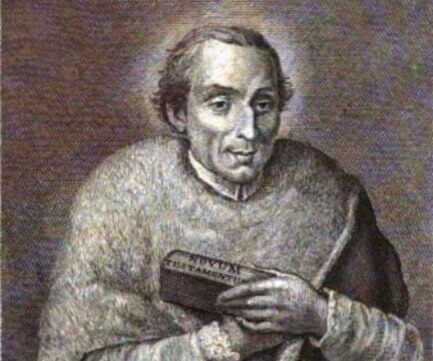
Image Credit: Catholic Exchange
St. John Baptist de Rossi: The Apostle of the Abandoned Who Found Christ in Rome’s Outcasts
St. John Baptist de Rossi spent his life among the people Rome wanted to forget. By day, he visited the sick in hospitals. By night, he ministered to street people. Homeless women found shelter through his efforts. Prisoners and workers received his aid. The dying heard him speak of Jesus Christ. No illness repulsed him. Every sufferer revealed Christ to his eyes.
Epilepsy had plagued him from youth. The condition nearly barred him from the priesthood. A special dispensation opened the door. Ordination came in 1721. Rome’s abandoned soon knew him as their apostle. Many called him a second Philip Neri.
Pope Leo XIII canonized him on December 8, 1881. The Church celebrates his feast on May 23. Voltaggio, his birthplace, claims him as patron.
Early Life and Education in Faith
St. John Baptist de Rossi was born on February 22, 1698, in Voltaggio, Italy. His parents were Charles de Rossi and Frances Anfossi. They were a holy couple. They were rich in faith, though not in money. Through their guidance and a strong education, John learned to excel in living faith, piety, and gentleness.
Two priests noticed his potential early. Scipio Gaetano and Giuseppe Repetto took charge of his education and faith formation. They made him part of their apostolate. They took him under their spiritual care.
At age ten, John met a wealthy noble couple from Genoa after Mass. They also saw his gifts. They took him in as a page. His father approved. John moved to Genoa for school. He stayed until 1711.
In 1710, his father died suddenly. His mother begged him to come home. John believed the Lord wanted him to finish his education in Genoa. He stayed.
St. John Baptist de Rossi: Studies in Rome and Growing Holiness
In 1711, his cousin Lorenzo de Rossi called him to Rome. Lorenzo was canon of St. Mary in Cosmedin. He suggested John complete his studies at the Collegium Romanum. The Jesuits guided him there.
John thrived. His natural talents, spiritual gifts, Christian virtue, and hard work made him a model student. He studied philosophy and theology under the Dominicans at the Dominican College of Saint Thomas.
During this time, he joined two lay groups. The Sodality of the Blessed Virgin and the Ristretto of the Twelve Apostles both attracted him. These groups brought lay faithful together for prayer and service. John led meetings. He led group prayer, led outreach to the poor and visited hospitals with his fellow members.
His desire for holiness sometimes went too far. He practiced voluntary mortification to excess. His austerity nearly ruined his health. He also began having epileptic fits. These struggles stayed with him for life.
Priesthood Against the Odds
John desperately wanted to become a priest. Normally, epilepsy would have excluded him. However, he received a special dispensation. After ordination as a deacon, he was ordained to the priesthood on March 8, 1721.
He believed he had reached his goal. He was deeply grateful to the Lord. As an expression of gratitude, he made a vow. He would not accept any ecclesiastical benefits unless obedience to his superiors commanded it.
Rome’s outcasts became his flock. The sick, the homeless, and prostitutes all found refuge in his care. Hospitals drew him by day. Street people drew him by night. Homeless women received special attention. He helped found a hospice for them near Saint Galla. Prisoners and workers also benefited from his aid.
The dying heard him speak of Jesus Christ. He led them to salvation. Relieving their suffering consumed his heart. No illness repulsed him. No symptom was too terrible. Every sufferer revealed Jesus to his eyes.
In one case, a young man dying of syphilis turned away from him. Shame consumed the man. John showed his selfless heart. He helped him with his bedpan. The man finally listened. He made a good confession before his death.
Other priests stood in awe of John’s holiness. They saw that a few kind words from him could turn lives around.
Wisdom for Fellow Priests
During one sermon, John addressed his fellow priests directly. His words revealed his pastoral heart:
“Ignorance is the leprosy of the soul. How many such lepers exist in the church here in Rome, where many people don’t even know what’s necessary for their salvation? It must be our business to try to cure this disease. The souls of our neighbors are in our hands, and yet how many are lost through our fault? The sick die without being properly prepared because we have not given time or care enough to each particular case. Yet with a little more patience, a little more perseverance, a little more love, we could have led these poor souls to heaven.”
He also gave practical preaching advice:
“The poor come to church tired and distracted by their daily troubles. If you preach a long sermon they can’t follow you. Give them one idea that they can take home, not half a dozen, or one will drive out the other, and they will remember none.”
Canonry and Confessional Ministry
In 1735, John became titular canon at St. Mary in Cosmedin. His cousin died in 1737. Obedience forced John to accept the canonry. However, he refused the house that came with the title. He sold it. He used the funds for his work with the poor.
His illness continued to shape his ministry. He feared entering the confessional. A seizure might strike during a session. He grew accustomed to sending sinners he found to other priests.
In 1738, he became dangerously ill. His superiors sent him to Civita Castellana to recover. The bishop there pushed him to hear confessions. John reviewed his moral theology. He received special faculty to hear confessions in any of Rome’s churches.
From then on, he spent countless hours in the confessional. He sought out the poor and illiterate, found them in hospitals and in their homes.
The Apostle of the Abandoned
John became the “apostle of the abandoned.” People called him a second Philip Neri. They called him a hunter of souls. He preached five to six times daily. Churches, hospitals, and prisons all served as his pulpits. He also showed strong devotion to St. Aloysius Gonzaga.
In August 1762, his health worsened. He grew worn out. His strength deteriorated. Companions begged him to recover at Lake Nemi. There, his epileptic fits grew worse.
Two months later, he returned to Rome. He rarely left his room. In September 1763, he celebrated Mass at Santa Maria in Cosmedin. He told those present he would die soon.
In December, a violent seizure struck him unconscious in his room. He remained unconscious for a day, received Viaticum, Anointing of the Sick, recovered and celebrated several more Masses. Soon after, his health declined again. Confined to his bed, he prepared for the end.
Death and Canonization
John Baptist de Rossi died on May 23, 1764, in his bedroom at Trinita de Pellegrini. He passed to the Lord whom he loved with true devotion.
They buried his body in that church. A marble slab marked the altar of the Blessed Virgin. In 1965, his remains moved to a new church named in his honor.
Pope Pius VI began his canonization cause in 1781. The French Revolution and the Napoleonic Wars created setbacks. In 1859, Pope Pius IX resumed the cause. He attributed two miracles to John’s intercession.
Pope Pius IX beatified him on May 13, 1860. Pope Leo XIII canonized him on December 8, 1881.
He is patron saint of Voltaggio. The Church celebrates his feast on May 23.
On this day, Catholics remember the priest who found Christ in syphilitic patients and homeless women. Those who serve the forgotten discover his model. Those who struggle with chronic illness find his companion. And every believer who has ever feared their weakness disqualifies them from ministry learns from John Baptist de Rossi that God often chooses the broken to heal the broken.
Leave a Reply