
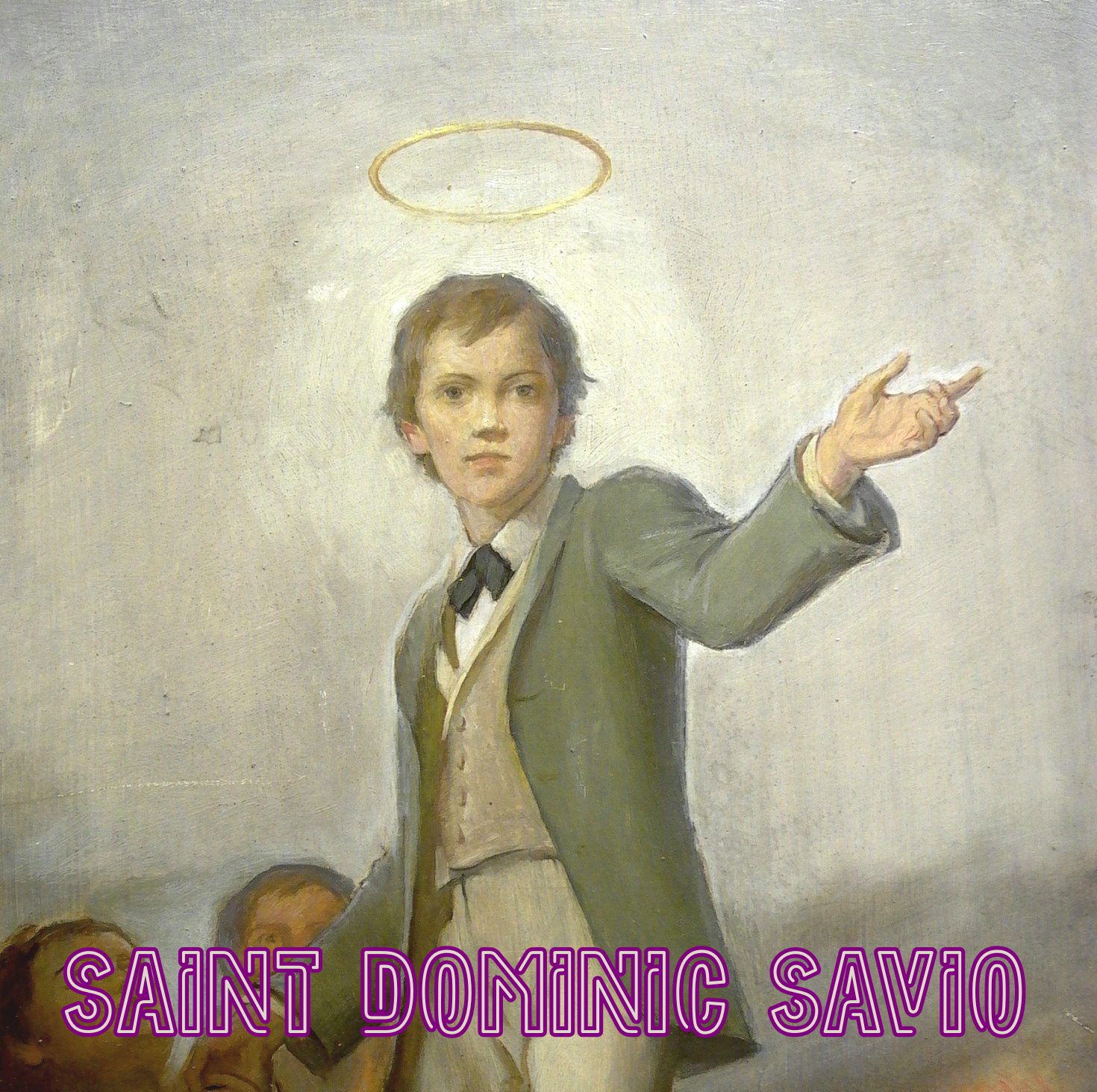
Image Credit: Portrait illustration/statue depiction of Saint Dominic Savio.
Born on April 2, 1842, in the small village of Riva near Chieri in northern Italy, Saint Dominic Savio became one of the youngest non-martyr saints in the history of the Catholic Church. Though he lived only fourteen years, his remarkable holiness, deep love for God, and joyful obedience made him an enduring example for children, teenagers, and adults around the world. His feast day is celebrated on May 6, and he is honoured as the patron saint of choirboys, the falsely accused, and juvenile delinquents.
Dominic was born into a poor but deeply religious family. His father, Carlo Savio, worked as a blacksmith, while his mother, Brigitta, was a seamstress. Despite financial struggles, the Savio family raised their children with strong Catholic values. From an early age, Dominic displayed unusual devotion and maturity in spiritual matters. He loved prayer, attended Mass faithfully, and often spent long moments kneeling before the Blessed Sacrament.
Even as a child, Dominic stood out among his peers because of his kindness, discipline, and love for virtue. He would remind others to say their prayers and refused to participate in behaviour he considered sinful or disrespectful. People in his village noticed his sincerity and his desire to please God in everything he did.
One of the most important moments of Dominic’s early life came when he received his First Holy Communion at the age of seven. At that time, children in Italy usually waited until around age twelve before receiving the Eucharist. However, Dominic’s priest recognized his exceptional understanding of the faith and granted permission for him to receive Communion early.
On the day of his First Communion, Dominic wrote down four personal resolutions that would guide the rest of his short life:
- I will go to Confession often and receive Holy Communion as often as allowed.
- I will keep Sundays and holy days sacred.
- Jesus and Mary will be my best friends.
- Death rather than sin.
These promises revealed the seriousness with which Dominic approached his spiritual life. He later described his First Communion as the happiest day of his life.
As he grew older, Dominic attended school several miles from home, walking long distances daily without complaint. His teachers admired both his intelligence and his character. One famous incident from his school years involved two classmates who filled a heating stove with snow and rubbish. Fearing punishment, they blamed Dominic for the prank. Rather than defend himself, Dominic quietly accepted the scolding. When the truth later emerged, he explained that he remained silent because he wanted to imitate Jesus, who endured false accusations without retaliation.
Dominic’s outstanding conduct eventually brought him to the attention of Saint John Bosco, commonly known as Don Bosco, the great educator and founder of the Salesians. In October 1854, Dominic met Don Bosco for the first time. The priest was immediately impressed by the young boy’s intelligence, humility, and spiritual depth.
Dominic soon joined Don Bosco’s Oratory of St. Francis de Sales in Turin, where poor and abandoned boys were educated and cared for. Under Don Bosco’s guidance, Dominic flourished spiritually and academically. He worked diligently in his studies, obeyed his teachers, and became known for encouraging his companions to pray, attend confession, and avoid sinful behavior.
Although Dominic longed to become a saint, he initially misunderstood holiness as requiring severe physical penance. He secretly tried fasting, sleeping uncomfortably, and exposing himself to cold weather. When Don Bosco discovered this, he corrected him gently, teaching him that true holiness for a young boy consisted in cheerful obedience, study, prayer, and fulfilling daily duties faithfully. Dominic accepted this advice wholeheartedly and became known for his joyful spirit.
Dominic also founded a group called the Sodality of the Immaculate Conception among the boys at the Oratory. The members dedicated themselves to honoring the Blessed Virgin Mary, encouraging good behavior, and helping others grow closer to Christ. This small group later influenced the development of Salesian spirituality.
Several stories from Dominic’s life demonstrate his remarkable virtue. On one occasion, he prevented a violent fight between two boys by standing between them with a crucifix and asking them to throw stones at him first. Ashamed, the boys abandoned the fight and later reconciled. Dominic was also known for protecting younger boys from bad influences and helping his classmates remain morally upright.
As Dominic matured, his health steadily weakened. He began suffering from persistent illness, believed today to have been pleurisy or a lung-related disease. Doctors advised him to return home from the Oratory to recover. Before leaving, Dominic made what was known as the “Exercise of a Happy Death,” a spiritual devotion preparing the soul for eternity. He reportedly told others that it would be his last.
At home, his condition worsened rapidly. Medical treatments of the time included repeated bloodletting, which likely weakened him further. Yet Dominic remained calm and prayerful throughout his suffering. He received the Sacraments devoutly and spoke peacefully about death.
On March 9, 1857, after asking his father to recite prayers with him, Dominic suddenly awoke and exclaimed, “Oh, what wonderful things I see!” Moments later, he died peacefully at just fourteen years old.
Don Bosco was deeply moved by the loss of his beloved student and later wrote The Life of Dominic Savio, a biography that spread Dominic’s story throughout Italy and beyond. Many people were inspired by the holiness of the young boy who practiced heroic virtue in ordinary daily life.
Some critics initially believed Dominic was too young to be declared a saint because he had not died as a martyr. However, the Church recognized that sanctity is measured not by age but by holiness. Pope Pius XI declared him Venerable in 1933. He was beatified by Pope Pius XII on March 5, 1950, and canonized on June 12, 1954.
At the time of his canonization, Dominic Savio became the youngest non-martyr saint in the Catholic Church. His life continues to inspire young Catholics to pursue holiness through prayer, kindness, purity, joy, and faithfulness in everyday responsibilities.
Leave a Reply