
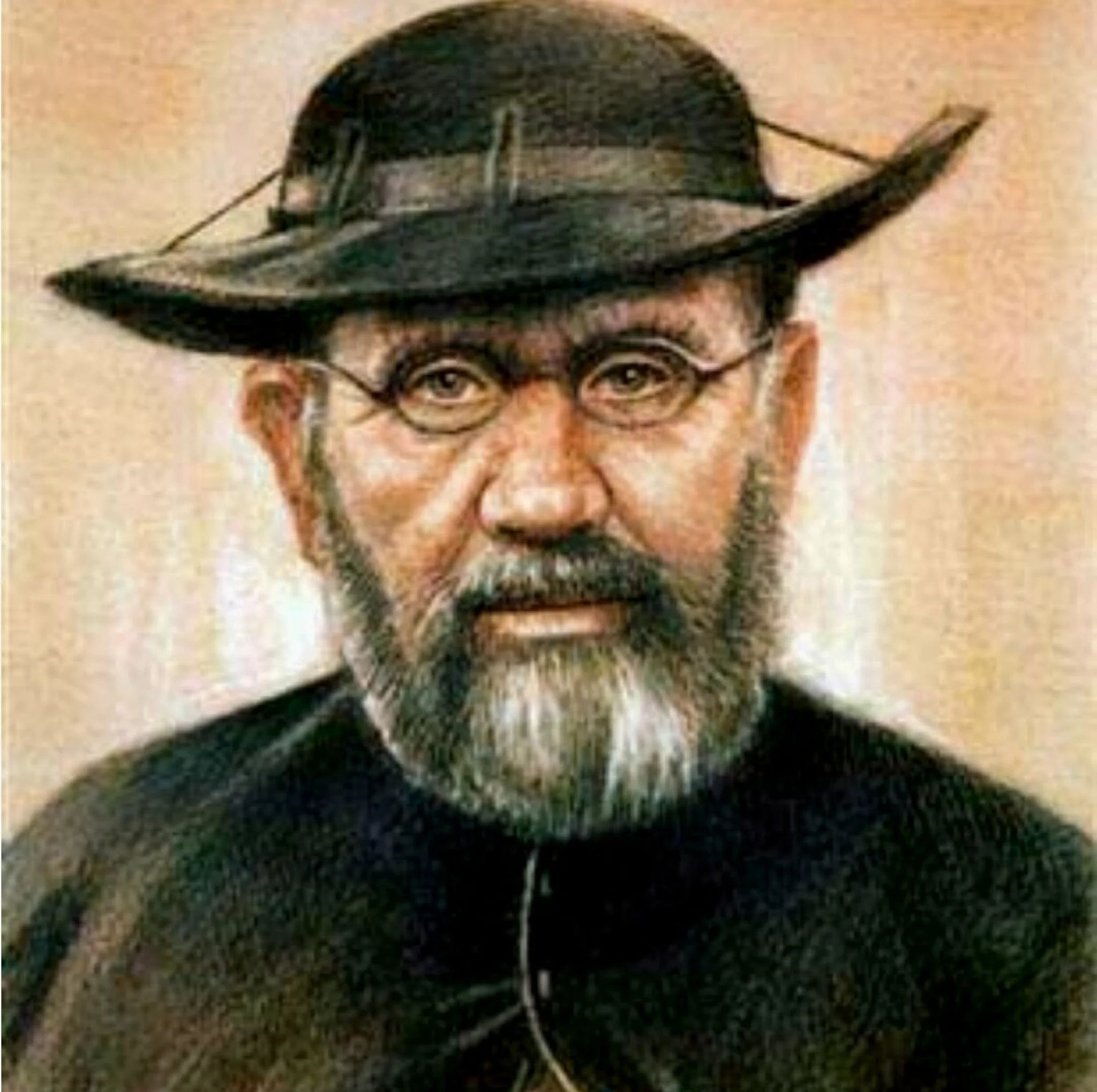
Image Credit: Damien Memorial School
Saint Damien of Molokai: The Apostle of the Lepers
Saint Damien of Molokai is one of the greatest examples of Christian charity and self-sacrifice in modern history. Father Damien served lepers on Molokai. His courage and faith turned an abandoned colony into a place of dignity, hope, and spiritual renewal.
Saint Damien was born Jozef De Veuster on January 3, 1840, in the rural village of Tremelo in Belgium. He was the youngest of seven children in a devout Catholic farming family. Several of his siblings entered religious life, inspiring young Jozef to follow the same path. Although he helped on the family farm and left formal schooling at an early age, he possessed strong determination, intelligence, and deep faith.
As a young man, he joined the Congregation of the Sacred Hearts of Jesus and Mary. Upon entering religious life, he took the name Damien in honor of an early Christian martyr and physician. Though some superiors doubted his academic abilities because of his limited education, Damien proved himself through hard work and discipline. He learned Latin quickly and showed remarkable dedication to prayer and missionary life. Every day, he prayed before an image of Saint Francis Xavier, asking God for the opportunity to serve in foreign missions.
That opportunity came in 1864 when Damien’s older brother, who had been assigned as a missionary to Hawaii, became seriously ill. Damien volunteered to take his brother’s place, and his request was accepted. He arrived in Hawaii in March 1864 and was ordained a priest two months later at the Cathedral of Our Lady of Peace in Honolulu.
For several years, Father Damien faithfully served different parishes throughout the Hawaiian Islands. Hawaii faced devastating imported diseases: smallpox, influenza, and leprosy. Believing leprosy highly contagious and incurable, the government isolated patients on Molokai’s Kalaupapa Peninsula in 1866.
Thousands of men, women, and children diagnosed with leprosy were forcibly removed from their families and sent into quarantine. Conditions in the colony quickly deteriorated. There was inadequate medical care, poor housing, widespread alcoholism, violence, and despair. Many residents felt abandoned by both society and the government.
Recognizing the desperate need for spiritual and human care, church leaders asked for volunteers willing to minister to the colony. Father Damien immediately offered himself. On May 10, 1873, he arrived at Kalaupapa and began what would become the defining mission of his life.
What Father Damien encountered shocked him deeply. Sick people were neglected, homes were falling apart, and many bodies were left unburied. Rather than keeping his distance from the patients, Damien chose to live among them as one of their own. He shared meals with them, dressed their wounds, built homes, dug graves, and personally cared for the dying. His compassion restored dignity to people whom society had rejected.
Father Damien also brought structure and hope to the settlement. He organized the construction of roads, schools, farms, reservoirs, hospitals, and churches. He built the Parish Church of Saint Philomena, which still stands today as a reminder of his work. Under his leadership, the colony gradually became more organized and humane.
Most importantly, Father Damien reminds the residents of God’s love for them. He preached the Catholic faith, celebrated the sacraments, prayed with the sick, and comforted the dying. His ministry was not just on physical care; he also extend his care to emotional trauma and spiritual wounds caused by years of rejection and loneliness.
After serving in the colony for more than a decade, Father Damien discovered he had contracted leprosy himself. In 1884, he accidentally placed his foot into scalding water and realized he felt no pain, one of the common symptoms of the disease due to nerve damage. Despite his diagnosis, he refused to abandon the people he loved.
Even as his health declined, Damien continued working tirelessly. He found strength through prayer, especially before the Eucharist and while praying the Rosary. He once wrote, “It is at the foot of the altar that we find the strength we need in our isolation.” His courage and perseverance inspired both the residents of Molokai and people around the world.
International supporters sent supplies and medicine. King Kalākaua honored his service. Critics who once doubted him eventually recognized his holiness.
During his final years, several volunteers joined him in caring for the colony, including Saint Marianne Cope, who later became a saint herself. Together they continued improving the lives of the patients and caring for the most vulnerable.
Father Damien died on April 15, 1889, after sixteen years of service among the people of Molokai. He was only forty-nine years old. The residents mourned deeply because they had lost not only a priest but also a father and friend who had shared their suffering completely.
His reputation for holiness spread rapidly after his death. He became internationally recognized as a symbol of selfless charity and Christian compassion. Mahatma Gandhi later praised Father Damien’s work, saying few heroes in history could compare to him.
The Church officially recognized his holiness over time. Pope John Paul II beatified him on June 4, 1995, in Brussels, Belgium. Later, Pope Benedict XVI canonized him on October 11, 2009, declaring him Saint Damien of Molokai.
Saint Damien is the patron saint of people suffering from leprosy and outcasts rejected by society. His feast day is May 10, while Hawaii also commemorates him annually on April 15, the anniversary of his death.
The life of Saint Damien of Molokai remains a powerful testimony to sacrificial love, courage, and faith. By choosing to live among the abandoned and forgotten, he revealed the compassion of Christ to a suffering world and became one of the Church’s most beloved modern saints.
Leave a Reply