
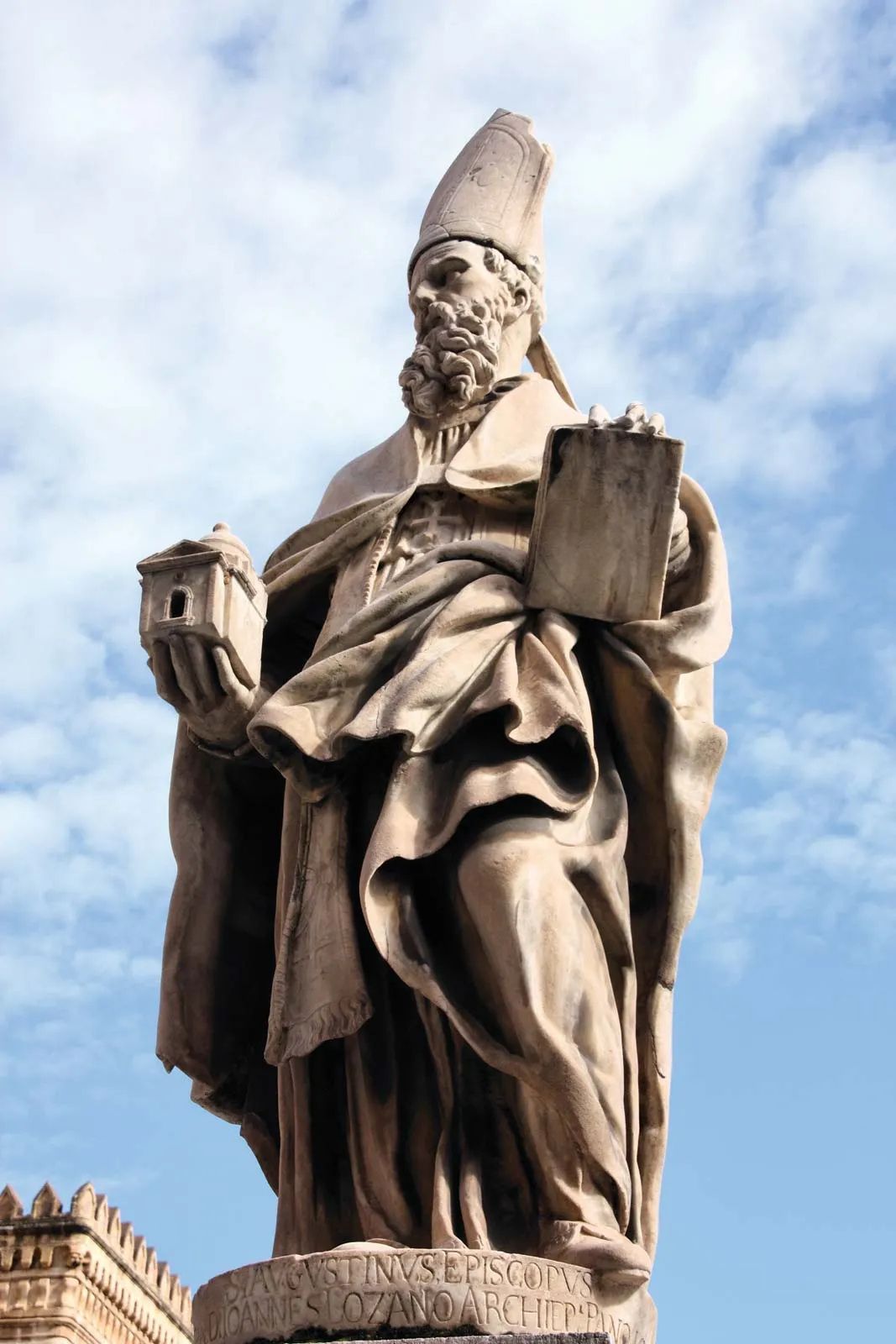
Image Credit: Britannica
Saint Augustine of Canterbury: The Monk Who Converted England and Became Its First Archbishop
Saint Augustine of Canterbury did not seek adventure. He was a respected prior in a Roman monastery, expected to die there, instruct novices and to to govern a peaceful community. Then Pope Gregory the Great chose him. He needed someone to evangelize Anglo-Saxon England, so he picked Augustine and thirty monks to accompany him. The mission was dangerous. The mission was unexpected. Augustine obeyed. He became the first Archbishop of Canterbury, converted a kingdom, planted the faith that would shape England for centuries. The Church remembers him on May 26 in England and May 27 elsewhere.
The Mission No One Wanted
Missionaries had reached Britain before Augustine. The Roman legions had brought Christianity. They withdrew in 410. pagan Germanic tribes flooded in. The Angles, Saxons, and Jutes conquered the island. They pushed the native Christians into Wales and Cornwall. These British Christians developed in isolation. They calculated Easter differently, wore a different tonsure and had no contact with Rome.
Pope Gregory I decided to act. He launched the Gregorian mission in 595. He chose the Kingdom of Kent. King Æthelberht ruled there. He had married a Christian princess named Bertha. She was a Frank. She had brought her own bishop, Liudhard. She had restored an ancient church in Canterbury. Æthelberht allowed her to worship freely. He was still pagan, but the door was open.
Gregory chose Augustine as leader. Augustine was prior of the Abbey of St Andrew in Rome. Gregory had once lived under Augustine’s rule in that same monastery. He knew the man, trusted his administrative ability, his biblical knowledge and sent about forty companions with him. Laurence of Canterbury was among them. He would eventually succeed Augustine.
The Fear That Almost Turned Them Back
The missionaries left Rome. They traveled north. Every step brought worse stories. They heard tales of Saxon cruelty. They heard tales of barbarity. The future hosts sounded monstrous. By the time they reached France, the monks were terrified. They sent Augustine back to Rome. They begged for permission to return home.
Gregory refused. He had heard encouraging news. England was more ready than the stories suggested. Æthelberht’s marriage to Bertha was key. The king commanded influence over neighboring kingdoms. The Franks could provide support. Gregory urged the missionaries onward. He sent letters to Frankish kings and bishops, asked for interpreters, hospitality, wanting a friendly reception assured.
The Franks complied. King Theuderic II of Burgundy helped. King Theudebert II of Austrasia helped. Their grandmother Brunhild helped. King Chlothar II of Neustria helped. The Franks provided priests and interpreters. They saw political advantage in the mission. A Christian Kent would be a friendly realm across the Channel. It would guard their flanks against rival Frankish kingdoms.
Landing in Kent and Converting the King
Augustine landed in Kent in 597. He arrived on the Isle of Thanet. He proceeded to Canterbury. Æthelberht received him cautiously. The king was curious. He was also afraid. He feared magic. He held the meeting in the open air. He wanted no enclosed space where spells might work.
Augustine preached. The king listened. He did not convert immediately. But he was impressed. He allowed the missionaries to settle, gave them land, permitted them to preach freely. He allowed them to use the church of St Martin’s for Masses. This church had been restored by Bertha and Liudhard. It dated to Roman times.
The conversion came soon after. By 597, Æthelberht had accepted baptism. A late medieval tradition places the date on Whit Sunday, June 2, 597. Bede recorded the story. The king’s conversion opened the floodgates. Augustine made large numbers of converts within a year. By Christmas Day 597, thousands were baptized in a mass ceremony. Gregory wrote to Æthelberht and Bertha in 601. He called the king his son. He referred to his baptism. The mission had succeeded beyond expectation.
Building the English Church
Augustine established his episcopal see at Canterbury. He founded the monastery of Saints Peter and Paul. It later became St Augustine’s Abbey. The king donated the land. In 598, Gregory wrote to the patriarch of Alexandria. He claimed more than 10,000 Christians had been baptized. The number may be exaggerated. But mass conversion had definitely occurred.
Pope Gregory sent more missionaries in 601. They brought a pallium for Augustine. This garment signified metropolitan status. Augustine was now an archbishop. The pope also sent sacred vessels, vestments, relics, and books. He directed Augustine to consecrate twelve suffragan bishops. He wanted two metropolitans. One at York. One at London. Each would have twelve suffragan bishops beneath them.
The plan for London never materialized. London was part of Essex. It was ruled by Æthelberht’s nephew Saebert. He converted in 604. But Canterbury remained the archiepiscopal see. Augustine founded two more bishoprics in 604. Mellitus became Bishop of London. Justus became Bishop of Rochester. A school was established to train Anglo-Saxon priests and missionaries. Augustine arranged the consecration of his successor, Laurence of Canterbury.
The Failure with the British Christians
Augustine succeeded with pagans. He failed with Christians. The native British Church had survived in Wales and Dumnonia. Gregory had decreed that these Christians should submit to Augustine. Their bishops should obey him. He believed more Roman organization survived in Britain than was actually true.
In 603, Augustine and Æthelberht summoned the British bishops to a meeting south of the Severn. The Britons were uncertain. They advised their bishops to judge Augustine by his respect at their next meeting. Augustine failed the test. He did not rise from his seat when the British bishops entered. They refused to recognize him as their archbishop.
The differences ran deeper than etiquette. The British Church calculated Easter differently. They wore a different tonsure. They had different approaches to asceticism and mission. Some historians believe Augustine had no real understanding of their history and traditions. His efforts were sponsored by the Kentish king. The Wessex and Mercian kingdoms were expanding westward into British territory. Politics poisoned the religious dialogue. The old Church chose isolation and bitterness over community and reconciliation.
Gregory’s Wisdom and Augustine’s Methods
Pope Gregory gave Augustine crucial guidance. He instructed him to consecrate pagan temples for Christian worship. He told him to turn pagan festivals into feast days of martyrs. This was pragmatic evangelization. It built on existing sacred sites. It transformed familiar celebrations. It eased the transition from paganism to Christianity.
One site revealed a shrine to a local St Sixtus. The worshippers knew nothing of the martyr’s life or death. They may have been native Christians. Augustine did not treat them as such. Gregory told him to stop the cult. He should use the shrine for the Roman St Sixtus instead.
Gregory also legislated on clergy and laity behavior. He placed the English mission directly under papal authority. English bishops would have no authority over Frankish counterparts. He directed the training of native clergy. He regulated missionary conduct. These directives shaped the emerging English Church.
Death and Enduring Legacy
Augustine died on May 26, 604. Some sources say 605. He was in England for only eight years. Yet his impact was decisive. He introduced an active missionary style into the British Isles. No earlier efforts had tried to convert the Saxon invaders. Augustine changed that. His close relationship with Æthelberht gave him time to establish himself. His example influenced later Anglo-Saxon missionary efforts.
His body was originally buried in the portico of St Augustine’s Abbey. It was later exhumed and placed in a tomb within the abbey church. This became a pilgrimage site. After the Norman Conquest, his cult was actively promoted. King Henry I granted the abbey a six-day fair around the translation of his relics. It ran from September 8 through September 13.
The English Reformation destroyed his shrine. His relics were lost. In March 2012, his shrine was re-established at the church of St Augustine in Ramsgate, Kent. This site is very close to where the mission first landed. St Augustine’s Cross, a Celtic cross erected in 1884, marks the spot in Ebbsfleet where Augustine first met King Æthelberht.
The Man Who Changed England
St. Augustine of Canterbury transformed a pagan kingdom into a Christian one. He did not do it through force. Æthelberht left religious choice free. He did it through persuasion, organization, and papal support, built institutions that outlasted him, trained native clergy, established bishoprics and created a school.
His failure with the British Christians remains a cautionary tale. Evangelization requires respect for existing traditions. It requires cultural sensitivity. Augustine lacked these qualities in his dealings with the native Church. The division between Roman and Celtic Christianity persisted for generations.
Yet his success with the Anglo-Saxons was undeniable. England became Christian. The faith took root. It produced saints, scholars, and missionaries who would re-evangelize Europe in the Dark Ages. All of this flowed from one reluctant monk who obeyed his pope, faced his fears, and planted the Gospel in hostile soil.
On May 26 and 28, the Church honors this apostle of the English. Catholics seeking courage to evangelize find his model. Those building institutions in hostile environments discover his methods. And every believer who has ever been asked to leave their comfort zone for the Gospel understands exactly what Augustine felt when Gregory’s letter arrived at his monastery door.





Leave a Reply