
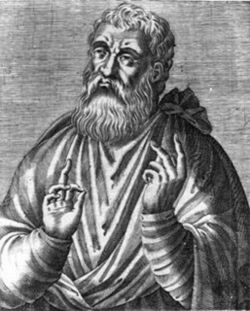
Image Credit: Catholic Online
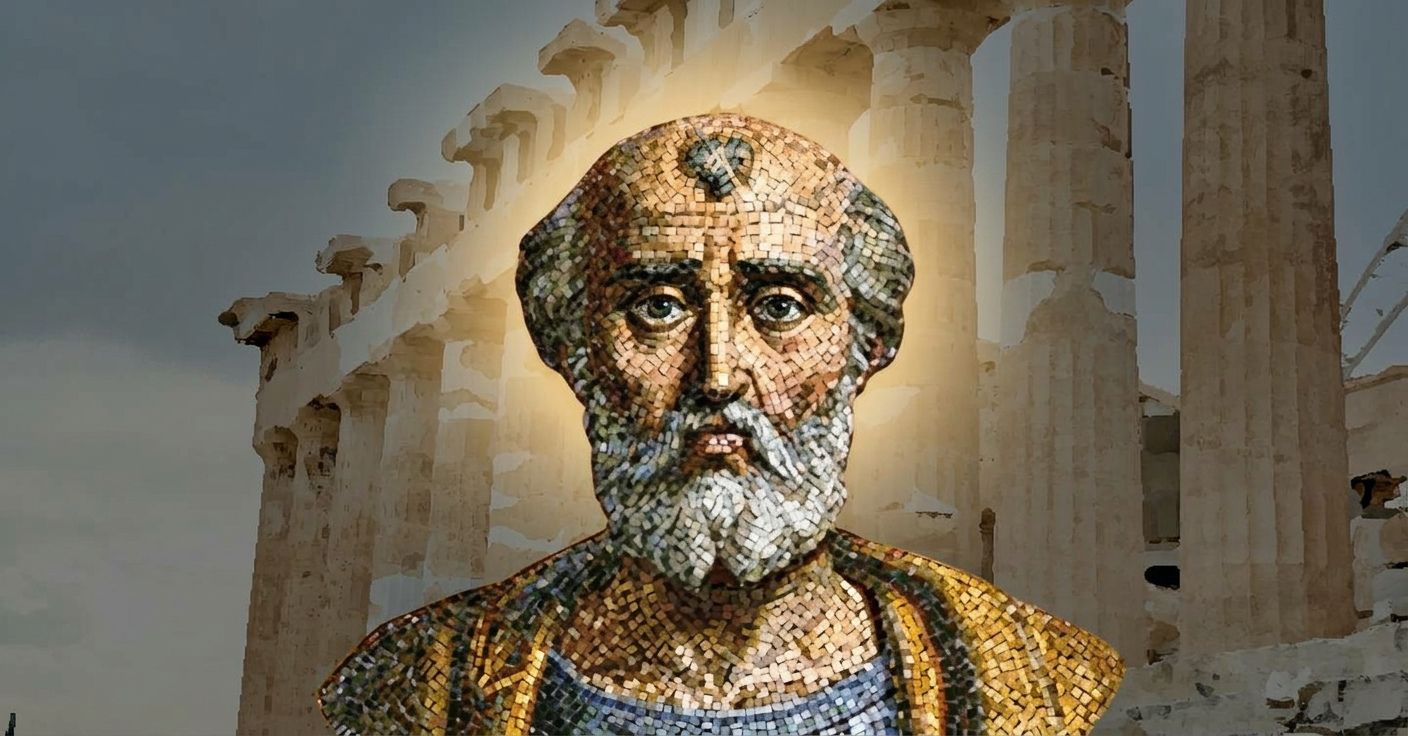
Saint Justin Martyr: The Philosopher, Apologist Who Found the Truth in Christ and Became a Martyr
A Restless Search for Wisdom
Some people stumble into faith. Others fight their way to it. Saint Justin Martyr definitely fought.
Born around A.D. 100 in Flavia Neapolis—a Roman city built near ancient Shechem in Palestine—Justin grew up in a thoroughly pagan household. His very name, passed down from his father Priscus and grandfather Baccheios, marked him as uncircumcised, outside the Jewish covenant. Yet something in him hungered for more than the rituals and superstitions surrounding him.
That hunger drove him into philosophy with almost reckless intensity. He tried everything. First came Stoicism, with its emphasis on virtue and emotional control. His teacher, however, proved frustratingly silent on the subject of God. What good was wisdom, Justin wondered, if it couldn’t even tell you about the divine?
Next he approached a Peripatetic—an Aristotelian philosopher. The man welcomed him warmly at first, then demanded payment. Justin walked away disgusted. True philosophers, he believed, shouldn’t sell truth like merchandise at market.
A Pythagorean offered stricter terms: learn music, astronomy, and geometry first, then we’ll talk. Justin, eager but impatient, found the prerequisites exhausting.
Finally, Platonism captured his imagination. Here was beauty, transcendence, the soul’s ascent toward eternal forms. For a time, Justin was genuinely happy. He had found something that felt like truth.
The Old Man by the Sea
Then came the encounter that changed everything.
While walking along the seashore—probably somewhere in the eastern Mediterranean—Justin met an elderly stranger. Their conversation stretched long into the afternoon, wandering through questions that had tormented Justin for years.
The old man dismantled his confidence piece by piece. Human philosophy, however noble, could never grasp God through reason alone. The prophets—men moved by the Holy Spirit—had actually known God and could make Him known. Without their testimony, the soul wandered in shadows.
Something cracked open in Justin during that conversation. He began reading the Hebrew prophets with fresh eyes. Then he encountered Christians—and what he saw astonished him.
In his own words, written years later: “When I was a disciple of Plato, hearing the accusations made against the Christians and seeing them intrepid in the face of death and of all that men fear, I said to myself that it was impossible that they should be living in evil and in the love of pleasure.”
Their moral courage didn’t match the slanders. Their joy in suffering made no sense unless something real sustained them. Justin investigated further, and by around A.D. 130, he was baptized into the faith he once dismissed.
Defending the Faith with Pen and Voice
Conversion didn’t make Justin retreat into quiet devotion. Instead, he became one of Christianity’s most vocal defenders—a true apologist in the ancient sense of “speaker in defense.”
He taught in Asia Minor, likely at Ephesus, engaging anyone willing to discuss these matters seriously. His most famous literary work, the Dialogue with Tryphon, purports to record conversations with a learned Jewish rabbi—possibly the renowned Tarphon mentioned in the Talmud. Whether every word happened exactly as written matters less than the genuine intellectual respect between interlocutors. Justin knew Jewish thought deeply, argued from the prophets extensively, and never descended into cheap polemic.
Later, he moved to Rome, settling near the baths of Timothy with a companion named Martin. There he established something like a school, teaching Christian philosophy to seekers from various backgrounds. His students weren’t mere listeners; several would eventually share his fate.
Justin’s two Apologies—formal defenses addressed to Roman emperors—remain his most influential works. The first, composed between A.D. 153 and 155, systematically dismantles accusations against Christians while presenting their beliefs with remarkable openness. He describes baptism, the Eucharist, and Sunday worship with a frankness that modern readers find almost startling. This was no secret cult; Justin wanted the authorities to understand exactly what Christians did and why.
The second Apology functions more as an appendix, responding to specific recent persecutions under Prefect Urbinus. Together, these writings offer our clearest window into 2nd-century Christian practice and belief.
The Logos and the Philosophers
Justin’s theological creativity shows most clearly in his teaching about the Logos—the divine Word made flesh in Christ.
Drawing on Stoic philosophy’s concept of the “seminal Word” (logos spermatikos) scattered through creation, Justin proposed something radical. Philosophers like Socrates and Plato had glimpsed partial truth because the Logos had already been at work in the world. But in Jesus Christ, the full Logos appeared—not scattered seeds, but the living reality itself.
This wasn’t simple syncretism. Justin maintained Christianity’s absolute transcendence: “Our doctrine surpasses all human doctrine because the real Word became Christ who manifested himself for us, body, word and soul.” No philosopher died for his teachings as Christians died for Christ. No philosophical system offered the moral transformation he witnessed in believers.
Yet his approach opened genuine dialogue with pagan culture. He could honor philosophy’s achievements while insisting on its limitations. He could quote Plato respectfully while demonstrating Plato’s dependence on Moses. This balance—neither hostile rejection nor naive assimilation—would influence Christian thought for centuries.
The Trial and Martyrdom
Justin’s death came around A.D. 165, during the reign of Marcus Aurelius. The authentic Acts of his Martyrdom preserve the exchange with Prefect Rusticus in almost courtroom detail.
Rusticus demanded sacrifice to the Roman gods. Justin refused: “No one in his right mind gives up piety for impiety.”
The prefect threatened torture. Justin responded with almost serene acceptance: “That is our desire, to be tortured for Our Lord, Jesus Christ, and so to be saved, for that will give us salvation and firm confidence at the more terrible universal tribunal of Our Lord and Saviour.”
Six companions stood with him—Chariton, Charito, Evelpostos, Pæon, Hierax, and Liberianos. When Rusticus pronounced sentence, scourging and beheading for all who refused to worship idols, they answered together: “Do as you wish; for we are Christians, and we do not sacrifice to idols.”
They were taken to the customary execution place, beheaded, and so “consummated their martyrdom confessing their Saviour.” Justin, the restless philosopher, had finally found the truth worth dying for.
Why Justin Martyr Still Matters
Nearly nineteen centuries later, Justin’s relevance hasn’t faded. He speaks directly to anyone who suspects Christianity is anti-intellectual, who thinks faith and reason must war against each other. His journey through multiple philosophies before finding Christ models honest questioning rather than blind acceptance.
His writings preserve early Christian worship practices with unmatched clarity. When he describes the Eucharist, Sunday gatherings, and baptismal preparation, historians listen carefully because no earlier witness speaks so fully.
Pope Leo XIII recognized this enduring importance by composing a Mass and Office in Justin’s honor, establishing his feast on April 14 (later moved to June 1 in the revised calendar). The Church remembers him not merely as a martyr but as a martyr and teacher—someone whose intellectual witness proved as essential as his bloody one.
For modern Christians navigating skeptical workplaces, academic environments, or pluralistic neighborhoods, Justin offers a model of confident, respectful engagement. He didn’t fear hard questions. He welcomed them, having asked plenty himself.
The restless search that carried him from Stoicism through Platonism to Calvary reminds us that every genuine quest for truth, pursued with integrity, eventually leads to Christ. Justin Martyr would insist on nothing less.



Leave a Reply