
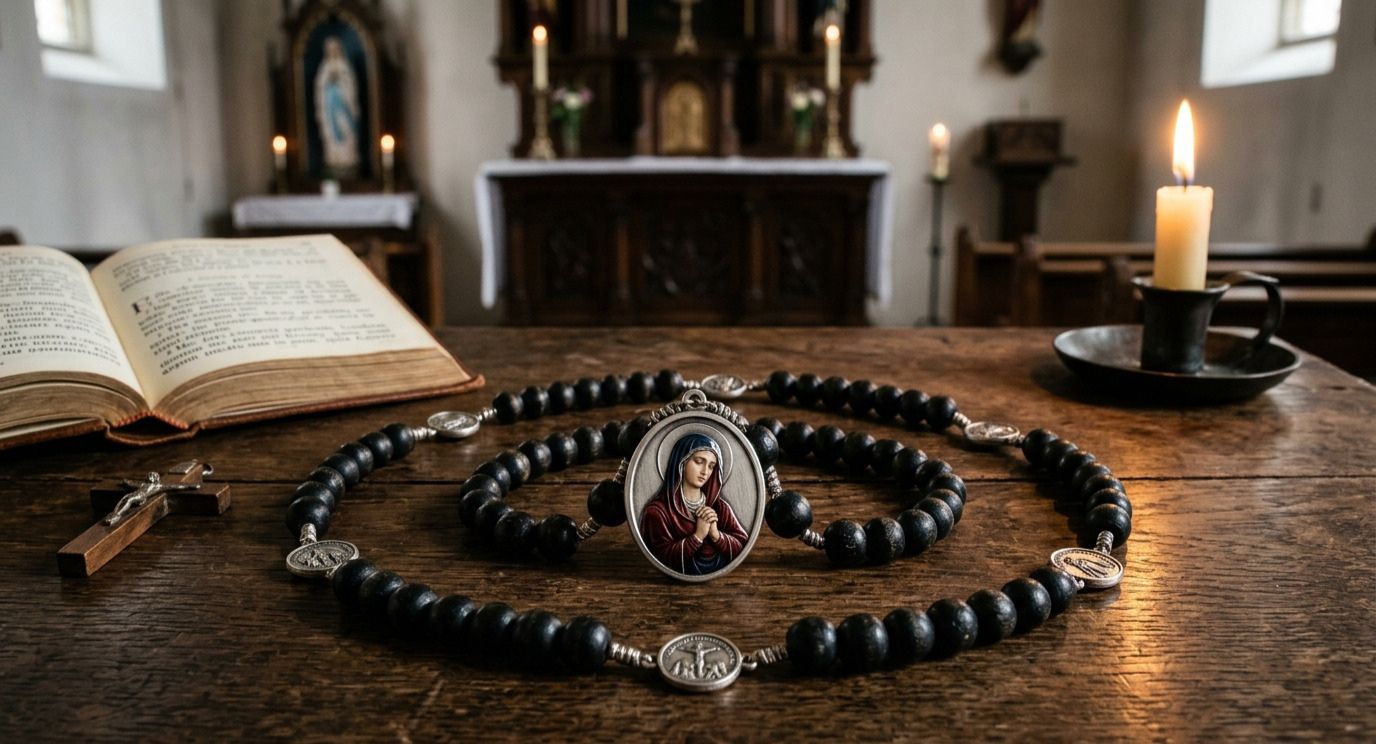
The Feast of Our Lady of Sorrows falls on September 15 and many Catholics mark it by praying the Seven Sorrows Rosary. This devotion, also called the Servite Rosary or the Chaplet of Seven Sorrows, invites believers to walk alongside Mary through her most painful moments. Unlike the traditional Rosary, which contemplates joyful, sorrowful, glorious and luminous mysteries, this particular chaplet focuses entirely on Mary’s grief. Consequently, it offers a distinctly intimate form of prayer. The devotion dates back to the 13th century, when it originated within the Servite Order, also known as the Order of the Servants of Mary. From the very beginning, these friars dedicated their community to honouring Our Lady of Sorrows. As a result, the practice spread steadily across Europe and eventually reached believers worldwide.
The Seven Sorrows Rosary has deep roots in the Catholic devotion to the suffering of the Blessed Virgin Mary. According to tradition, seven Florentine merchants founded the Servite Order in the mid-13th century. They lived a penitential life and placed Mary’s sorrows at the centre of their spirituality.
In the 14th century, devotion to Mary’s sorrows grew through the reported visions of Saint Bridget of Sweden. She received revelations concerning seven promises associated with meditating on the sorrows of the Virgin Mary.
In 1724, Pope Benedict XIII granted indulgences to those who prayed this devotion, especially in Servite churches.
The Seven Sorrows Rosary later experienced renewed interest following the Marian apparitions at Kibeho, Rwanda, in the 1980s. Visionary Marie-Claire Mukangango helped promote this ancient devotion among a new generation.
How to pray the Seven Sorrows Rosary
- Begin, as with most Catholic prayers, by making the Sign of the Cross.
- Afterwards, recite a brief introductory prayer, offering your intentions and asking for grace to pray sincerely. Many devotees also include a short Act of Contrition, acknowledging that sin contributed to Mary’s suffering.
- Next, announce the first sorrow aloud, then pause briefly to reflect on its meaning.
- Following this reflection, pray one Our Father, then seven Hail Marys while continuing to meditate on that sorrow.
- Afterwards, move steadily to the second sorrow, repeating the same pattern of announcement, reflection, one Our Father and seven Hail Marys.
- Continue in this manner through all seven sorrows, allowing each meditation room to breathe rather than rushing between them.
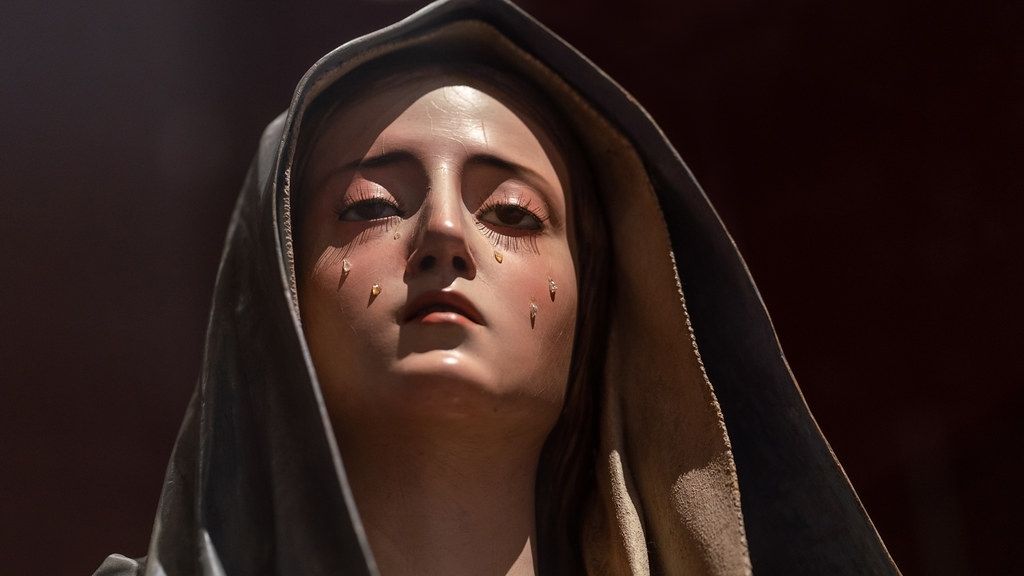
Traditionally, believers use a specific set of beads to pray this devotion properly. The chaplet contains seven groups of seven beads and each group is separated by a small medal depicting one particular sorrow. Additionally, three extra beads sit at the beginning, honouring Mary’s tears and marking the chaplet’s starting point. Most sets use black beads, since this colour traditionally symbolises mourning and sorrow. Although owning a proper chaplet certainly helps, it remains entirely possible to pray this Rosary using ordinary fingers to count the prayers instead.
The seven sorrows themselves follow Mary’s life chronologically.
- Firstly, Simeon’s prophecy foretold that a sword would pierce her heart.
- Secondly, the flight into Egypt forced her family into sudden exile.
- Thirdly, she endured the anguished loss of the child Jesus within the temple.
- Fourthly, she met her son along the sorrowful road to Calvary.
- Fifthly, she witnessed his crucifixion while standing helplessly at the foot of the Cross.
- Sixthly, she received his lifeless body into her own arms.
- Finally, she watched over his burial, marking the most tragic conclusion imaginable for any mother.
Once all seven sorrows have been prayed, conclude with three additional Hail Marys, offered specifically in honour of Mary’s tears. Many versions also add one Our Father, one Hail Mary and one Glory Be for the Pope’s personal intentions, followed by the invocation, “Virgin most sorrowful, pray for us,” repeated three times.
This Rosary offers something genuinely different from other Marian prayers, since it centres wholly on compassion and shared suffering. Rather than glossing over pain, it invites believers to sit honestly within grief before moving toward hope. Therefore, many people find this devotion particularly meaningful during personal hardship, illness or bereavement. Moreover, praying slowly through each sorrow cultivates patience, humility and trust in divine providence. According to tradition, Mary promised particular graces to those who embrace this devotion faithfully, including comfort in times of affliction and assistance at the hour of death.
Ultimately, the Seven Sorrows Rosary remains a profoundly human prayer, since sorrow touches every life eventually. By walking through Mary’s darkest moments, believers discover that faith and grief can coexist meaningfully. This devotion therefore continues to offer comfort across generations, cultures and continents. For readers wishing to explore related traditions, our earlier published post on this website concerning the Feast of Our Lady of Sorrows and its historical development.




Leave a Reply