
Novena of the 24 Glory Be to the Father and It’0s Link to Saint Therese’s of Lisieux
The Catholic Church remembers Saint Therese of Lisieux every year on the first of October, and many believers mark this occasion through the Novena of the 24 Glory Bes. This distinctive devotion differs considerably from other novenas, since it involves reciting the Glory Be to the Father prayer 24 times daily, rather than following a structured daily meditation. Consequently, its simplicity has made it remarkably popular among believers seeking Therese’s powerful intercession. Furthermore, the novena carries a fascinating origin story involving roses, answered prayers and one persistent Jesuit priest. Therefore, understanding its history helps explain why so many Catholics continue praying it faithfully today.
According to widely documented tradition, Father Putigan, a Jesuit priest, began this particular novena on the third of December 1925. He specifically asked Saint Therese, then recently canonised, for one significant favour concerning his ministry. As a sign confirming his prayer had been heard, he requested that someone present him with a freshly cut rose. Remarkably, an unknown visitor approached him on the third day, offering exactly such a rose without any prior explanation. Encouraged by this coincidence, Father Putigan later repeated the novena, this time requesting a white rose specifically. Once again, his request was reportedly fulfilled, prompting him to share this powerful devotion more widely across the Church.
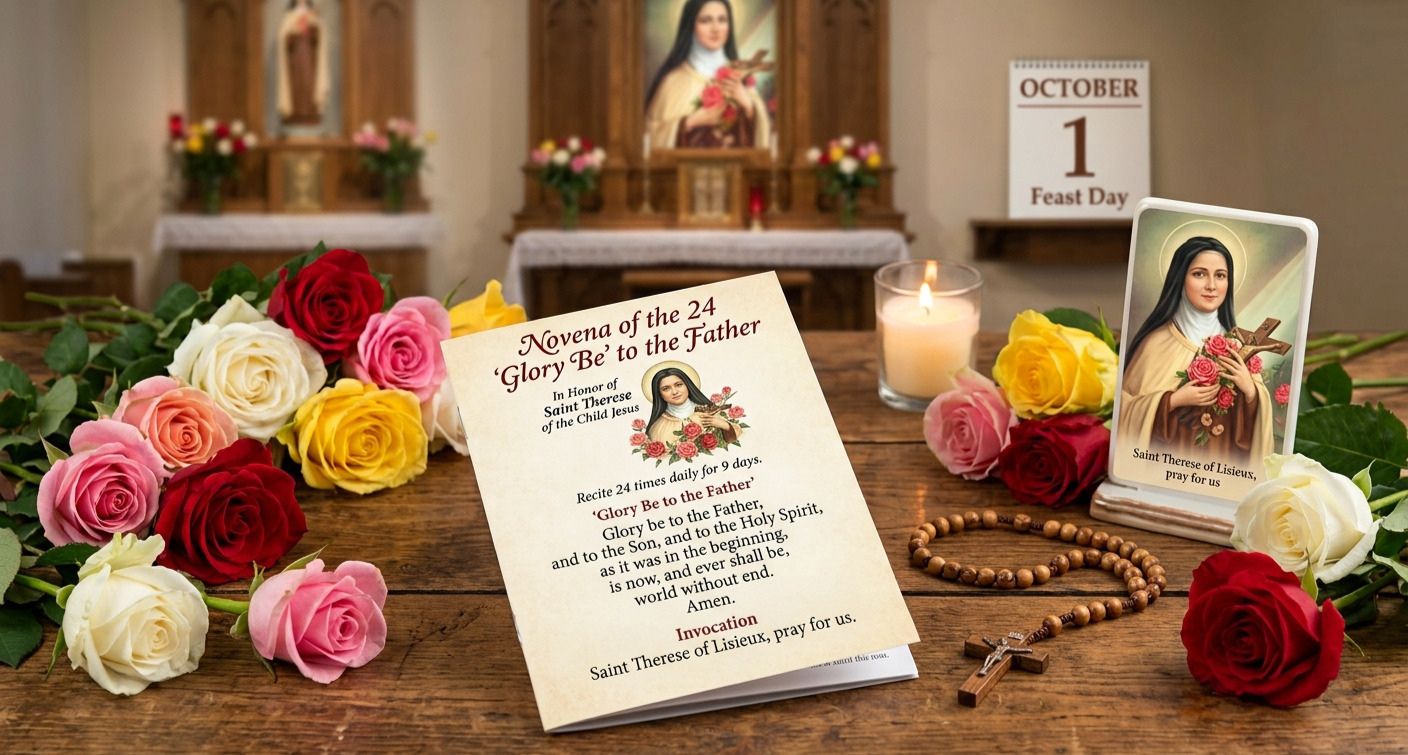
The novena’s structure centres upon reciting the Glory Be prayer 24 times each day, continuing faithfully for nine consecutive days. This particular number honours the twenty-four years Therese spent on earth before her early death from tuberculosis in 1897. Before beginning the 24 Glory Bes, believers typically recite a specific thanksgiving prayer addressed directly toward the Holy Trinity. This opening prayer thanks God for every blessing bestowed upon Therese throughout her short yet remarkably fruitful life. Afterwards, petitioners humbly ask that their own particular request be granted, provided it aligns with God’s holy will. Many also insert the brief invocation, “Saint Therese of the Child Jesus, pray for us,” between individual Glory Be prayers.
Interestingly, devotees may pray this novena at any time throughout the year, without needing to wait for her official feast day. However, many sources specifically recommend praying it between the ninth and seventeenth of any given month. This particular window allows petitioners to join spiritually alongside countless others praying simultaneously across the world. Consequently, participants form what devotional writers describe as one great, unified prayer offered collectively toward heaven. In France, meanwhile, this same devotion carries the alternative title “Novena of Roses,” reflecting its strong floral symbolism. This naming choice directly echoes Therese’s own famous promise to send roses as signs of her heavenly intercession.
This rose symbolism connects directly toward one of Therese’s most beloved spiritual teachings during her final months alive. Shortly before dying, she reportedly promised to spend her heaven continuing good works here upon the earth. Specifically, she pledged that she would send a “shower of roses” toward anyone who sought her help afterwards. Consequently, countless believers today report receiving roses, whether literal flowers or simply persistent thoughts of roses, following answered prayers. Therefore, this novena beautifully unites her promised floral sign with a structured, repeatable prayer practice. Many Catholics keep a small prayer card nearby, tracking their daily Glory Bes across the full 9-day period.
Beyond its charming origin story, this novena also reflects Therese’s broader spiritual philosophy, often called her Little Way. Rather than demanding lengthy, complicated prayers, this devotion embraces simplicity, repetition and genuine childlike trust in God’s providence. Indeed, Therese herself consistently taught that small, humble gestures could carry immense spiritual weight when offered with sincere love. Consequently, this uncomplicated novena mirrors her own teaching perfectly, requiring only faithful repetition rather than elaborate theological reflection. Many parishes and prayer groups now organise communal recitations, particularly surrounding her October feast day each year.
Ultimately, the Novena of the 24 Glory Bes offer believers a beautifully simple pathway toward Therese’s powerful heavenly intercession. Whether seeking healing, guidance or comfort during difficult circumstances, countless Catholics continue finding genuine hope through this century-old devotion. Therefore, praying it faithfully across 9 days invites believers into a tradition stretching back nearly one hundred years. For readers wishing to explore further devotional history, additional detail remains available through EWTN’s prayer archives, alongside earlier articles published on this website concerning the life of Saint Therese of Lisieux.



Leave a Reply